
Odisha MSMEs face a ₹3.6-4.3 lakh crore funding gap, receiving just ₹1.2 lakh crore against a ₹4.8-5.5 lakh crore need
97-98% of MSMEs are micro units, with poor bookkeeping and delayed payments limiting access to formal credit
Digitisation can unlock funding, with digital records helping banks assess businesses and speed up lending
Odisha’s micro, small and medium enterprises (MSMEs) currently require an estimated ₹4.8 lakh crore to ₹5.5 lakh crore in funding support, but are receiving only around ₹1.2 lakh crore, leaving a substantial financing gap for the sector, a senior Bank of Baroda official said.
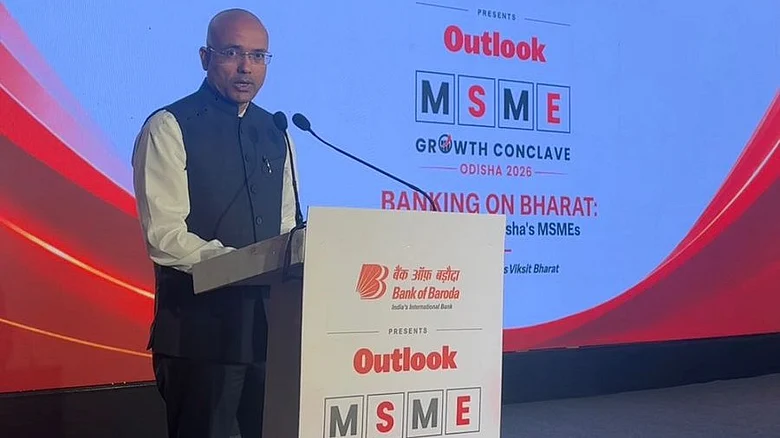
Speaking at the Outlook MSME Growth Conclave – Odisha 2026, Sunil Kumar Sharma, Head – MSME Banking, Co-Lending & Supply Chain Finance, Bank of Baroda, said the state’s MSME sector was receiving only about a quarter of the funding it potentially needs.

1 October 2026
Get the latest issue of Outlook Business

“MSMEs in the state of Odisha roughly need ₹4.8 lakh crore to ₹5.5 lakh crore of funding support. What it is getting as of now is ₹1.2 lakh crore. So, just 25% or even less than that is the funding support that the MSMEs are getting,” Sharma said.



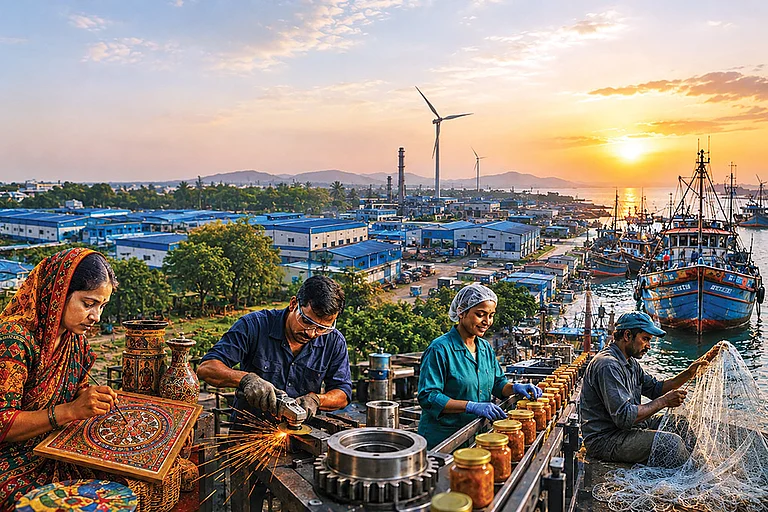
The financing challenge is particularly significant because around 97-98% of Odisha’s MSMEs are micro enterprises, Sharma said. Many of these businesses struggle to maintain proper books of accounts, making it difficult for lenders to assess their financial strength and, in turn, limiting their ability to raise formal credit.
“Approximately 97-98% of the MSMEs are micro units. They have their own set of challenges with respect to bookkeeping, and in absence of proper bookkeeping, they are not in a position to justify their worth,” he said.
Advertisement

Sharma also pointed to what he described as a “missing middle” in MSME financing. Micro enterprises that initially receive funding through self-help or group-based ecosystems can find it difficult to access credit once they graduate into standalone businesses.
According to Sharma, another major issue in Odisha is the delay in realisation of payments. Several ancillary MSMEs operate within the ecosystem of large corporates and public sector enterprises, but delayed payments from larger customers can put significant pressure on their working capital.
“The delayed realisation of their receivable is causing trouble for them,” he said, adding that conservative risk underwriting by lenders was also contributing to the financing challenge.
Advertisement
Sharma said greater formalisation and digitisation of MSMEs could help bridge the financing gap. Banks are increasingly using digital infrastructure and alternative data to reduce documentation requirements and speed up credit decisions.
He said banks can now extend loans of up to ₹10 crore without collateral under certain schemes, while digital lending channels can substantially reduce paperwork.
For smaller enterprises, however, maintaining digital financial records remains crucial. Sharma said that if an entrepreneur can provide GST returns, bank account statements and income-tax returns, digital lending processes can assess the business without requiring extensive additional documentation.
“For the MSME to become eligible for doing that, they have to shift from manual bookkeeping into a digital mode,” he said.
Sharma said Odisha currently has around 24 lakh registered MSMEs, providing employment opportunities to nearly 60 lakh people and contributing approximately ₹3.6 lakh crore to the state’s GSVA.
He said the state’s MSME sector is now growing faster than the national average, making Odisha an important growth market for banks as well.
“The growth in this state is currently faster than the national average. This is the area where we as Bank of Baroda also look at for our growth,” Sharma said.
At the national level, Sharma described MSMEs as the backbone of the economy, citing their contribution to GDP, manufacturing output, exports and employment.