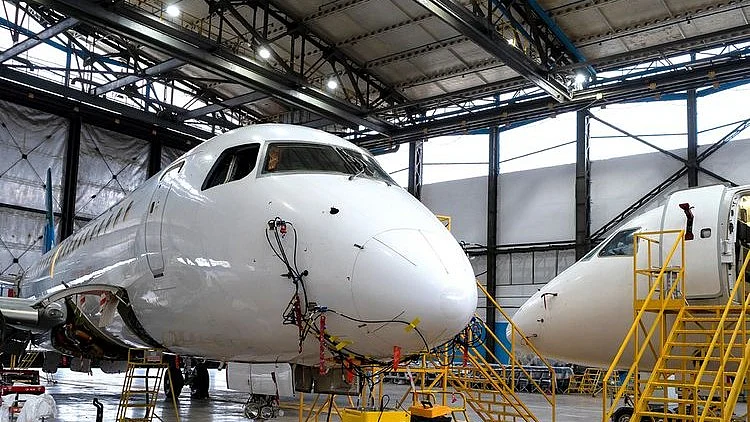
The government on Monday said there were 23 accidents involving scheduled, non-scheduled fixed-wing operators and helicopter operators in the last five years.
The figures were provided as part of a written reply by Minister of State for Civil Aviation Murlidhar Mohol to the Rajya Sabha.
The rate of accidents involving helicopters per 10,000 hours of flying stood at 0.53 last year, the highest reading in the last 5 years while the rate of accident involving NSOP fixed wing aircraft per 10,000 departures was at 0.27 in 2025, as per the data.

1 September 2026
Get the latest issue of Outlook Business

NSOP refers to Non-Scheduled Operators.

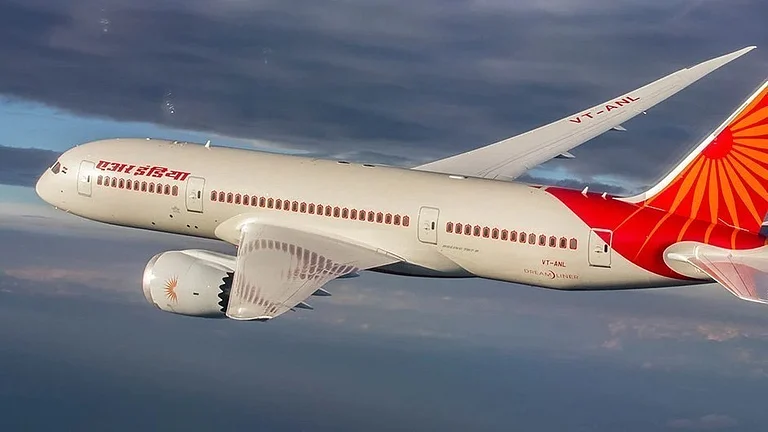


According to the data, there were 6 accidents last year while the count stood at 3 in 2024 and 4 in 2023. The number was 4 in 2022 and 6 in 2021.
Last year, there were 4 helicopter accidents and 1 each involving aircraft of a scheduled operator and a NSOP fixed-wing operator.
Responding to a query, the minister said the shortfall in manpower has not impacted the safety functions of the Directorate General of Civil Aviation (DGCA).
Out of the 1,630 sanctioned posts at the regulator, more than 780 positions are lying vacant.
"In the last few months, as a part of recruitment exercise, 167 candidates have already been selected/recommended, out of which offer of appointments have also been issued to 106 candidates.
"Replacement of 42 candidates (Airworthiness Officers) from reserve panel has been requested from UPSC. DR Proposal for 82 posts of different technical cadres for vacancy year 2026 is at various stages of process," Mohol said.
Advertisement
He also said that vacancies are managed by recruiting persons through short term contractual hiring.
Mohol said the DGCA has a systematic safety oversight mechanism.