DDGS has become contentious under the India-US trade deal due to its link with genetically modified crops.
The Centre says imports will be limited, while opposition parties and farmers’ groups flag biosafety and price concerns.
The issue reflects broader tensions between trade liberalisation and India’s cautious GM policy.
Dried Grains with Solubles (DDGS) has emerged as a political hot potato under the India-US trade deal, triggering fresh debate over genetically modified (GM) products in India’s agricultural ecosystem. What makes DDGS particularly contentious is that it is derived from GM crops — a long-standing red line for Indian policymakers, farmers’ groups and environmental activists.
Across bilateral trade negotiations with the US, DDGS has been a recurring point of interest for Washington, dating back to US President Donald Trump’s first term in office. The issue has resurfaced amid reports suggesting a likely opening up of Indian markets to US-made DDGS as part of the interim trade pact.

1 September 2026
Get the latest issue of Outlook Business

While the Centre has maintained that any imports will be limited and pose no threat to farmers, opposition parties and farm unions have flagged concerns over biosafety, price distortion and the precedent such a move could set for future GM-linked imports.
The DDGS debate has, thus, become a proxy for broader tensions between trade liberalisation, farm politics and India’s cautious approach to genetically modified products.
Advertisement
What Is DDGS?
DDGS is made from genetically modified (GM) corn and is a protein-rich byproduct of ethanol manufacturing. It is widely used as cattle fodder and as feed for poultry and fisheries. In India, however, DDGS is made using non-GM corn or maize and rice. As per the interim trade deal announced last week, India will allow imports of DDGS at zero import duty in limited quantities.
Do We Import DDGS?
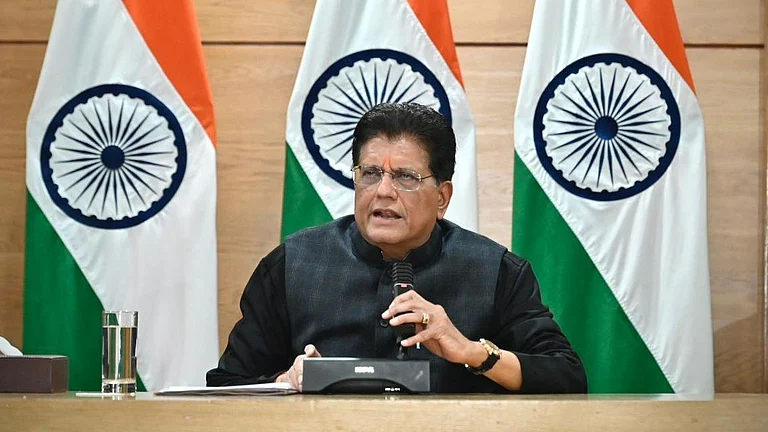
New Delhi already imports DDGS from other countries, including Brazil and Argentina, which grow GM soy. As per reports, Union Commerce Minister Piyush Goyal has stated that “there is no threat” to any farmers under the deal and that the opening up of DDGS imports was driven by industry demand amid scarce grazing land and a rising livestock population.
Advertisement
Why Does India Resist GM Products?
India’s long-standing resistance to genetically modified farm products sits at the intersection of regulatory caution, political economy considerations and environmental concerns. Owing to perceived health risks, India follows a precautionary biosafety framework, a report by Business Standard said.
Opening up the sector to GM products could also hurt Indian farmers, whose interests are often cited as part of the national interest. Large-scale imports of GM-linked crops from the US could distort domestic prices and affect rural livelihoods, the report said. Moreover, experts have raised concerns over gene flow, biodiversity loss, and long-term ecological impact.
What Does the Opposition Claim?
The opposition has criticised the Centre’s move, stating that India is yet to allow the use of transgenic technologies in food crops. Member of Parliament and former environment minister Jairam Ramesh alleged that opening the agriculture sector to duty-free DDGS imports amounts to a “backdoor entry” of GM crops into food systems.
"There is an exaggerated attempt to present it as a benefit for India that cheaper Distillers Dried Grains with Solubles (DDGS) will be imported from the US. But the truth is that DDGS is made from GM corn. This is nothing but entry through the back door, if not directly," Ramesh said in a post on X.
Farmers’ union Bharatiya Kisan Sangh has also objected to the move, with other industry experts flagging concerns that such imports could disproportionately impact prices for Indian farmers growing soybean and corn. The farmers’ union has called for a nationwide strike on February 12.
What Does History Tell Us About DDGS?
In 2017, the Genetic Engineering Approval Committee (GEAC) reported that it had received several applications seeking permission to import US DDGS. In 2018, GEAC accepted draft guidelines and asked applicants to align their applications accordingly.
A key moment came when a subcommittee under Lalitha Gowda submitted two draft documents detailing procedures for handling applications for the import of animal feed containing GM organisms, as well as application formats covering production processes, uses and safety of DDGS. In 2025, GEAC asked the Gowda committee to update the draft documents to incorporate subsequent scientific advances and changes in the existing regulatory framework, an Economic Times report said.
The drafts have regained significance after the US Trade Representative flagged them as “sanitary and phytosanitary barriers” during India-US trade negotiations. In India, Bacillus thuringiensis cotton (Bt cotton), a pest-resistant GM variant, remains the only GM crop currently approved, while GM mustard was put on hold by the Supreme Court in 2024, with the apex court seeking a national GM policy, which is still awaited.
India’s Experience with Bt Cotton
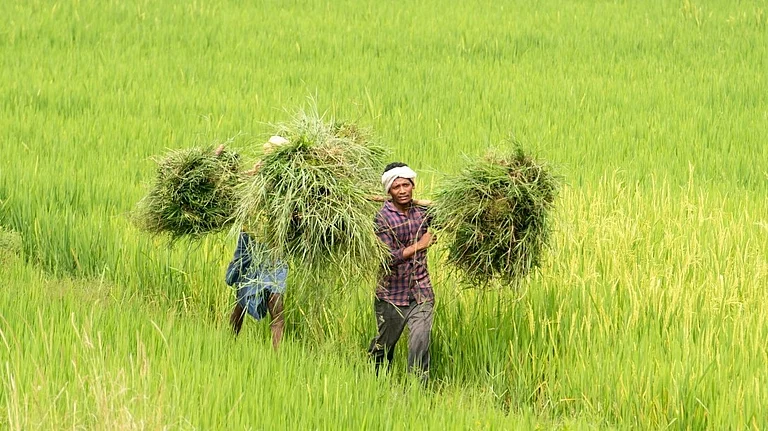
India has so far approved only Bt cotton for GM crop cultivation, primarily to reduce insecticide use, and it has remained the sole GM crop for nearly two decades. According to a report by India Today, Bt cotton cultivation has shown adverse environmental effects, including a reduction in nectar production in flowers, leading to changes in honeybee behaviour.
Farmers who once harvested 25–30 kilos of honey per beehive reportedly found no honey in their fields. A GM crop introduced to combat pink bollworm is now again facing attacks from the same pest, the report said.
What Will US DDGS Have in Store?
According to a Mint report, imports of corn-based DDGS are likely to remain limited, even though US-made DDGS is considered to be of better quality. Details and clarity on import volumes are still awaited, with the formalisation of the India-US deal expected by mid-March.
A key question remains whether Indian cattle feed manufacturers will replace domestically produced DDGS with US imports. Reports have also suggested that analysts have flagged concerns that imports from the US could hurt Indian soybean farmers — a claim Goyal has said is overstated. As per preliminary details of the interim deal, a quota of only 5 lakh tonnes has been offered under the India-US agreement, while domestic animal feed consumption stands at nearly 500 lakh tonnes.
While DDGS is meant for animal feed and not direct consumption, critics say permitting GM-derived fodder could set a precedent for wider acceptance of genetically modified crops in India’s agri supply chain.