
WTO members consider extending global moratorium on e-commerce tariffs beyond 2031 timeline.
India opposes long-term extension citing revenue loss and policy flexibility concerns.
Debate highlights divide between developed and developing nations over digital trade rules.
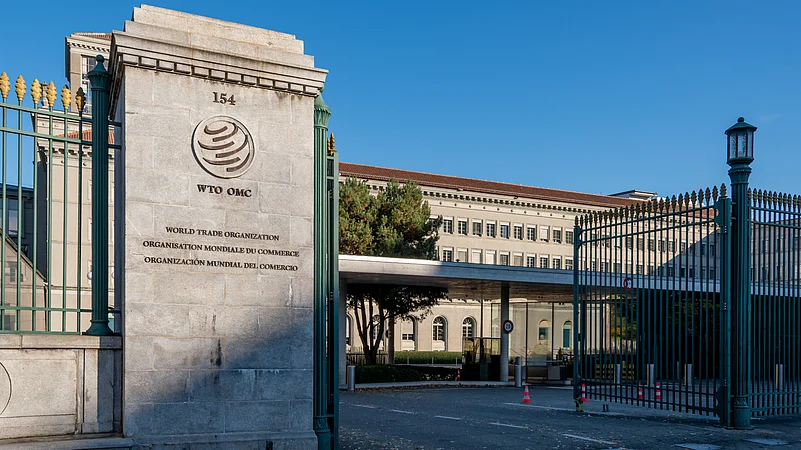
As the World Trade Organisation’s (WTO’s) 14th ministerial conference (MC14) drew to a close on March 29, member countries were considering an extension of the global ban on ecommerce tariffs for five more years. However, India was still against a long-term moratorium because it was worried about losing money, reported Bloomberg.
The WTO moratorium means that countries don't charge customs duties on electronic transmissions that cross borders. Member countries have agreed to extend it every two years for almost thirty years, but they still don't agree on whether it should continue. At the 13th WTO ministerial conference in 2024, members agreed to keep the practice of not imposing such duties until the next ministerial conference.

1 September 2026
Get the latest issue of Outlook Business

According to Bloomberg, nations agreed to maintain their practices of not imposing tariffs on online digital-services trade until June 30, 2031. In a March 26 statement at the start of the conference called MC14, US Trade Representative Jamieson Greer called making the moratorium permanent “the lowest of the low-hanging fruit”.
Bloomberg further quoted Greer as saying that Washington “is not interested in another temporary extension of the moratorium.” Doing so “would not provide our businesses the certainty needed for their operations. It would also further weaken the WTO’s standing,” Greer added.
Advertisement
Digital Trade Concerns
India's resistance goes beyond just short-term financial effects; it shows deeper worries about how global digital trade is changing. According to a 2021 report published by United Nations Conference on Trade and Development, developing economies may become mostly consumers of digital goods instead of producers, which could make existing differences in technological skills even bigger. Policymakers say that without the power to set tariffs, they lose an important way to support domestic digital industries and make sure that competition is fair with big multinational companies.
Experts have also said that the term "electronic transmissions" is still not clear, and it could mean anything from downloading software to new technologies like 3D printing files and AI-driven services. The Organisation for Economic Co-operation and Development says that clearer rules are needed to deal with taxes, data governance and value creation in the digital economy. Countries like India think that keeping regulatory flexibility is important for dealing with these uncertainties and making sure that trade commitments are in line with national development goals in a world that is becoming more digital.