
BRICS ministers met in Delhi amid escalating Iran conflict and global energy concerns.
India warned ongoing geopolitical tensions threaten trade, energy security and economic stability worldwide.
Oil disruptions pushed BRICS nations toward alternative trade and currency settlement discussions globally.
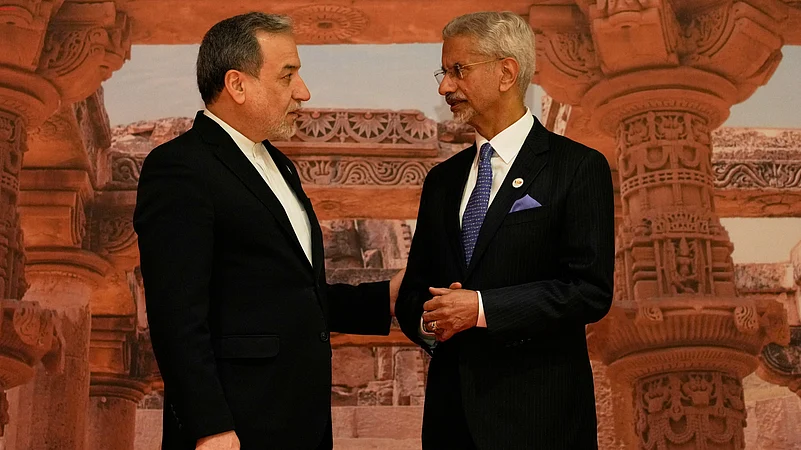
BRICS foreign ministers, including from Iran and Russia, met in New Delhi on May 14, where India warned of “considerable flux” with conflict driving economic uncertainty and energy insecurity.
War in Iran and the related fuel crisis are dominating discussions in the two-day gathering.

1 September 2026
Get the latest issue of Outlook Business

Development Issues Remain Central
India, which holds the BRICS chair this year, was hosting the foreign ministers from the expanded bloc, which now includes Iran, Saudi Arabia and the United Arab Emirates—countries at odds over the conflict launched by the United States and Israel on February 28.
"We meet at a time of considerable flux in international relations," India's Foreign Minister Subrahmanyam Jaishankar said, in his opening speech, before closed meetings began.
Among the foreign ministers attending were Iran's Abbas Araghchi and Russia's Sergei Lavrov.
"Ongoing conflicts, economic uncertainties, and challenges in trade, technology, and climate are shaping the global landscape," Jaishankar added.
"There is a growing expectation, particularly from emerging markets and developing countries, that BRICS will play a constructive and stabilising role."
Disruptions around Gulf shipping routes and the Strait of Hormuz continue to drive volatility in oil and gas markets, increasing pressure on energy-importing economies, including India.
Advertisement
"Development issues remain central," Jaishankar added. "Many countries continue to face challenges on energy, food, fertiliser and health security, as well as access to finance."

Why This Summit Matters
The May 2026 summit serves as a critical stress test for the expanded BRICS+, which now controls nearly 30% of global oil production. According to a report published by The New Indian Express on May 1, the conflict has forced Brent crude to surge past $126 per barrel, marking the most significant energy disruption since the 1970s.
For India, which routes approximately 40% of its crude through the high-risk Strait of Hormuz, the meeting is a tactical necessity to secure alternative supply chains and local-currency trade settlements.
Advertisement
According to an April 2026 report titled ‘Oil Market Report’ published by the IEA, the blockade has slashed global oil output by 10.1mn barrels per day, triggering emergency rationing in parts of Asia. Consequently, the bloc is prioritising the linkage of Central Bank Digital Currencies (CBDCs) to bypass dollar-denominated volatility and safeguard regional fiscal stability.