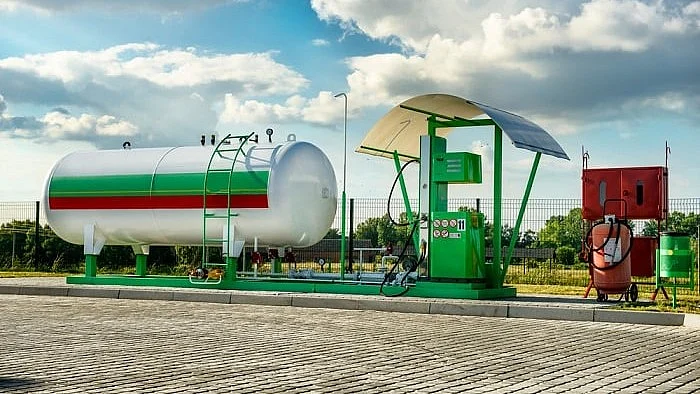

The Centre is planning to expand ethanol's use beyond transport, with a policy framework that could introduce ethanol-powered cooking stoves and dedicated dispensing stations.
India's rapidly expanding ethanol production capacity has created a sizeable surplus.
Ethanol is also set to play a larger role in aviation and automobiles, with Sustainable Aviation Fuel (SAF) blending targets, ethanol-to-jet fuel projects and proposed CAFE-III norms supporting higher biofuel adoption.
After achieving its nationwide E20 petrol blending target ahead of schedule, the Centre is now looking to expand ethanol's role beyond automobiles, with plans to promote it as a household cooking fuel while creating new demand across aviation and export markets, according to a report by The Economic Times.
The government is reportedly working on a policy framework that would allow ethanol to be used as a mainstream cooking fuel. As part of the proposal, consumers could refill ethanol canisters through dedicated dispensing stations, or "ethanol ATMs", for use in specially designed cooking stoves.

1 September 2026
Get the latest issue of Outlook Business

Surplus Production Driving Policy Shift
India's ethanol production capacity has expanded rapidly over the past few years, creating a supply surplus that policymakers are now seeking to utilise.
According to a CareEdge Ratings report cited by The Economic Times, the country's annual ethanol production capacity has crossed 20 billion litres, with another 4 billion litres expected to be added during the current financial year.
Advertisement
While the government's E20 petrol blending programme consumes around 11 billion litres annually, industries such as liquor, pharmaceuticals and chemicals account for another 3-3.5 billion litres.
This leaves nearly 7 billion litres of annual production capacity unutilised.
The surplus has prompted the government and industry to explore new consumption avenues beyond fuel blending.
Cooking Fuel and Export Markets in Focus
One of the biggest initiatives under consideration is the use of ethanol as an alternative household cooking fuel to complement LPG.
The proposed retail network of ethanol dispensing stations would enable consumers to refill fuel canisters for ethanol-powered stoves.
Besides creating a new domestic market, the move could help reduce India's dependence on imported LPG and strengthen energy security.
Advertisement
Industry is also exploring export opportunities to countries such as Nepal, Bangladesh and Indonesia, which have ethanol blending targets but limited domestic production capacity.
Export demand could provide an additional outlet for India's expanding ethanol industry.
Aviation and Auto Sector to Boost Demand
Ethanol is also expected to play a growing role in India's sustainable aviation fuel (SAF) strategy.
The government has already approved a roadmap requiring 1% SAF blending in international flights by 2027, increasing to 2% in 2028 and 5% by 2030.
To support this transition, NTPC Green Energy and GPS Renewables are setting up India's first ethanol-to-jet fuel facility near Visakhapatnam, with an estimated annual production capacity of 1,800 tonnes.
The automotive sector is also being brought into the biofuel ecosystem. Draft Corporate Average Fuel Efficiency (CAFE)-III norms propose incentives linked to the use of ethanol and other biofuels, encouraging the adoption of flex-fuel vehicles capable of running on higher ethanol blends.

Feedstock Base Expands Beyond Sugarcane
India's ethanol programme has also undergone a significant shift in raw material sourcing.
While sugarcane was once the dominant feedstock, grain-based sources—particularly maize—now account for a larger share of ethanol production. The transition has diversified the supply chain, bringing grain processors into the country's expanding biofuel ecosystem alongside traditional sugar mills.