Missile strike hits Ras Laffan, disrupting Qatar’s critical LNG infrastructure.
Qatar supplies nearly 40% of India’s LNG imports.
Hormuz disruption threatens 60% LNG and 90% LPG supply routes.
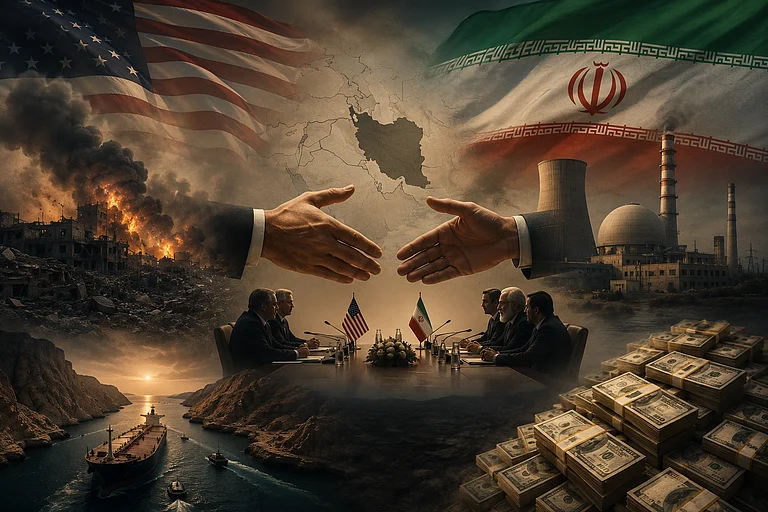
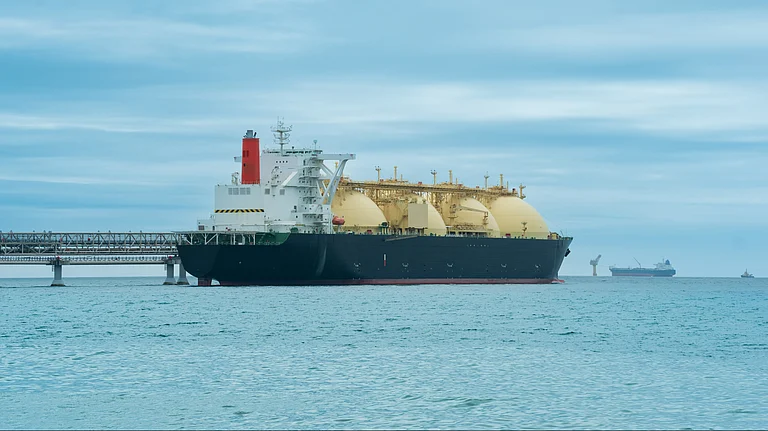
Iran responded to Israel's attack on South Pars, the world’s largest natural gas field, by firing five ballistic missiles at Qatar. One of the missiles hit Ras Laffan Industrial City, Qatar’s liquefied natural gas (LNG) infrastructure and one of the world’s most important energy export hubs.
State-run QatarEnergy confirmed that the Wednesday attack caused extensive damage to the Pearl GTL (gas-to-liquids) facility. In the early hours of Thursday, additional missile strikes hit LNG infrastructure in Ras Laffan, triggering major fires and further damage.

1 September 2026
Get the latest issue of Outlook Business

“If the facility is affected, it will affect us,” said Sujata Sharma, joint secretary at the Ministry of Petroleum and Natural Gas, as reported by Moneycontrol.
Iran has since warned it could expand its strikes to energy facilities in the United Arab Emirates and Saudi Arabia, raising fears of a wider disruption across the Gulf’s energy infrastructure.
Ministry of External Affairs spokesperson Randhir Jaiswal also called attacks against energy installations in Gulf region deeply disturbing.
"[It will] only serve to further destabilise an already uncertain energy scenario for the whole world. Such attacks are unacceptable and need to cease," he said during weekly press briefing.
Advertisement
Shadow Over India
The potential damage to Ras Laffan carries significant implications for South Asia, particularly India, given its deep reliance on Qatari LNG.
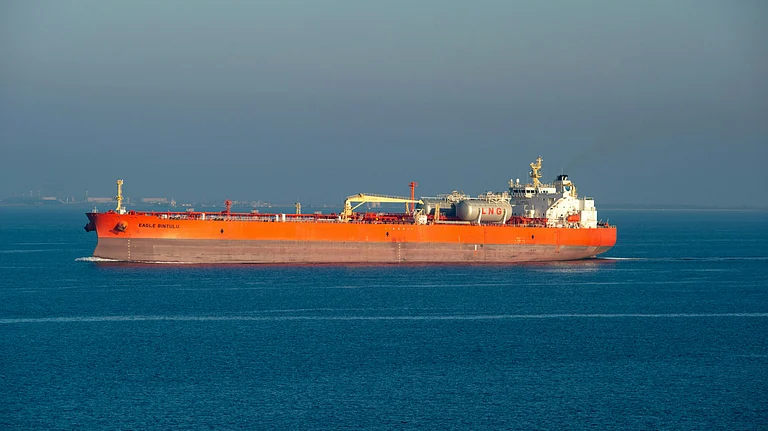
LNG is the backbone of trade ties between India and Qatar. Qatar has the world’s third-largest natural gas reserves while India is the fastest-growing energy market globally because of increased demand for cleaner energy sources. Qatar is now India’s largest and dominant supplier of LNG, accounting for nearly 40% of the country’s total imports, according to the Impact and Policy Research Institute, and almost all of it from Ras Laffan.
Advertisement
India depends on imports to meet over 88% of its crude oil requirement, 60% of its LPG needs, and around 50% of its natural gas requirement. Nearly 60% of India’s LNG and 90% of LPG imports come through the Strait of Hormuz. With the closure of the Strait of Hormuz and a production suspension by QatarEnergy, India already cut natural gas supplies to certain industries.
However, so far, the disruption from the conflict has largely been a supply chain problem for. But once energy infrastructures are targeted, the crisis will become a production issue.