Shell emerged as India’s largest LNG supplier after Qatari disruptions.
Rapid deployment of global supply network helped bridge sudden gas shortfall.
Shell likely to retain strong position in upcoming LNG tenders.
After Qatari liquefied natural gas (LNG) supplies to India stopped abruptly following Iran's retaliatory strikes on Gulf infrastructure, the country faced an immediate shortfall in the feedstock that keeps its fertiliser plants running, powers its city gas networks and fuels its industries. The company that moved fastest and most decisively to fill that gap was Shell.
PTI reported that the Anglo-Dutch energy major imported its largest-ever monthly LNG volumes into India in March, becoming the country's single largest supplier of imported gas in the process — a position it captured by deploying its global LNG portfolio and its fleet of more than 65 chartered carriers at a moment when most other suppliers were constrained by geography, shipping capacity or both.

1 October 2026
Get the latest issue of Outlook Business

Industry sources told the news agency that Shell secured 4trn British thermal units out of the 6 TBtu tendered in last month's bulk LNG procurement by Indian fertiliser companies — making it the dominant supplier in a tender the government moved urgently to fill as urea production came under pressure. The company also supplied gas to industrial users and city gas distribution retailers across the country.
Qatar supplies roughly 45-50% of India's LNG imports under long-term contracts — around 11.2 million tonnes of India's total annual imports of approximately 27 million tonnes. When QatarEnergy declared force majeure following Iran's strikes on Gulf infrastructure that housed US and allied troops, that volume vanished from India's supply picture almost immediately.
Advertisement
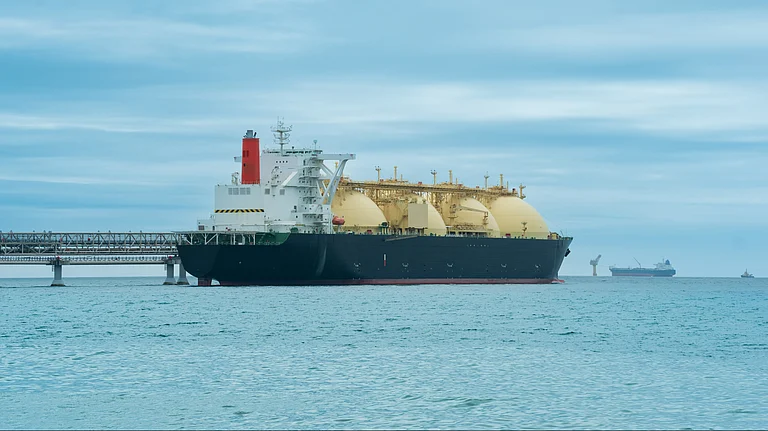
State-run firms including GAIL continued sourcing alternative cargoes from the US and Russia, but faced a critical constraint of shipping. LNG carriers from the US take up to 45 days to reach India, and available vessels were limited. Shell, the repot said, was relatively insulated from those constraints.
Its 5 million tonne-per-year import terminal at Hazira in Gujarat provided the receiving infrastructure, whilst its position as the world's largest LNG portfolio player — with access to supplies from Oman, Australia, Nigeria and beyond, combined with its own shipping fleet — allowed it to divert cargoes far more quickly than suppliers dependent on any single source or route.
Advertisement
The practical effect was a faster stabilisation of gas availability than might otherwise have been possible. Initially, industrial users faced supply cuts of up to 40% as gas was prioritised for fertiliser plants and city gas distribution networks.
But with alternative cargoes coming in, allocations were progressively restored. Urea plants, which had been operating at around 70% of their gas requirement at the height of the disruption, were receiving close to 90% from April 6 and approximately 95% from April 9.



City gas distribution and other industrial and commercial consumers saw an additional 10% increase in allocations from April 6.
Shell's elevated supply position is expected to continue into April. The company is likely to be a major bidder in a 10 to 12 TBtu fertiliser sector tender planned for mid-month — suggesting that what began as an emergency intervention may be solidifying into a more durable shift in India's LNG supply landscape, the report said.