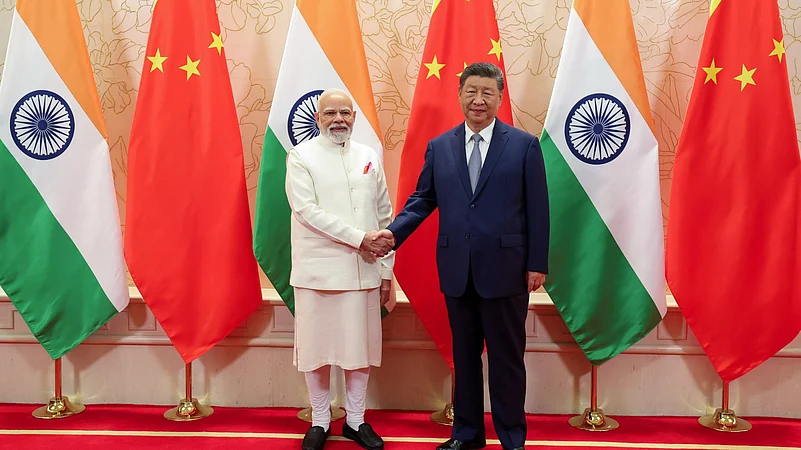

India has amended Press Note 3 of 2020, easing restrictions on Chinese FDI in select sectors after six years
Investments in electronics, capital goods, and solar manufacturing will be processed within 60 days, with Indian majority ownership mandatory
The move aims to attract capital and technology while maintaining safeguards amid improving India–China economic engagement
The Indian government has approved changes to foreign direct investment (FDI) policy governing investments from countries that share a land border with India. The move will create a pathway for Chinese investment to flow into critical manufacturing sectors.
The decision, taken by Prime Minister Narendra Modi's cabinet, has approved changes aimed at clarifying the provisions of Press Note 3 (PN3) while enabling smoother investment flows into key manufacturing and high-technology sectors, including electronics, capital goods, and solar cells.
In a statement, the government said the revised policy is designed to strengthen domestic manufacturing and make the business environment more investor-friendly.

1 September 2026
Get the latest issue of Outlook Business

"The amendments in the FDI Policy aim to unlock greater FDI inflows from global funds for start-ups and deep techs, take forward the agenda of ease of doing business," the statement read. This comes amid rising demand from industry that heavily relies on Chinese cutting-edge technology and capital.
The primary goal of easing restrictions is to free up Chinese investments that had stalled since 2020. As per data, FDI from China plunged sharply from $163.8 million in FY2020 to just $2.7 million in FY25. But technically, the policy extends to all bordering nations, including Bhutan, Pakistan, Nepal, Mayanmar, and Bangladesh.
Advertisement

What's New in Press Note 3?
Under the new rules, the government has introduced the definition and criteria of determining "beneficial owner", which will now align with the definition used under the Prevention of Money Laundering Rules, 2005. "The Beneficial Ownership test shall be applied at the level of the investor entity", it said.
The government also stated that investors with non-controlling LBC (land-bordering country) Beneficial Ownership of up to 10% shall be permitted under the automatic route as per the applicable sectoral caps, entry routes, attendant conditions.
Advertisement
And such investments shall be subject to the reporting of relevant information/details by the investee entity to DPIIT, it added.
In addition, proposals for LBC investments in specified sectors of manufacturing like capital goods, electronic capital goods, electronic components, polysilicon and ingot-wafer, shall be processed and decided within 60 days.
"CoS under the Cabinet Secretary may also revise the list of specified sectors," the government said.
Why India Introduced PN3
Press Note 3 was initially introduced in April 2020 during the COVID-19 pandemic to protect Indian companies and prevent opportunistic or hostile takeovers at the time of economic vulnerability. The policy required investments from countries sharing a land border with India to undergo government approval.
The government noted that the previous rules were limiting investment in situations where investors from neighbouring countries held only small or non-controlling stakes, including through international private equity and venture capital funds.
It is important to note that 2020 was the year when friction between India and China intensified during the Galwan Valley clash. The incident prompted New Delhi to tighten scrutiny of investments from Chinese companies.
The clash along the Himalayan frontier resulted in the deaths of 20 Indian soldiers and four Chinese soldiers. Following the new security clearance requirements for Chinese entities, several investment plans stalled, including China’s 2023 proposal to invest $1 billion in an electric vehicle joint venture.
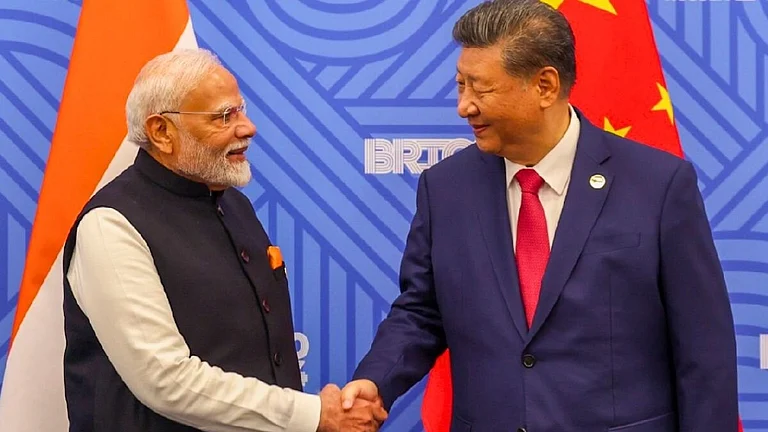
Prime Minister Narendra Modi visited China last August after seven years and met Chinese President Xi Jinping to discuss ways to improve bilateral ties. Following the de-escalation of tensions and improving relations, New Delhi and Beijing have since resumed direct flights and eased visa procedures.
Some media reports stated that India has also eased restrictions on the procurement of Chinese equipment by state-owned power and coal companies.
Why Chinese Investments Are Vital for India
India offers large and expanding consumer market for China as the Chinese entities deal with sluggish domestic growth and increasing trade barriers. For India, Chinese firms are valuable partners in accelerating manufacturing and scaling production capacity. The easing of restrictions will help leverage foreign capital and increase domestic production rapidly and eventually reduce import dependence.
“From an investment perspective, this move could unlock capital flows into startups, deep-tech ventures, and manufacturing value chains such as electronics components and solar supply chains,” Rahul Turki, Partner and Global Value Ecosystem Leader at Grant Thornton Bharat, said.
“India’s recalibration of Press Note 3 signals a shift from passive deficit management toward a more deliberate strategy of fostering strategic partnerships,” Kumudini Bhalerao, senior partner MMJC and Associates said.
Bhalerao also added that the proposed easing may be better understood not as an indiscriminate opening, but as a calibrated “trade-for-investment” approach.


With this move, BDO India's Prashant Bhojwani says that the pending investment and business plans can also be activated.
This change is particularly relevant for the electronics and renewable energy sectors, where Indian manufacturers have been advocating for minority JVs to gain the technical "know-how" necessary to scale up domestic production.