The government is reportedly rethinking its approach to Chinese investments.
This follows remarks by government officials in November indicating openness to feedback on easing Press Note 3 (PN3).
Any changes are aimed at improving India’s investment climate while balancing national interests.
The Union government is reportedly rethinking its strategy on financial investments and government procurement from China as it looks to expand India’s manufacturing capacity and create more jobs. This comes after government official said in November last year that they were open to considering feedback on easing Press Note 3 (PN3) to create a better investment climate in India.
According to a Moneycontrol report quoting government officials, the government has a “strong understanding” that investments which create jobs and build domestic capacity should be welcomed. The officials told the portal they are open to considering investments that generate meaningful employment and facilitate technology transfer. However, they added that any reassessment would exclude sensitive sectors such as telecom, defence and strategic infrastructure.

1 September 2026
Get the latest issue of Outlook Business

The report added that India may selectively ease rules in sectors that can benefit from foreign capital and technology without diluting safeguards, including areas such as renewable energy and advanced manufacturing. Some procurement curbs on Chinese participation imposed since 2020 could also be relaxed to address project delays, though any changes would remain subject to national security considerations and are still under review.



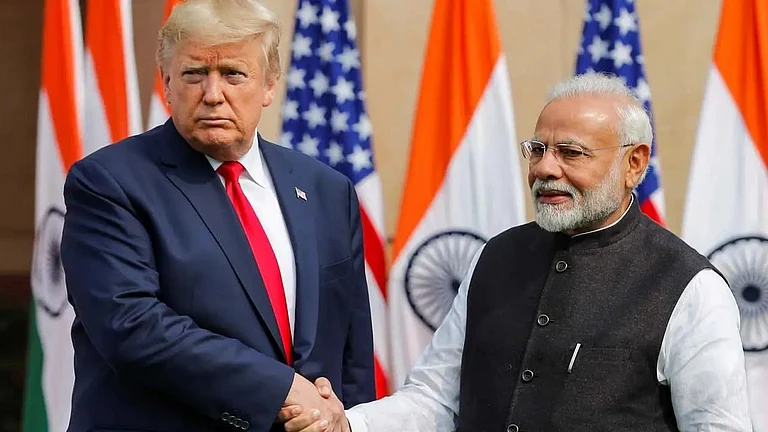

Outlook Business in November reported that the government was open to suggestions on Press Note 3. At the time, a senior government official familiar with the discussions had said, “We are open to all suggestions regarding investment in India. But every decision must be weighed carefully so that the nation’s interest is balanced with ease of doing business.”
Advertisement
Press Note 3, rolled out in April 2020 after border clashes with China, mandates prior approval from multiple ministries for investments by entities based in countries that share a land border with India. While conceived as a protective mechanism, it has also added friction to the investment process.
Even as India positions itself as an attractive destination for global capital, foreign investment continues to face long-standing challenges, including procedural delays and geopolitical sensitivities, a trend reflected in official data. Gross FDI inflows rose 14% to $81 billion in the last fiscal, but foreign companies repatriated $51 billion during the same period. Combined with record overseas investments by Indian firms, net FDI plunged 96% to $0.4 billion in FY25.
Advertisement
The pressure persisted into the current fiscal, with India posting a negative net FDI of $616 million in August 2025, marking the second month of net outflows in FY26 after a marginal deficit in May.
That said, the longer-term trajectory remains favourable. India’s FDI inflows have risen nearly 20-fold since FY01, reaching a cumulative $1.09 trillion between April 2000 and June 2025.