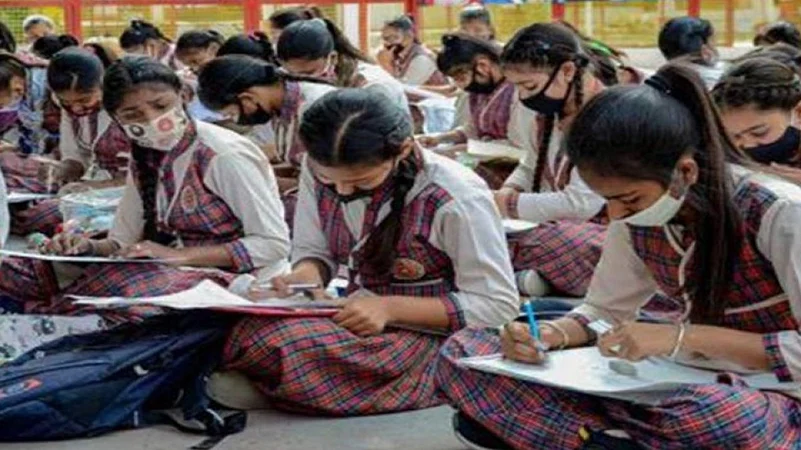
The Indian workforce continues to be affected by skill gaps and low education levels, reports said. Nearly 73% of the workforce in India only have ‘up to basic education’ and employability rate among the youth is stalled at 54.8%, data shared at the 5th National Conference of Chief Secretaries showed. The data comes at the backdrop of Indian IT and engineering companies report a near 63% ‘talent shortage’ while futuristic sectors await adequately skilled workforce, media reports said.
The three day conference concluded on 28 December and discussed key areas to develop ‘Human Capital for Viksit Bharat’ and addressed the challenge of ‘demographic dividend as the Indian youth population heads to peak working age in 2030 at 68.9% and is expected to hit 112 crore in 2047, a report by The Economic Times said.
Recommendations at the conference underscored education level in the country. The suggestions aimed at raising literacy level to 100% from the current 81%, significantly increasing female labour force participation, currently at 31%, and a shift to formal skilling and 21st century skills from agricultural sector. A presentation by the Ministry of Education showed that India’s labour productivity is stuck at 10.68. Labour productivity is measured as GDP per hour worked. To compare, Russia has a labour productivity of 44.31 while US has 81.8 labour productivity. Emerging economies such as Brazil report labour productivity at 22.
As per the data, each additional year of schooling is said to lead a 0.37% increase in GDP. India has 13.37 years of schooling, compared to 14.91 years and 15.92 years for Russia and the US, respectively. Brazil has 15.79 years of schooling. According to the ET report, the recommendations by the secretaries suggested that if India is able to extend its expected years of schooling to 18 years, it will add nearly ₹6.12 lakh crore to the GDP, 1.85% higher than the current GDP. Though number of years of schooling does not directly add to GDP mechanically, they raise human capital, which improves labour productivity and gradually increases output per hour worked.
Advertisement

1 September 2026
Get the latest issue of Outlook Business

Over 73% of working population in India have less than basic education, 47.7% only had basic education. 11.9% of the working population has ‘intermediate’ education levels while 13.8% have ‘advanced’ educational levels. In contrast, even Brazil has 8% of its working population in less than basic levels and 18.4% at basic and around 47.5% at intermediate level of education while 25.2% are at advanced level, the ET report said. As per data revealed at the meeting, of the 15 crore worked joined the workforce between 2017-18 and 2023-24, 40% are self employed, 37.3% are helpers in household enterprises, only 18% are salaried and 4% are casual laborers.