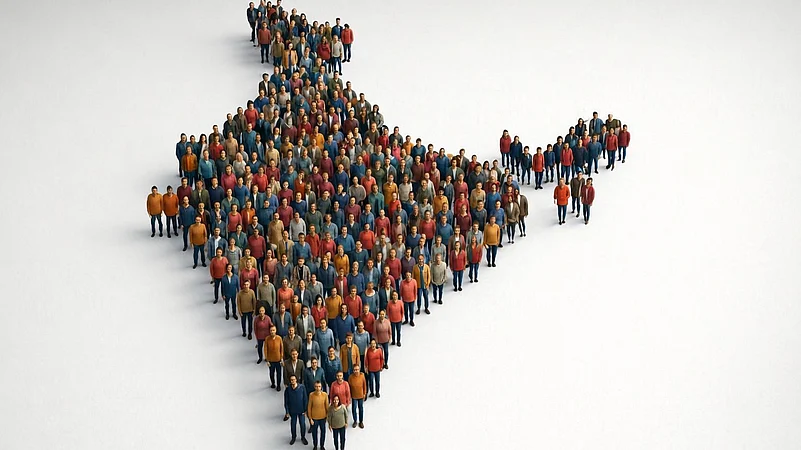
India has begun the first phase of its long-delayed census today, covering the entire country, which could reshape welfare programs and political representation.
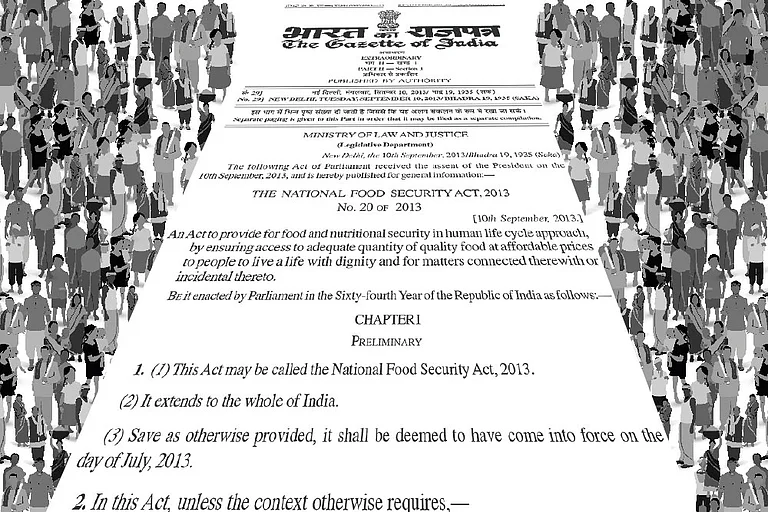
As highlighted by Outlook Business in an earlier feature, "The Nowhere Men & Women," over 140mn citizens have been excluded from essential welfare programs like the public distribution system (PDS) due to reliance on outdated data from the 2011 census. This exclusion underscores the critical need for accurate and current population data to inform policy-making and resource allocation.
This marks the world’s largest population census exercise and the first to be conducted digitally. The two-phase exercise--House Listing (HLO) and Population Enumeration (PE)--will involve over three million people spending a year counting every citizen with March 1, 2027, fixed as the reference date.

1 September 2026
Get the latest issue of Outlook Business

The country held its previous census in 2011, which recorded a population of 1.21bn. The new census had been planned for 2021 but was postponed due to the COVID-19 pandemic and logistical challenges. According to the United Nations Population Fund, India's population reached 1.4bn in 2023, overtaking China.



In order to ease the process, the facility of self-enumeration is available to citizens to fill in their information as per their convenience. It is a new web-based facility which allows citizens to provide their household information online before an enumerator visits. Through this, respondents can fill out the census schedule at their own convenience in any of the 16 available languages.
Advertisement
The first phase of the count will roll out around the country through September. The second phase to be conducted from September to April 1 next year, will record more detailed information like people's social and economic characteristics, including religion and caste.
The government’s decision to include caste enumeration in the upcoming census — a long-standing demand championed by the opposition — comes just months before a high-stakes Assembly election in Bihar. Over 63% of the state's population belongs to Extremely Backwards or Backwards Classes, making the move politically significant.