




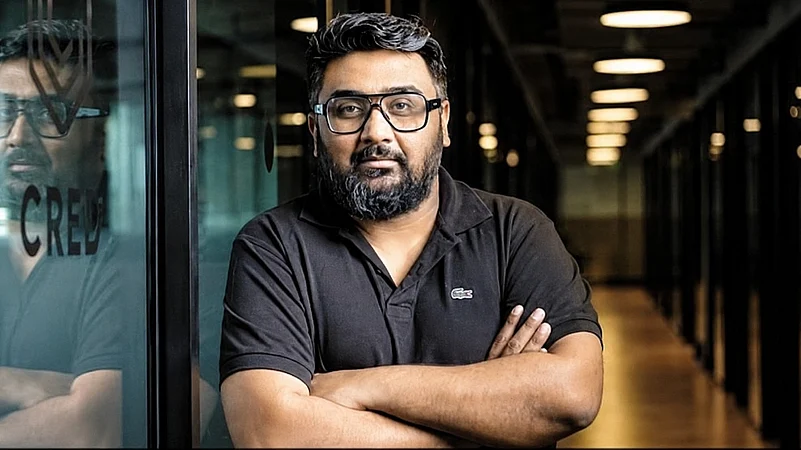

Kunal Shah’s appointment to helm WhatsApp comes as Meta seeks to turn the messaging giant into a fintech and commerce engine
CRED’s value lies less in tech than in its engaged, financially active users and the trust Shah commands
Challenge is to fix WhatsApp’s monetisation and adoption gap while preserving its simplicity, privacy and regulatory compliance
Meta's investment in CRED and the appointment of founder Kunal Shah to lead WhatsApp has triggered a larger debate in India's technology and fintech ecosystem. The question now arises is whether the entrepreneur who built a premium fintech brand around exclusivity unlock revenue from one of the world's largest mass-market platforms.
The move is being viewed by many as less of a conventional investment and more of a strategic bet on Shah himself.

1 September 2026
Get the latest issue of Outlook Business

The challenge before him is formidable. WhatsApp has over three billion users globally and remains deeply embedded in daily life across markets such as India, yet its ability to monetise that scale has lagged far behind its influence.



Bet on Kunal Shah More Than CRED
Industry experts broadly agree that Meta's interest extends beyond CRED's financial products. Experts say that CRED's biggest asset is not its technology stack but the highly engaged and financially active consumer base it has cultivated over the years.
Advertisement
"Meta continues to see India as one of its most important strategic markets," said Shafi Shoukath, Founder and Chairman of iQue Ventures. However, the company is "also betting on Kunal Shah himself" because of his understanding of consumer behaviour, engagement and trust, he added.
"Meta isn't buying CRED for credit cards or rewards. Meta is buying trust," said Jeet Chandan, Group Managing Director, BizDateUp. India has over a billion users, but "in financial services, trust is the real currency," Chandan said.

The appointment comes at a time when WhatsApp is seeking new avenues of growth beyond messaging. While the platform dominates communication globally, monetisation has remained a persistent challenge.
Advertisement
WhatsApp's Revenue Problem
Despite serving billions of users, WhatsApp remains one of Meta's least monetised assets.
Its business model currently relies on four key pillars: business messaging through the WhatsApp Business API, click-to-WhatsApp advertisements from Facebook and Instagram, merchant payment services, and Meta Verified subscriptions.
Yet India's experience illustrates the challenge. Despite having hundreds of millions of users, WhatsApp Pay continues to command only a tiny share of the country's UPI ecosystem, which remains dominated by PhonePe and Google Pay.
The platform is already generating revenue but remains "significantly undermonetised relative to its scale," said Salman Waris, Founder and Managing Partner at TechLegis.
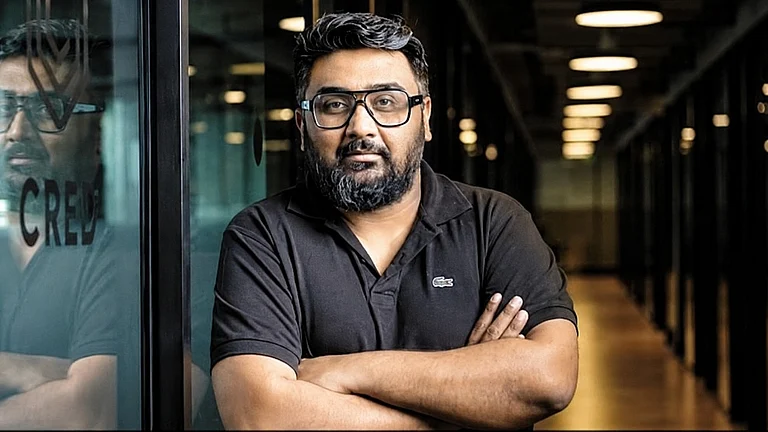
"The gap between what WhatsApp earns today and what it could earn is not a product problem — it is a monetisation and adoption problem," he said.
That challenge now lands on Shah's desk.
The CRED Contradiction
Ironically, Shah arrives at WhatsApp with a mixed record in payments. CRED successfully built one of India's most recognisable fintech brands and expanded into lending, wealth management and insurance. However, its premium positioning limited its reach in the country's mass-market payments ecosystem.
The company once emerged as the fourth-largest UPI platform by transaction value but has steadily lost ground to larger rivals. While its lending business has helped drive revenue growth, CRED has struggled to convert brand affinity into dominant market share.
This raises an important question: can strategies that worked for a niche affluent audience be replicated across a platform used by billions?
Kaushik Moitra, Partner at Bharucha & Partners, sees this as a fundamental product challenge. "This is not just a leadership transition, it is a product philosophy stress test," he said.
"If Meta wants to turn WhatsApp into a stronger fintech and commerce engine, the challenge will be proving that scale in messaging can actually convert into scale in monetisation, something the industry has repeatedly found harder than expected," Moitra explained.
Monetisation Without Breaking Trust
Experts believe the biggest obstacle is preserving WhatsApp's core identity while introducing new revenue streams.
WhatsApp's users have historically accepted the platform because it remains simple, private and largely free from the advertising clutter seen on other social networks.
Any attempt to aggressively introduce commerce, financial products or advertising risks changing that perception.
"Immediately, he has to find revenue within WhatsApp without eroding the trust that is its only real asset," said Saahiba Bhatia, Founder of Apartment Eleven Eleven.
The moment users feel they're being overwhelmed with ads, unwanted promotions, or unnecessary complexity, there could be pushback, Shafi Shoukath, Founder and Chairman, iQue Ventures, echoed those concerns.
Regulation Could Be an Even Bigger Test
Beyond product strategy lies a complicated regulatory landscape. Expanding WhatsApp's role in payments and digital services will require balancing commercial ambitions with privacy obligations and governance requirements.

The opportunity lies in deepening business messaging, payments and adjacent digital services, but that must be balanced against privacy expectations, data governance obligations, and consumer protection considerations, Moitra noted.
Waris added that the transaction itself sits at the intersection of foreign investment regulation, competition law and financial-sector oversight. He argued that policymakers may increasingly need to examine broader questions around ownership and governance of digital financial infrastructure.
From Messaging App to Financial Super-App?
For Meta, the long-term ambition appears clear. Several experts believe the company wants WhatsApp to evolve beyond communication into a platform for payments, commerce and financial services.
Whether Shah succeeds will depend on his ability to solve a problem that has challenged global technology companies for years: converting engagement into revenue without losing the trust that created that engagement in the first place.
That balancing act — not user growth — may ultimately define Kunal Shah's tenure at WhatsApp.
The real opportunity lies in turning WhatsApp into "India's largest financial operating system," Chandan argued.









