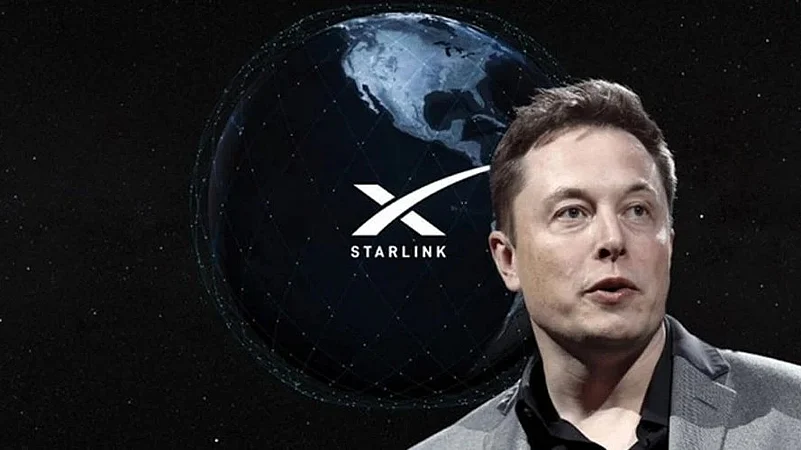

Starlink’s advanced satellite services, including D2D connectivity, are not coming to India yet after IN-SPACe rejected its Gen 2 constellation plan.
India has cleared only Starlink’s basic Gen 1 satellite broadband services, while newer phone-to-satellite offerings remain barred.
The government and telecom regulator are still debating rules, spectrum bands and pricing for D2D services.
Elon Musk's satellite telecom operator, Starlink, will need to seek fresh regulatory approvals to offer advanced satellite services including direct-to-device (D2D) connectivity and broadband from space in India. This comes as the country’s space regulator, Indian National Space Promotion and Authorization Centre (IN-SPACe), rejected part of its application, according to Economic Times (ET) report.
IN-SPACe reportedly declined Starlink’s proposal for its second-generation (Gen 2) satellite constellation, citing that it did not meet certain technical requirements and sought to use frequency bands that are not currently permitted in India.

1 September 2026
Get the latest issue of Outlook Business

Notably, Starlink had applied for approval to deploy both its Gen 1 and Gen 2 low-earth-orbit (LEO) satellite constellations to begin commercial operations in the country. While IN-SPACe cleared the Gen 1 constellation, comprising 4,408 satellites that support traditional satellite broadband, it did not grant permission for the more advanced Gen 2 system, the report added.




Advertisement
Additionally, IN-SPACe Chairman Pawan Kumar Goenka had confirmed to ET recently that the regulator has not approved Starlink’s Gen 2 application.
When Starlink first submitted its application around three to four years ago, technologies such as direct-to-device connectivity were still evolving and were not widely in use. Since then, the technology has advanced rapidly, prompting satellite companies to explore offering mobile connectivity directly to smartphones without relying on ground-based telecom towers.
However, India currently does not allow D2D satellite services, as there is no regulatory framework in place. The Department of Telecommunications (DoT) is still deliberating on how such services should be governed and is expected to refer the matter to the Telecom Regulatory Authority of India (TRAI) to examine pricing, licensing and operational issues, according to ET.
Advertisement

The DoT and TRAI also need to finalise which spectrum bands can be used for D2D services. Discussions are underway with key stakeholders, including telecom operators, handset manufacturers, operating system providers and satellite communication firms.
India’s telecom companies have consistently raised concerns that D2D satellite services could disrupt their business and have urged the government to ensure that satellite operators follow rules similar to those imposed on traditional telcos if they are allowed to offer mobile connectivity.
Globally, countries such as the US, Canada and Australia have already introduced rules to extend mobile coverage using satellite services. In the US, Starlink has partnered with T-Mobile to allow mobile phones to connect directly to satellites in areas with little or no cellular coverage.