Rasna is betting on premium and low-sugar beverages as key growth drivers after its ₹350 crore Jumpin acquisition in 2025.
The company launched a 1-litre premium Jumpin range in July.
Premium products target online shoppers, while low-sugar offerings are gaining traction among younger consumers, says Piruz Khambatta.
Rasna International is stepping up its push into premium packaged beverages following its ₹350 crore acquisition of ready-to-drink brand Jumpin from Hershey India last year. In July, the company introduced a 1-litre premium version of its Jumpin juice range. All Jumpin products contain around 7% sugar, compared with roughly 12-15% across much of the broader beverage industry, according to Piruz Khambatta, Group Chairman of Rasna International.
“These two things can be a good growth lever for us,” Khambatta told Outlook Business, explaining that premium products are aimed at consumers shopping through modern retail and online platforms, while low-sugar products are gaining traction among the younger consumers.

1 October 2026
Get the latest issue of Outlook Business

“We had always said that we would be coming out with variants,” Khambatta said. The original Jumpin range was designed largely for rural and traditional retail markets, with ₹10 and ₹20 price points and flavours such as orange, mixed fruit and mango.


However, the company subsequently identified growing demand for premium products from e-commerce and modern trade channels. This has prompted Rasna to develop products tailored to individual retail formats rather than relying on a single product across channels.
Advertisement
“For e-commerce, we have come out with a premium version of Jumpin, which is basically a nectar with higher fruit content,” Khambatta added.
The 1-litre pack is already available across major e-commerce platforms, including Blinkit, BigBasket, Flipkart, Amazon and Zepto. Rasna is also looking to expand its presence in organised retail, with the product expected to enter Reliance and D-Mart, alongside other large supermarkets and standalone stores. Khambatta said the strategy reflects a broader shift in the retail market, where different channels are increasingly demanding products designed specifically for their customer base.
Earlier, the company introduced a 750-gram pack specifically for D-Mart and a 400-gram pack for Reliance.
Advertisement

Alongside premiumisation, Rasna is betting heavily on reduced-sugar products, particularly as health consciousness grows among Indian consumers. The company has opted to replace part of the sugar with sweeteners rather than position the products exclusively as 'diet' beverages. The reduced-sugar proposition has also been extended across Rasna’s portfolio, including its ₹2, ₹5 and ₹10 packs, while its concentrate range is available without added sugar.
“We have decided that we will give people non-sugar options,” Khambatta said, adding that consumers should ultimately be allowed to choose between regular and reduced-sugar products.
The company believes this approach could help it tap into growing demand for healthier beverage choices without alienating consumers who continue to prefer conventional products.
Khambatta, however, acknowledged that reduced-sugar beverages face a perception challenge in India. Some consumers continue to associate low-sugar products with medicinal or diabetes-oriented offerings, while others remain sceptical about the use of sweeteners. Rasna is therefore attempting to balance health positioning with mainstream appeal. The company is using sweeteners such as stevia and sucralose in its reduced-sugar offerings, while also increasing consumer communication around the category.
Khambatta said the traction already being seen for low-sugar products indicates that consumer demand is emerging, particularly online. The next step, he believes, is greater awareness and promotion to make reduced-sugar beverages a mainstream choice rather than a niche or “medicinal” product.
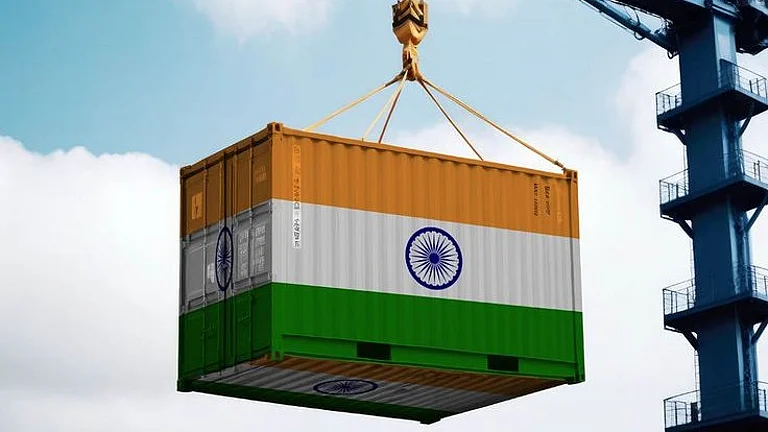
West Asia Crisis Hits Exports
Exports account for around 30% of Rasna’s overall business. According to its Chairman, the ongoing conflict in West Asia has affected the company’s exports, although he did not disclose the extent of the potential impact on its FY27 growth.
“The geopolitical situation is such that nobody can predict what will happen tomorrow. I don't want to make any predictions,” Khambatta said. He explained, however, that the conflict has led to a sharp increase in logistics costs for the company. Khambatta pointed to the dramatic increase in container freight rates to Dubai as an example. A container that Rasna had previously exported for as little as $90, and typically at around $300, now costs the company about $4,000.
“We had a whole range of new products that we were planning to launch in Dubai, but that market has been affected for almost a year,” he added.
As an alternative, the company is looking to expand its export opportunities in Africa and other markets.
“For all Indian food exporters, West Asia has traditionally been one of the biggest markets. When that market will improve, nobody knows. But the good news is that Indian companies have been growing in Africa for several years, and that growth is gaining momentum,” he said.
The company is also a recipient of the Production Linked Incentive (PLI) scheme. Rasna’s Chairman said the company has made representations to the government to extend the benefits of the PLI scheme for the food-processing industry by another one or two years, citing the disruptions caused by the ongoing geopolitical situation.