Personal guarantees may give banks a legal right to recover, but Chandra’s case shows how little they may recover in practice
Creditors can enforce personal guarantees, but tracing and recovering the guarantor’s assets remains difficult
Lenders had roughly recovered only 1% of admitted claims showing the enforcement gap in personal guarantor recovery
On August 25, the Delhi bench of the NCLT, through a third-member opinion resolving an earlier tiebreaker, approved the repayment plan in the personal-guarantee insolvency case of Subhash Chandra.
The ruling attracted attention as the Essel Group chairman and Zee founder will pay only ₹6.25 crore to creditors against admitted claims cited in the proceedings at around ₹22,006.57 crore, with another ₹25 lakh towards insolvency process costs. The liabilities and recovery rights against the principal borrowing entities remain separate from Chandra's personal repayment plan.

1 October 2026
Get the latest issue of Outlook Business

A day later, Chandra was all over almost every business channel and social media, with a contested line that Subhash Chandra had settled a ₹22,000-crore debt for ₹6.25 crore.


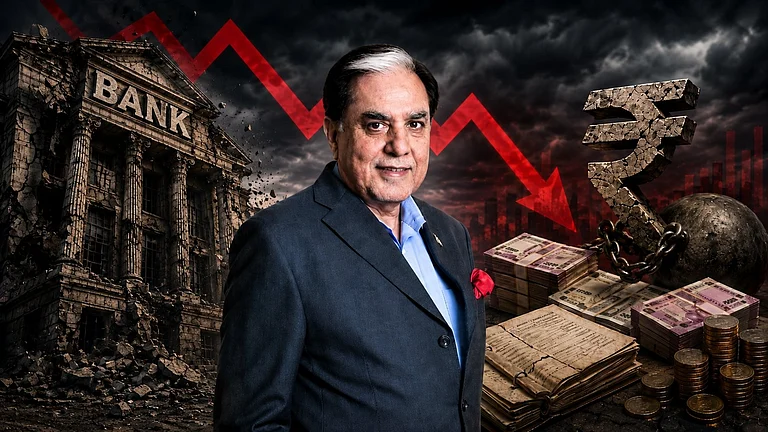

From CJP fame Abhijeet Dipke to Leader of Opposition Rahul Gandhi, fugitive businessman Vijay Mallya and RPG chairman Harsh Goenka, all weighed in, mainly criticising what they saw as the government apparently favouring a businessman who was once elected as a Rajya Sabha MP with BJP’s support and whose media house was seen as supportive of Modi's 2014 campaign.
To defend himself against what was being reported as a 99.97% haircut (which Jairam Ramesh, taking a jab, called a "mundan") Chandra himself had to come out and reject the ₹22,000-crore framing point by point. He invoked Dhirubhai Ambani and warned Mukesh Ambani not to spread misinformation about him through the latter’s Network 18 Group channels like CNBC-TV18.
Advertisement
The repayment plan also referred to around ₹1,494 crore that Chandra proposed to facilitate from the principal borrowers. But this was not an assured recovery: LIC Housing Finance argued before the NCLT that the principal borrowers were not bound by Chandra's personal repayment plan and there was no certainty that these payments would be made.
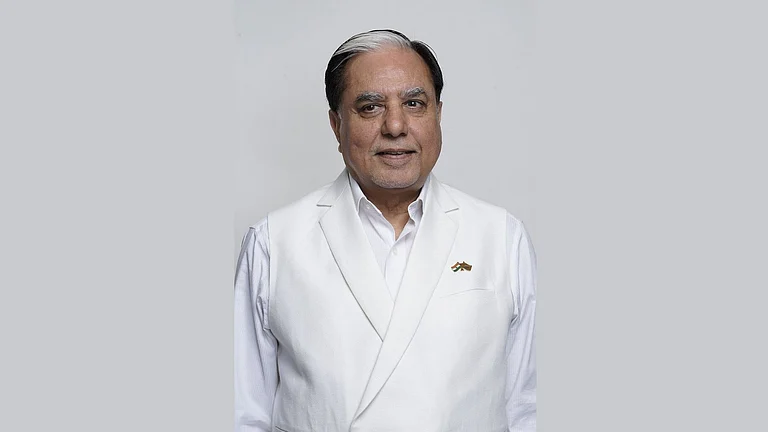
When a Company's Debt Becomes a Guarantor's Liability
The reason lenders can proceed against Chandra even though the loans were taken by corporate entities is simple: Chandra was the guarantor, and a guarantor's liability is treated as coextensive with that of the borrower.
Advertisement
Under a personal guarantee, a lender gives a loan to an entity under the promise that if the borrower does not repay, the lender can recover the money from the guarantor. But a personal guarantee is not only about giving the bank another avenue of recovery. It is also meant to align the promoter's incentives with those of the lender.
As Soumya Singh, Co-Founding Partner at Thistle&Law, explains: "Banks take personal guarantees to ensure that the promoter has personal economic skin in the game and does not treat corporate default as a ring-fenced company problem." In theory, she adds, it also strengthens lenders’ negotiating leverage and discourages asset diversion.
That brings the real question into focus, not how much the companies owed their creditors, but how much can actually be recovered from Chandra as a personal guarantor. In other words, how far does a guarantor's liability extend, and what happens if a guarantor misrepresents his net worth during the insolvency process?
The proceedings show that the guarantee is a separate and enforceable claim that can sit alongside recovery against the corporate borrower rather than necessarily behind it.
Section 128 of the Indian Contract Act states this in plain terms, and the Supreme Court confirmed in Bank of Bihar Ltd v. Damodar Prasad, that a bank need not first exhaust its remedies against the company or its security before proceeding against the guarantor.
The reason is practical. Corporate collateral tends to lose value at exactly the moment a company runs into trouble. Plant, receivables and inventory of a distressed business rarely hold their book value once default sets in.
As Advocate Ishaan Mukherjee, the founder of AIM Legal and a specialist in insolvency, bankruptcy and white-collar crimes, puts it, "A personal guarantee, by contrast, reaches assets that sit outside the company altogether, such as personal real estate, listed shares and other assets held by the guarantor."
Chandra, in his statements after the ₹22,000-crore figure went viral, has also argued that he is held accountable only for the portion of the claims represented by around 20% of creditors who did not vote in favour of the resolution, amounting to around ₹4,000 crore.
Chandra’s reading of the Code has not been tested fully yet. What the courts have settled is the neighbouring question: whether a guarantor stays on the hook at all once the borrowing company's own insolvency has run its course.
In Lalit Kumar Jain v. Union of India, the Supreme Court made it clear that approval of a resolution plan for the company does not, by itself, discharge the personal guarantor. The guarantor's liability can continue independently of what happens to the company.
Structural Weakness Exposed by Chandra and Earlier Cases
However, the Chandra proceedings, and several others like it, show what that right is worth in practice.
According to the IBBI's Quarterly Newsletter for April to June 2026, lenders had roughly recovered only 1% of admitted claims (₹234.56 crore across 64 personal guarantor resolutions since the framework became operational in FY20) showing the enforcement gap in personal guarantor recovery.
In Chandra’s own case, the statement of affairs placed in the proceedings disclosed assets of approximately ₹31.79 crore, a fraction of the ₹40,000 crore net worth mentioned in certificates furnished to RBL Bank and Canara Bank in FY18.
The reason for the poor recovery is partly one of timing: a guarantee is only as valuable as the assets that stand behind it. By the time a large corporate borrower defaults, the promoter's wealth may already have been pledged to other lenders, moved earlier or genuinely lost as the business declined.
While there are allegations that Chandra downplayed his net worth to escape guarantor liability, the case also highlights a broader weakness in the system. The case simply put an unusually large and unusually public number on a concern that has existed for years.
On design, repayment plans under the current framework are essentially proposals put forward by the guarantor and voted on by creditors, rather than obligations independently investigated and enforced by a court.
The liability itself cannot be bargained down, but some guarantors can shrink what is available to meet it, pointed out Raheel Patel, Partner at Gandhi Law Associates. "What can shrink is the personal estate available to meet it, through assets held via family, trusts, offshore entities or group companies, equity pledged to one lender and invoked to the exclusion of others, or settlements with individual lenders before any collective process begins."
The Code does provide safeguards against some of these transactions. Sections 164 and 165 allow certain undervalued transactions and preferential payments to be unwound, subject to prescribed look-back periods. But, as Tejbir Singh, Managing Partner at T&R Law Offices, points out, "those powers lie with the bankruptcy trustee and come into play only after a repayment plan fails or is rejected." The result, he says, is that "the law as it stands today does little to close that window during the repayment plan stage itself."
The concern was visible in Chandra's own proceedings. Canara Bank raised over undervaluation of assets after a Lutyens' Delhi property was reportedly sold for around ₹1,260 crore, a value that appeared higher than the value disclosed for a similar asset in Chandra's statement of affairs.
The tribunal, however, rejected the allegation of asset suppression, accepting Chandra's explanation that the property belonged to a separate company and holding that a newspaper report alone could not establish suppression. The episode nevertheless shows the difficulty of testing such questions at the repayment-plan stage.
Chandra is not the only promoter these provisions are being tested on. Industrialist Anil Ambani offers a current example. On June 11, 2026, the Mumbai Bench of the NCLT admitted a Section 95 application filed by the State Bank of India against Ambani over an alleged default of ₹853.25 crore linked to personal guarantees he had given for loans to Reliance Communications and Reliance Infratel. Ambani has challenged the admission order before the NCLAT, where the matter is pending.
Vijay Mallya is also mentioned in this connection, though his defaults predate the personal-guarantor provisions and his personal insolvency ran in the UK. What his case does illustrate is the difficulty creditors face when assets move while recovery is underway: the Supreme Court found him guilty of contempt in 2017 over the disclosure and transfer of assets.
The Audit That Was Offered and Never Taken
The key question in all this is what anyone in the process could have done about the differences in net worth. According to the law, a bankruptcy resolution professional must verify claims, obtain relevant information and examine the guarantor's financial affairs, but does not have a general statutory power to order a forensic audit, appoint an asset-tracing agency or conduct an unrestricted investigation into all of the guarantor's historical financial affairs.
That does not mean the tribunal can never order one. However, there is no fixed statutory threshold requiring a forensic audit, and the tribunal's power is discretionary, generally requiring credible material indicating fraud, suppression, collusion or a statutory breach. In Chandra's case, the tribunal did not find the material before it sufficient to warrant such an exercise.
There is, however, a crucial fact recorded in the proceedings: Chandra had agreed at the first meeting of creditors on September 18, 2024, to the appointment of an independent asset finder, forensic auditor or investigating agency to verify his personal assets. Chandra and the RP submitted that no creditor subsequently pursued that suggestion.
The order is now before the NCLAT, where Union Bank, LIC Housing Finance and Canara Bank have challenged the approval of Chandra's repayment plan.
The appeal could either leave the NCLT order intact, in which case the ₹6.25-crore recovery under the plan remains binding on creditors, or overturn the approval if the appellate tribunal finds that the creditors' voting or the treatment of entities linked to Chandra did not meet the requirements of the Code.
The appeal is not simply about whether Chandra pays ₹6.25 crore; it could determine whether the personal-guarantor resolution itself survives and, with it, how much scope creditors retain to pursue recovery from him.
Which leaves the banks with a question of their own to answer. If they believed Chandra's assets needed independent verification, why was the audit not pursued when, according to Chandra's submission, he offered to consent to one?
Going forward, the appeal could either leave the NCLT order intact, in which case the ₹6.25-crore recovery under the plan remains binding on creditors, or overturn the approval if the appellate tribunal finds that the creditors’ voting or the treatment of entities linked to Chandra did not meet the requirements of the Code.
The underlying corporate borrowers and securities already held by lenders would remain outside this outcome. The appeal, therefore, is not simply about whether Chandra pays ₹6.25 crore; it could determine whether the personal-guarantor resolution itself survives and, with it, how much scope creditors retain to pursue recovery from him.