Major Indian banks have suggested a "Yes/No" confirmation prompt for certain high-risk UPI transactions as a way to fight rising digital payment fraud without disrupting the country's real-time payments system, according to a report by The Economic Times.
Banks are pushing for a software change that would ask payers to confirm peer-to-peer (P2P) transactions before the receiver's account is credited. If a customer selects "Yes," the payment goes through within seconds. If the customer selects "No," the transaction is cancelled. If the customer does not respond at all, the transfer still goes through, but only after a one-hour delay.
Notably, digital fraud cases rose from 2.6 lakh in 2021 to 28 lakh in 2025, while the value involved increased from ₹551 crore to ₹22,931 crore during the same period.

1 September 2026
Get the latest issue of Outlook Business

The suggestion was made in response to a Reserve Bank of India (RBI) discussion paper, which had proposed ideas such as lagged credit instead of instant credit to counter the rise in frauds linked to fake calls, coercion and deep-fake impersonation, the report said.


.jpeg?auto=format%2Ccompress&fit=max&format=webp&w=768&dpr=1.0)
Why Banks Prefer This Option
Many banks see the prompt as a better alternative to the uniform one-hour delayed credit suggested in the RBI paper. They worry that a blanket one-hour delay across all transactions could discourage people from using digital payments and push them back toward cash, according to the report.
Banks have also proposed limiting the prompt to only certain flagged transactions, rather than applying it to every payment above the ₹10,000 threshold mentioned in the RBI paper. The prompt would instead appear only for transactions showing unusual patterns, such as payments made at 2 am, transfers to a beneficiary the customer has never paid before, or transfers to newly opened bank accounts, which are often linked to money mule networks, the report said.
Advertisement
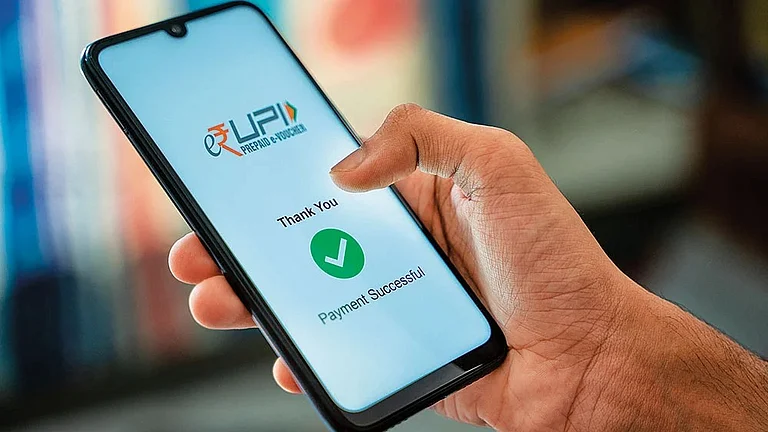
The RBI is reportedly serious about addressing the issue and is expected to release guidelines, or at least draft rules, soon. The matter was also discussed when an RBI deputy governor met with bank CEOs recently, the report said, citing sources.
Most digital frauds currently fall under the category of Authorised Push Payment (APP) frauds, where victims themselves initiate and approve transactions after being deceived. Sources cited in the report said that while only about 2% of UPI transactions exceed ₹10,000, this is still a significant number given that monthly UPI transaction volumes stand at 23.66 billion.
Advertisement
The National Payments Corporation of India (NPCI), which operates the country's retail digital payment systems, has reportedly raised concerns about the proposed lagged credit system. The organisation believes India should not simply copy payment friction models used in other countries, given how accustomed Indian users have become to fast digital transactions. The report added that a delayed credit system would not help prevent investment fraud schemes or cases involving mule accounts, where both payer and beneficiary are complicit in the fraud.
The proposed changes apply only to P2P transactions and not to merchant payments (P2M). However, many small and micro merchants do not have current accounts and instead receive payments through QR codes linked to personal savings accounts, effectively making these transactions P2P. A source cited in the report said a limited number of such merchants could be affected.