Kenya's President William Ruto has ordered Tata Chemicals to stop operations at its Magadi soda ash plant, months after Adani's own airport and power projects in the country collapsed
The Tata dispute began in July with a mining suspension over compliance issues, and the company says it has met every request the government has made
The episode fits a longer, messier pattern of Indian companies running into trouble in Kenya, even as Indian investment in the country keeps growing overall
A century-old mining contract, a president's public rebuke, and a company insisting it has done everything asked of it. That is roughly where things stand between Kenya and Tata Chemicals, after President William Ruto ordered the Indian company to halt operations at its Magadi soda ash plant, saying it had "failed to benefit" the country despite decades on Kenyan soil.
Ruto delivered the order during a visit to Kajiado County on Thursday, and his frustration was pointed. Tata, he said, had held a contract for 100 years without ever building a factory in the region. "Are we slaves to other people?" he asked. It was less a policy statement than a challenge, and it landed at the end of a dispute that had already been building for weeks.

1 October 2026
Get the latest issue of Outlook Business

Tata Chemicals' response, by contrast, was measured. The company said it had "submitted all the information and documents sought by the Kenyan government" and remained "compliant with applicable regulations," and that it was now waiting for officials to review what it had sent. No admission of wrongdoing, no defiance either, just a company saying it had done its part and was waiting for Kenya to do the same.



Advertisement
Adani's Collapse Set The Stage
The timing of Kenya's move against Tata is hard to separate from what happened to Adani just a year earlier. In 2024, Adani Airport Holdings had proposed a $1.85-billion, 30-year concession to modernise and operate Nairobi's Jomo Kenyatta International Airport. The plan ran into fierce opposition from Kenyan aviation unions, who feared job losses and foreign control of a strategic national asset, and was also challenged in court by the Law Society of Kenya and other groups.
Separately, Adani Energy Solutions had secured a $736-million, 30-year public-private partnership with Kenya Electricity Transmission Company to build transmission infrastructure. That deal, too, was suspended by the High Court after the Law Society challenged the procurement process over a lack of public participation.
Advertisement
The controversy escalated further after US prosecutors indicted Gautam Adani and other executives in November 2024 over alleged bribery and fraud, charges the Adani Group denied. Ruto, who had earlier defended the Adani projects, went on to cancel both the airport procurement and the transmission agreement. The US criminal case against Adani was later dismissed. The airport cancellation also drew attention to China's expanding footprint in Kenyan infrastructure. In June this year, Kenya signed a $1.2-billion agreement with China Road and Bridge Corporation to expand the same airport, a project expected to more than double its annual passenger capacity from 7.5 million to 22 million, a sequence that has fuelled speculation, though not proof, that Chinese interests gained from the removal of an Indian competitor.
Notably, Adani was not the first Indian company to run into difficulty in Kenya, and the list of precedents stretches back years. Essar's yuMobile telecom venture, launched in Kenya in 2008 with more than 40 billion Kenyan shillings of investment, never turned a profit. In 2014, Essar agreed to sell the business for about $120 million, with Airtel acquiring its 2.7 million customers and Safaricom taking over its network and other infrastructure. Essar Energy also exited its 50% stake in Kenya Petroleum Refineries in Mombasa, selling it back to the Kenyan government in 2016 for $5 million after the refinery had shut down in 2013 amid disputes over market policy, with Essar blaming Kenya for failing to enforce local fuel-buying quotas and the government questioning the company's investment choices.
Karuturi Global, the Bengaluru-based flower company, saw a different fate. Its Kenyan operation was placed under receivership in 2014 after it defaulted on a 383-million-shilling loan to CfC Stanbic, and the company eventually faced a winding-up process amid disputes over tax and other debts.
Mahindra has its own earlier exit story in Kenya. Its vehicle business, then operating as Kamson Motors, left the market after a vehicle-supply arrangement involving the Kenya Police and businessman Deepak Kamani turned controversial. Mahindra returned to Kenya in 2012 through a different local distribution partner. Even Airtel, which remains Kenya's second-largest mobile operator, has had its share of regulatory battles. Its original licence expired in 2015, and for years the company operated using the licence it had inherited from yuMobile. Airtel and Kenya's Communications Authority fought over billions of shillings in licence fees before reaching an out-of-court arrangement, and it was only last month that Airtel finally received a new 25-year licence, ending a decade of uncertainty.
How A Compliance Dispute Became A Presidential Order
Against that backdrop, Tata's troubles began on July 28, when Kenya's Mining Cabinet Secretary Hassan Joho ordered Tata Chemicals Magadi Limited, the company's local unit, to suspend all mining. The government's list of concerns was long: unresolved royalty payments, export reporting gaps, questions over mineral beneficiation and value addition, community development agreements, local employment and skills transfer, procurement from Kenyan suppliers, and environmental compliance. The ministry said it had been raising these issues with Tata for years, and that resuming operations would require the company to prove it had addressed them and settled any outstanding liabilities.
Tata complied with the shutdown, insisted it was already meeting Kenyan regulations, and said it would work with authorities to sort things out. The suspension also disrupted soda ash exports from the facility. Tata took the matter to court, seeking relief against the suspension, but Kenya's High Court declined to intervene. The court noted that the order had already taken effect by the time Tata filed its case, and the government pointed to earlier notices it said it had sent the company regarding its obligations. Officials also said Tata did not currently hold a valid mining licence, its application still sitting with regulators, a fact recorded in a Kenya Gazette notice covering roughly 63.5 square kilometres of Kajiado County.
What makes the dispute harder to resolve is that it is not really about paperwork anymore. Ruto has stopped talking about compliance as a condition for Tata to resume work. He wants the company replaced altogether, with two new firms brought in, one for glass manufacturing, another for local chemical production. A Reuters report suggests the Kenyan government is already working on that plan.
The Case Tata Is Making For Itself
Tata Chemicals has tried to counter the narrative that its presence has not benefited Kenya. In an August 17 statement, the company said around 500 employees and their families, along with a wider circle of contractors, suppliers, transporters and local businesses, depend on the plant's economic activity. It also said close to 30,000 people in the Magadi community benefit from its support in water, healthcare, education and infrastructure.
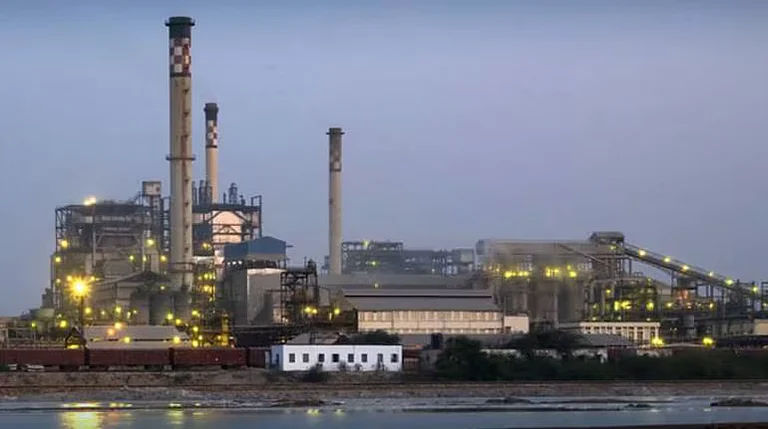
The scale of the operation backs up why this matters. Tata Chemicals Magadi is one of Africa's leading producers of natural soda ash, a chemical used in glass, detergents and water treatment, extracted from trona found at Lake Magadi. The company exports over 3,50,000 tonnes of it every year to Southeast Asia, India, the Middle East and other African markets. The business itself is older than Tata's involvement in it by nearly a century, having started life in 1911 as the Magadi Soda Company before Tata took ownership in 2005.
This is also not Tata's first legal skirmish with Kenyan authorities. In 2025, the company disclosed that Kenya's Court of Appeal had ruled in its favour in a separate dispute with the Kajiado County government over land rates. The court held that the demand was arbitrary and illegal, and that Tata Chemicals Magadi was not obliged to pay the claimed land revenue arrears in the absence of an open and accountable framework for determining the rates. The current dispute, however, is far broader in scope, touching mining compliance, royalties, exports, community agreements, local employment, procurement, value addition and environmental standards all at once.
Not everyone in Magadi sees the current dispute the same way, though. Some residents welcomed the July suspension, raising their own concerns about employment practices, community participation and how much of the company's benefits actually reach them. For now, Tata's latest statement stops short of accepting the presidential order as final, instead emphasising its compliance filings and its willingness to keep engaging through legal and regulatory channels. Tata has also said the shutdown could carry consequences well beyond the company itself, pointing to the hundreds of employees and larger network of contractors, suppliers and local businesses that depend on its operations, and to the Magadi community's reliance on Tata-supported services.
Is This About Tata, Or About Something Bigger?
Seen together, this string of disputes, Adani, Essar, Karuturi, Mahindra, Airtel, and now Tata, could easily be read as a country turning against Indian business. But that reading runs into a problem; it does not match the bigger picture. Nearly 200 Indian companies still operate in Kenya, according to the Indian High Commission. Over 60 major Indian companies have invested in various sectors including manufacturing, real estate, pharmaceuticals, telecom, IT & ITES, banking and agro-based industries, including Airtel, several Tata companies, Mahindra, Godrej, Thermax, UPL, Bank of Baroda and Bank of India.
Bilateral trade climbed to $4.31 billion in 2025-26, up from $3.45 billion the year before. And in December 2025, just months after cancelling Adani's transmission project, Kenya signed a $311-million power-transmission agreement with Africa50 and India's own Power Grid Corporation, a 30-year public-private partnership covering two high-voltage transmission lines.