India considers policy change to let airport operators like Adani and GMR own airlines
Current rules cap airport operators' airline stake at 10% in Delhi and Mumbai
Move aims to ease IndiGo-Air India duopoly controlling 90% of domestic capacity
India has begun talks on a policy change that could allow airport operators to own and run airlines, potentially clearing the way for the Adani Group and GMR Airports Ltd. to launch their own carriers, according to a Bloomberg report.
Under current rules, operators of the Delhi and Mumbai airports cannot hold more than a 10% stake in any airline.

1 October 2026
Get the latest issue of Outlook Business

The deliberations are underway within India's Ministry of Civil Aviation, and any waiver would need legal clearance from the law ministry along with approval from the federal Cabinet led by Prime Minister Narendra Modi, the report said.


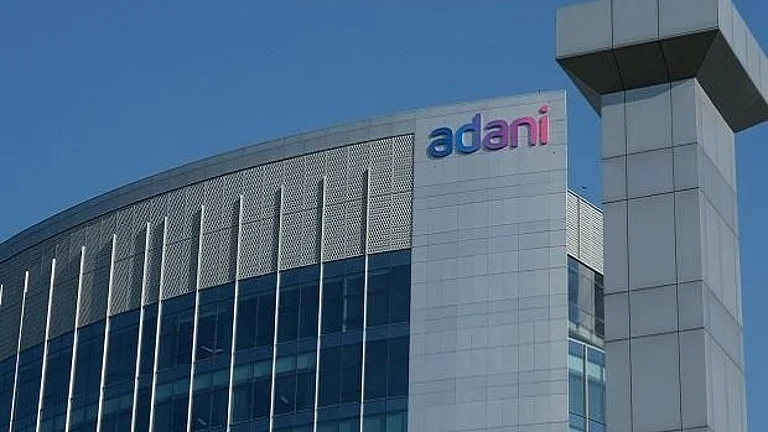

Why The Rules May Change
A relaxation of ownership norms would allow the Adani Group, whose unit runs the Mumbai airport and seven others, and GMR Airports, which manages the Delhi airport and four other facilities, to own airlines of their own. The idea behind the policy is to widen competition at a time when IndiGo and Air India together control nearly 90% of India's domestic capacity.
While this could ease the near-duopoly the two carriers hold over Indian skies, it also raises the possibility of new imbalances, such as airport operators giving preferential slots to their own airlines. The civil aviation ministry did not immediately respond to an emailed request for comment.
Advertisement
Even if new players enter the market, a global shortage of aircraft remains a key hurdle. Delivery delays at Airbus SE and Boeing Co. have slowed expansion plans worldwide, with supply chain disruptions from the pandemic era still limiting aircraft availability.
Globally, joint ownership of airports and airlines has seen limited success. In the US, strict public ownership rules for major airports and revenue-diversion laws under the Federal Aviation Administration prevent local governments from using airport income to fund airline ventures. In the European Union, such joint ownership is technically permitted, but strict antitrust enforcement makes it difficult in practice.
Advertisement
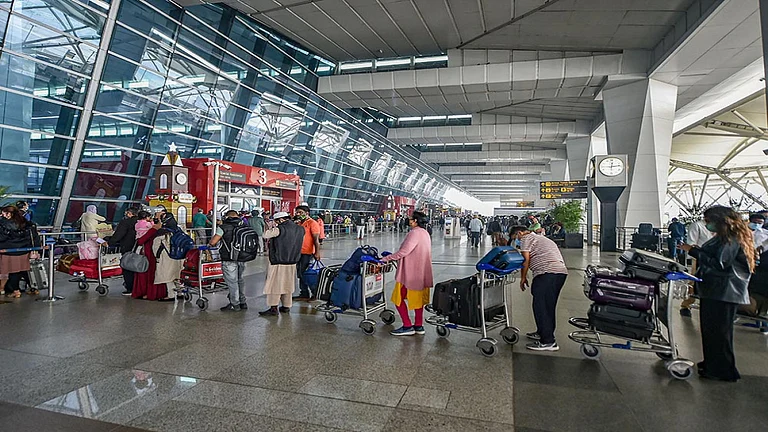
A Shrinking Airline Market
The Adani Group already has a wide presence across India's infrastructure sector, from being the country's largest private ports operator to its second-largest cement producer, alongside interests in thermal power, city-gas distribution and solar energy. Its growing footprint in airports has previously raised concerns about its expanding influence.
The number of Indian airlines has fallen sharply over the past decade. The collapse of Jet Airways India Ltd. and Go Airlines India Ltd., along with the merger of Vistara and AirAsia India under the Tata Group, has left IndiGo and Air India dominating the world's fourth-largest aviation market, with Akasa Air, SpiceJet Ltd. and smaller regional carriers operating on the margins.
Concerns over this duopoly grew during IndiGo's operational crisis in December, when the airline, which carries more than 60% of domestic passenger traffic, cancelled thousands of flights mainly due to pilot shortages, disrupting air travel and prompting Indian Railways to run special trains for stranded passengers.
India plans to double its number of airports to 350 by 2047, and the International Air Transport Association expects 425 million additional passengers by 2044, nearly triple the 2024 levels.