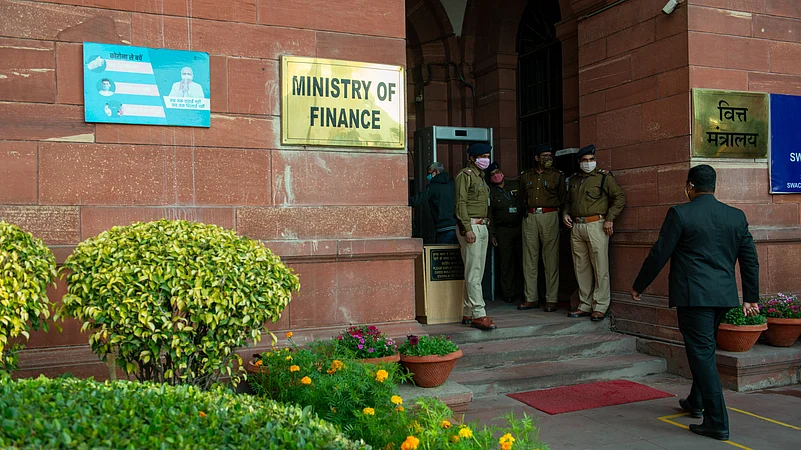

PHD Chamber of Commerce submitted pre-budget suggestions to Finance Minister Sitharaman.
The Union Budget for 2026–27 is expected on 1 February 2026, with the date to be confirmed by the Cabinet Committee in January.
Ahead of the Budget, the Finance Ministry will release the Economic Survey, followed by a press briefing, providing a clear view of the country’s economic health.
Preparations for the Union Budget have started as the Finance Ministry began engagin with the industry bodies ahead of budget 2026. The PHD Chamber of Commerce submitted pre-budget suggestions to Finance Minister Nirmala Sitharaman, asking for easier taxes, cheaper loans and simpler rules to help small businesses grow and compete globally.
The Finance Minister is expected to present the Union Budget for 2026–27 on 1 February 2026, though the date is tentative. The final schedule will be confirmed by the Cabinet Committee on Parliamentary Affairs in January 2026.
Ahead of the Budget, the Ministry of Finance will release the Economic Survey, followed by a press briefing by the Chief Economic Advisor and senior officials. This annual document sets the tone for what to expect in the Budget and gives a clear view of the country’s economic health.

1 September 2026
Get the latest issue of Outlook Business


What is Economic Survey?
The Economic Survey is a annual report put together by the Department of Economic Affairs (DEA) under the supervision of the government’s Chief Economic Advisor (CEA).
Advertisement
It explains the state of the economy during the previous financial year and highlights how different sectors performed. The document helps understand where growth is happening, where stress is building up, and what areas need attention before policy decisions are finalised.
How Is Survey Divided ?
The survey is usually divided into two main sections. Part A covers broad economic trends such as growth, inflation, fiscal position and sector-wise performance. This section acts as a snapshot of the country’s overall financial condition.
Part B looks at social and structural issues, including poverty, education, health, human development and climate-related challenges. Together, both parts offer a complete picture of the economy.
Advertisement
Over the years, the Economic Survey has grown into one of the most important documents released by the government. The first survey came out in 1950–51 and was originally part of the Union Budget. In 1964, it was separated from the Budget and has since been presented a day earlier.

Economic Survey Key Insights
The survey tracks key markers such as GDP growth, price movements, job trends and the fiscal deficit. It also looks at how major sectors including agriculture, industry and services performed through the year. Beyond these figures, it studies social welfare schemes, progress in infrastructure and global factors such as demand and commodity prices that could influence India’s economic outlook.
A large part of putting the survey together involves gathering and studying data. The Economic Division of the Finance Ministry leads this work, taking inputs from several departments, research organisations and international bodies. After the analysis is completed, the Chief Economic Advisor approves the report before it is presented in Parliament.

Why Does Economic Survey Matter?
The survey plays an important role because it guides the Union Budget. It helps to identify stress points, areas of improvement and possible risks, helping the government to decide where attention and resources are needed.
In simple terms, the Economic Survey works like India’s annual economic report card. It gives us a brief explanation of what went well, what needs attention and what the government may focus on next. Its insights help ensure that the Union Budget is better informed and more focused.