Sponsored Content
Starting an independent practice is one of the most consequential financial decisions a professional will ever make. Whether you're a doctor opening a clinic, a chartered accountant setting up a firm, or a consultant launching an advisory business, the money question hits early and hits hard. Where does the capital come from? How much do you actually need? And what kind of financing makes sense for someone whose primary asset is expertise, not inventory?
The Real Cost of Going Independent
Most professionals underestimate their startup costs. A doctor opening even a modest clinic needs equipment, interior buildout, staff salaries for the first few months, and working capital to survive until patient flow stabilizes. That can easily run into ₹15 to ₹40 lakh depending on the city and specialty. A CA firm needs office space, accounting software licenses, and enough runway to cover operational costs while building a client base. Consultants may have lower overhead, but they still face costs around branding, technology tools, and the simple reality of not earning for weeks or months while setting things up.
The temptation is to bootstrap everything. Use personal savings, borrow from family, keep costs razor-thin. That works for some, but it also creates fragility. One unexpected expense or a slower-than-expected ramp-up can destabilize the entire venture. Structured financing, when used wisely, gives you breathing room. An msme loan is one of the most accessible options for professionals in India, since independent practices typically qualify as micro or small enterprises under the MSME classification.

1 September 2026
Get the latest issue of Outlook Business

What Banks Actually Look At
Banks lending to professionals care about a few specific things: your qualification, your projected income, your credit history, and whether you have any collateral. The good news is that professional degrees carry weight. A medical degree or a CA certification signals earning potential that banks understand. This is different from, say, a first-time retailer with no track record.


Advertisement
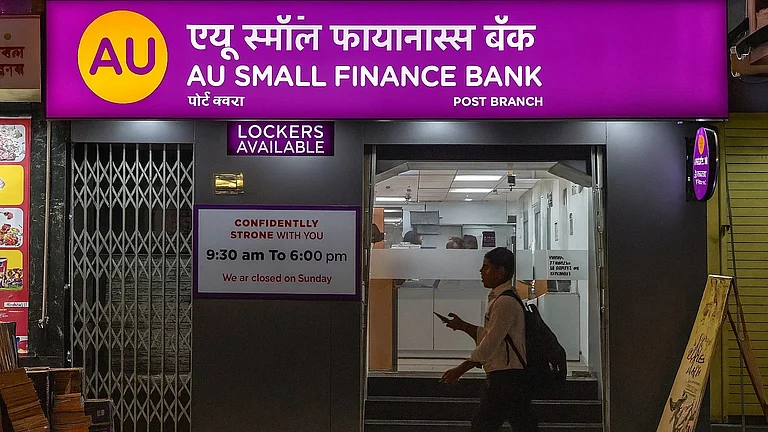
Most public sector banks and several private lenders have dedicated products for this segment. SBI, Bank of Baroda, and HDFC Bank, among others, offer schemes specifically designed for doctors, lawyers, chartered accountants, and other licensed professionals. Loan amounts typically range from ₹5 lakh to ₹50 lakh or more, depending on the lender and the borrower's profile. Interest rates tend to be competitive because the perceived risk is lower. A practicing doctor with a valid registration is, statistically, a safer bet than many other small business borrowers.
Choosing the Right Financing Structure
Not all debt is the same, and picking the wrong structure can create unnecessary pain. Term loans work well for one-time capital expenditures like equipment purchases or office renovation. If your need is more about cash flow management, an overdraft facility or a working capital line of credit might be more practical. You draw what you need, pay interest only on what you use, and avoid sitting on a large lump sum collecting interest.
Advertisement
A loan for professionals typically comes with flexible repayment options, including moratorium periods that let you skip EMIs for the first few months while your practice gets established. This feature alone can make a meaningful difference in early-stage survival. Pay attention to processing fees, prepayment penalties, and whether the interest rate is fixed or floating. These details matter more than the headline rate.
Government-Backed Options Worth Knowing About
The Pradhan Mantri Mudra Yojana (PMMY) and the Stand-Up India scheme offer financing routes that many professionals overlook. Mudra loans, available through most banks, provide up to ₹10 lakh without collateral under the Shishu, Kishore, and Tarun categories. The CGTMSE (Credit Guarantee Fund Trust for Micro and Small Enterprises) scheme can guarantee loans up to ₹2 crore, reducing the collateral burden significantly.
State-level schemes also exist, though they vary widely in scope and accessibility. Some state governments offer subsidized loans or interest subventions for healthcare professionals setting up practice in underserved areas. If you're willing to operate outside a metro, the financial incentives can be substantial.
Practical Steps Before You Apply
Get your documentation in order before approaching any lender. This means your professional registration certificate, identity and address proofs, a detailed project report outlining costs and expected revenue, bank statements for the last six to twelve months, and income tax returns if you've been employed previously. A clear, realistic project report does more for your application than anything else. Banks want to see that you've thought through the numbers, not just the dream.
Check your credit score beforehand. A CIBIL score above 750 opens the best terms. Below 700, you'll face higher rates or outright rejection from some lenders.
Talk to at least three different banks or NBFCs before committing. Rates, terms, and attitudes toward professional borrowers vary more than you might expect. One institution's rejection can easily be another's approval.
The money part of starting a practice is solvable. It requires planning, patience with paperwork, and a willingness to compare options rather than grabbing the first offer that appears. Your clinical or technical skills got you this far. A little financial diligence gets you the rest of the way.
Disclaimer: This is a sponsored article. All possible measures have been taken to ensure accuracy, reliability, timeliness and authenticity of the information; however OutlookBusiness.com does not take any liability for the same. Using of any information provided in the article is solely at the viewers’ discretion.