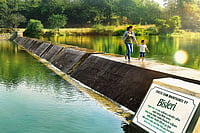

Supreme Court recognises Aravalli as an integrated, fragile ecosystem requiring scientific, landscape-level governance.
Judgment mandates sustainable mining plans with upfront restoration, monitoring and expert-led ecological assessments.
Restoration solutions link water security, native species revival and community livelihoods in semi-arid landscapes.
The Supreme Court’s November 2025 judgment on the Aravalli Hills—currently put on hold—is not just about redefining mining boundaries. It represents a landmark shift in how India approaches ecological governance. It recognises a deeper truth: Aravalli Hills is a continuous, fragile ecological system whose survival depends as much on restoration and regeneration as on regulation. The judgment provides a road map for reconciling development imperatives with long-term ecological security.
The top court acknowledges that scientific planning must precede decision-making. Drawing from its recent decision on Jharkhand’s Saranda Forest, the SC notes that the “Indian Council of Forest Research and Education’s (ICFRE’s) geo-referenced ecological assessment enabled the identification of areas suitable for mining, areas requiring strict ecological protection and zones where biodiversity values necessitated conservation priority”. Importantly, it observes that “it is not in dispute that the Aravali Hills and Ranges also exhibit similar ecological fragility and is also an area comprising significant biodiversity”. This recognition is crucial: the Aravalli cannot be viewed as a series of disconnected mining leases but must be managed as an integrated landscape.

1 October 2026
Get the latest issue of Outlook Business

The judgment records that the Aravalli range faces “escalating degradation pressures” and that “deforestation, unsustainable grazing, illegal and excessive mining, and urban encroachment have contributed to widespread ecosystem damage”. The consequences are already visible: “forest cover has declined significantly in the last two decades, desert sands are moving eastwards and aquifers have been depleted or damaged by mining activities”. These observations reinstate the urgency of moving beyond damage control to proactive ecological recovery.

Restoration Road
From The Energy and Resources Institute's (TERI's) recent scoping studies under the Aravalli Green Wall Project, one lesson stands out clearly: restoration cannot be treated as an afterthought once mining lease ends. It must become a non-negotiable, upfront condition—supported by financial provisioning, clear timelines, and post-closure monitoring. This aligns closely with the SC’s direction that scientific planning should guide both extraction and recovery. As the judgment states, “it may not be in the interest of ecology and environment if further mining activities are permitted to be carried out without a body of experts…examining the issue of protection of the conservation areas”.
Advertisement
Equally significant is the emphasis on preparing a Management Plan for Sustainable Mining for the entire Aravalli landscape. Such a plan, it notes, will not only identify where mining may be permissible but also ensure that “it provides data as to how sustainable mining is to be conducted”. Moreover, the SC mandates that the plan must “include detailed post-mining restoration and rehabilitation measures”—a decisive intervention that embeds restoration into the core of development planning rather than leaving it to discretionary compliance.
Implementable solutions must now focus on practical, on-ground actions that integrate ecological restoration with community development, particularly in the harsh, semi-arid conditions of the Aravalli. Abandoned mining pits, for instance, need not remain ecological liabilities. With appropriate design, they can be converted into water-security assets through check dams, percolation tanks, recharge wells and aquifer recharge structures. In a region facing chronic water stress, such interventions can significantly enhance groundwater availability while stabilising degraded landscapes.
Advertisement
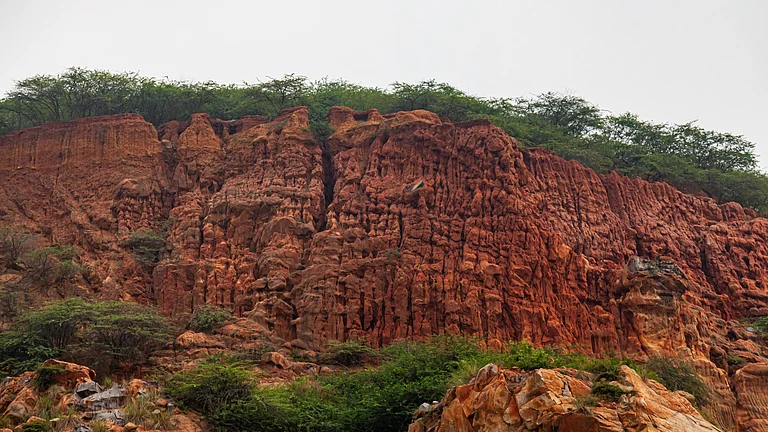
Green Solutions
Restoration must also prioritise ecological integrity. Large portions of the Aravalli have been overtaken by invasive species such as Prosopis juliflora (vilayati babool), which suppress native vegetation, deplete groundwater and weaken soil structure. Systematic removal of invasives, followed by the establishment of multi-tier native vegetation systems, is essential. Indigenous species such as Khejri, neem and babool—deeply adapted to local climatic conditions—form the backbone of resilient Aravalli ecosystems. Alongside these, long-rotation species such as teak can contribute to carbon sequestration, while livelihood-oriented species like moringa (sahjan) offer quicker economic returns, improve soil health and strengthen nutritional security for local communities.
New scientific interventions and technologies further enhance the feasibility of long-term restoration. Biochar application can enhance soil carbon content, water-holding capacity and microbial activity, while the use of mycorrhizal fungi significantly improves plant survival and nutrient uptake under stress conditions. Nature-based solutions that harness microbial processes are particularly relevant in degraded and climatically vulnerable landscapes like the Aravalli.
TERI, along with other institutions, has developed technologies specifically designed for afforestation and restoration of degraded lands. If these are deployed systematically and at scale, one can reasonably expect greener, more resilient Aravalli in the years to come.
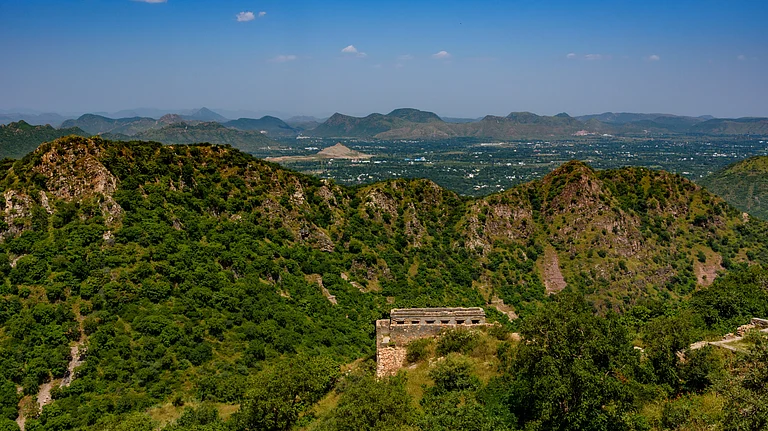
Framework into Action
The SC also strikes a careful balance between environmental protection and livelihoods. It cautions against blanket bans, noting that “a complete ban on mining could…lead to illegal mining activities, creation of land/mining mafias and criminalisation”. At the same time, it is unequivocal that ongoing operations must adhere to stringent safeguards, clarifying that mining activities already underway “would be carried out strictly in accordance with the recommendations”. This balanced approach solidifies the need for sustainable resource use rather than unchecked exploitation or absolute prohibition.
At a time when Delhi–NCR is grappling with severe air pollution, intensifying heat stress and growing water insecurity, the ecological integrity of the Aravalli has become a matter of public health and climate resilience. Further construction or mining that ignores ecological limits could prove environmentally and socially lethal. The SC has provided a clear, science-based framework. The task now is to translate this framework into action—through credible institutions, robust monitoring and sustained investment in restoration. If implemented with integrity and foresight, the top court’s directions can help ensure that the Aravalli Hills remain not just protected on paper but progressively restored as a living landscape that safeguards water, climate and livelihoods for generations to come.
Dhawan is Director General at TERI.
The views expressed in this article are personal and do not represent the opinions or positions of any institution or organisation with which the author may be affiliated.