As the world marks World Environment Day, the global conversation increasingly revolves around balancing economic growth with environmental responsibility. For a rapidly developing nation like India, the challenge is particularly complex. While the country pursues ambitious climate goals and a vision of becoming a developed economy by 2047, it must simultaneously ensure reliable and affordable energy for over 1.4 billion people.
In this context, coal continues to play a critical role in India's energy security. With the country's energy demand expected to grow significantly in the coming decades and per capita energy consumption still well below the global average, ensuring sustainable coal production remains a national priority.
At the centre of this effort is the Central Mine Planning & Design Institute (CMPDI), the premier planning, exploration, and technical consultancy organisation under Coal India Limited and the Ministry of Coal. Headquartered in Ranchi, CMPDI has emerged as a key institution working to integrate environmental sustainability into every stage of the coal mining lifecycle.
Planning Sustainable Mining from the Ground Up
As the nodal agency for mine planning, exploration, and resource evaluation, CMPDI's role extends far beyond conventional mining support. The organisation is responsible for maintaining the National Coal Inventory, undertaking exploratory drilling, and providing technical expertise that helps shape the future of India's coal sector.
Advertisement
A defining feature of CMPDI's approach is the integration of environmental considerations at the planning stage itself. Mine designs are developed with a focus on optimising land use, minimising impacts on forests and water bodies, reducing community displacement, and ensuring rehabilitation and resettlement measures wherever required.
The organisation also promotes the adoption of advanced and environmentally friendly mining technologies, including surface miners, continuous miners, and longwall mining systems, helping improve operational efficiency while reducing environmental impacts.
Reducing Emissions Through Smarter Infrastructure
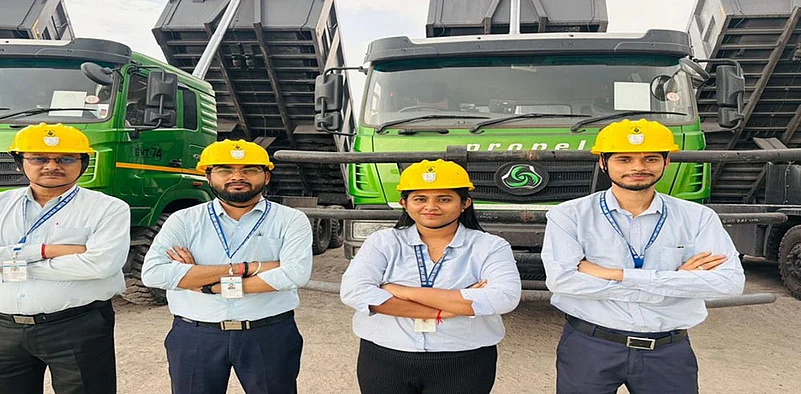
Transportation remains a significant source of emissions in mining operations. To address this challenge, CMPDI has been instrumental in planning First Mile Connectivity (FMC) projects that encourage mechanised and environment-friendly coal evacuation systems such as conveyors and rail-based transportation.
Advertisement
These initiatives reduce dependence on road transport, lowering fuel consumption, traffic congestion, dust emissions, and the overall carbon footprint associated with coal movement.
In parallel, the organisation advocates energy-efficient mining practices, automation, upgraded equipment, and the integration of renewable energy installations within mining projects to offset operational emissions and improve sustainability outcomes.
Biodiversity, Reclamation and Ecological Restoration
Environmental stewardship is deeply embedded within CMPDI's sustainability framework. The organisation undertakes specialised studies on wildlife management, ecological conservation, riverine ecosystems, soil and moisture conservation, and regional carrying-capacity assessments.
These studies play a critical role in understanding environmental sensitivities and designing mitigation strategies that support both resource development and ecosystem protection.
CMPDI also promotes progressive land reclamation and bio-reclamation practices throughout the active life of mines. Through planned afforestation and restoration measures, mining-affected landscapes are gradually rehabilitated, helping restore ecological balance and create long-term environmental value.
Strengthening Environmental Governance
Beyond mine planning, CMPDI plays a pivotal role in helping coal projects comply with India's environmental regulations.
The organisation undertakes environmental baseline studies, Environmental Impact Assessments (EIA), and prepares project-specific Environmental Management Plans (EMPs) that form the foundation of environmental clearance processes. These interventions ensure that environmental safeguards are integrated into project implementation from the outset.
CMPDI's network of NABL-certified environmental laboratories, located across its headquarters and regional institutes, provides continuous environmental monitoring support. These facilities help assess air quality, water quality, noise levels, and other critical environmental parameters, enabling mining companies to take corrective actions whenever necessary.
Technology-Driven Monitoring and Mine Closure
In recent years, technology has become a powerful tool in environmental management. CMPDI's advanced Remote Sensing and Survey Division leverages satellite imagery and geospatial technologies to monitor land-use changes, reclamation progress, and environmental restoration across mining regions.
The organisation has also been at the forefront of developing scientific mine closure frameworks. Modern mine closure planning now extends beyond physical restoration and includes community welfare, livelihood generation, skill development, and the concept of a "just transition" for mining-dependent populations.
By incorporating social and environmental considerations into closure plans, CMPDI is helping redefine how mining regions can transition towards sustainable futures after resource extraction ends.
Contributions Beyond the Coal Sector
CMPDI's expertise has increasingly been utilised in projects of national significance beyond the coal industry.
The organisation has undertaken ecological restoration studies for the Aravalli region, prepared scientific sand replenishment guidelines for multiple states, supported environmental capacity-building programmes for regulatory institutions, and provided technical inputs on matters related to climate change, forest conservation, and fly ash management.
Notably, several of its studies and recommendations have informed policy decisions and judicial deliberations, including matters considered by the Hon'ble Supreme Court of India. CMPDI has also served as a Centre of Excellence for environmental restoration in mining-affected regions and contributed to national-level environmental policy frameworks.
Preparing for a Low-Carbon Future
As India's sustainability agenda evolves, CMPDI is expanding its expertise into emerging areas such as greenhouse gas accounting, carbon markets, renewable energy integration, critical minerals, and Sustainable Development Goals (SDGs).
The organisation is currently supporting national efforts related to greenhouse gas inventory preparation and climate reporting, reflecting its growing role in India's broader environmental and climate governance framework.
Building a Responsible Energy Future
World Environment Day serves as a reminder that sustainable development requires practical solutions, scientific planning, and long-term commitment. While coal will continue to play an important role in India's energy landscape for the foreseeable future, institutions like CMPDI are demonstrating that environmental responsibility and energy security can advance together.
Through sustainable mine planning, biodiversity conservation, environmental monitoring, technological innovation, responsible mine closure, and climate-conscious resource management, CMPDI is helping shape a future where economic development is supported by stronger environmental stewardship.
As India moves towards the vision of Viksit Bharat 2047, such efforts will be essential in ensuring that growth remains not only robust and inclusive, but also environmentally sustainable.