




A free bunch of dhaniya is a small consolation of buying vegetables in India. But that extra handful is getting costlier as heavy rains disrupt supplies and push coriander prices above ₹220 a kg in some retail markets. Ginger, garlic and onions have also recorded sharp year-on-year price increases, adding pressure to household food bills.
India’s food inflation rose to 5.52% in July from 5.32% in June, but the increase is far from uniform.
Potato prices fell 16.56% year-on-year, while tomatoes and peas also became cheaper.

1 October 2026
Get the latest issue of Outlook Business

The divergence suggests that food inflation is increasingly being driven by crop-specific supply disruptions rather than a broad-based surge across all vegetables.

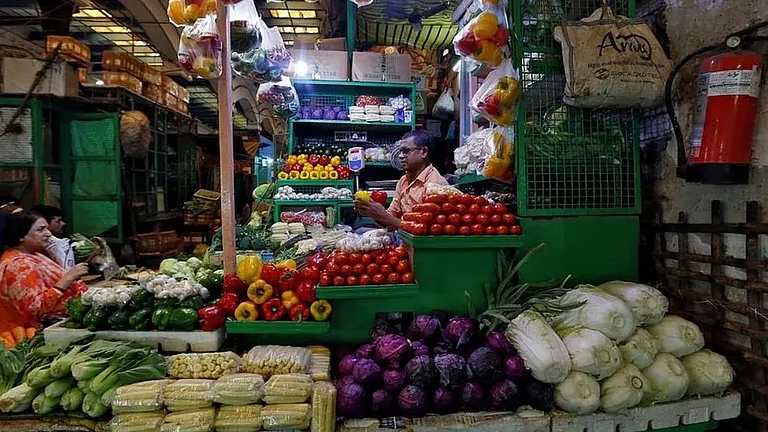


Dhaniya, Ginger, Garlic Drive Food Inflation
Coriander prices have jumped after heavy rainfall disrupted supplies from Nashik, an important sourcing centre. Wholesale prices have approached ₹175 a kg, while retail prices have risen to around ₹220-230 a kg, according to an ET Bureau report.
Ginger and garlic have seen even sharper increases. Ginger inflation accelerated to 83.62% in July from 50.41% in June, while garlic inflation rose to 35.36% from 17.93%. Onion inflation climbed to 22.54% from 4.73%.
Fresh coriander and other greens are particularly vulnerable to weather disruptions because of their short shelf life and dependence on regular arrivals from farms to wholesale markets.
Advertisement
Monsoon Swings Add To Supply Risks
The weather has been unusually volatile. India recorded its fifth-driest June on record, with rainfall 39.8% below normal, before heavy downpours disrupted conditions in July.
Such swings can affect agriculture in opposite ways. Dry spells can delay sowing and hurt crop development, while intense rainfall can damage standing crops, disrupt harvesting and interfere with transportation.
Around half of India’s farmland remains dependent on rainfall for irrigation. The uneven monsoon has already affected summer crop sowing and raised concerns about agricultural output.
A developing El Niño adds another layer of uncertainty. The phenomenon, along with global warming, is associated with increasingly erratic rainfall patterns, including longer dry spells followed by intense precipitation.
Advertisement
The Reserve Bank of India has also identified an uneven monsoon as a risk to food inflation, given that food accounts for nearly half of the Consumer Price Index basket.
Rice Adds To The Pressure
The pressure is beginning to extend beyond vegetables. Average retail rice prices rose from ₹42.92 a kg in May to ₹44.35 a kg in July, a 3.33% increase, according to government data.
Rice prices increased more sharply in Telangana, rising 4.65% to ₹54.06 a kg. Concerns over crop conditions, including the impact of El Niño, have contributed to the increase, while hoarding has also been cited as a factor.
However, India has substantial foodgrain reserves that can cushion supply shocks. The central pool held 42.8 million tonnes of wheat and 38.95 million tonnes of rice as of May 1, giving the government room to intervene if shortages intensify.
The current food inflation picture is therefore not a conventional potato-onion-tomato spike. Some staples are getting significantly more expensive while others are becoming cheaper.
The key question is whether these crop-specific price pressures remain contained or spread across a wider portion of the food basket.









