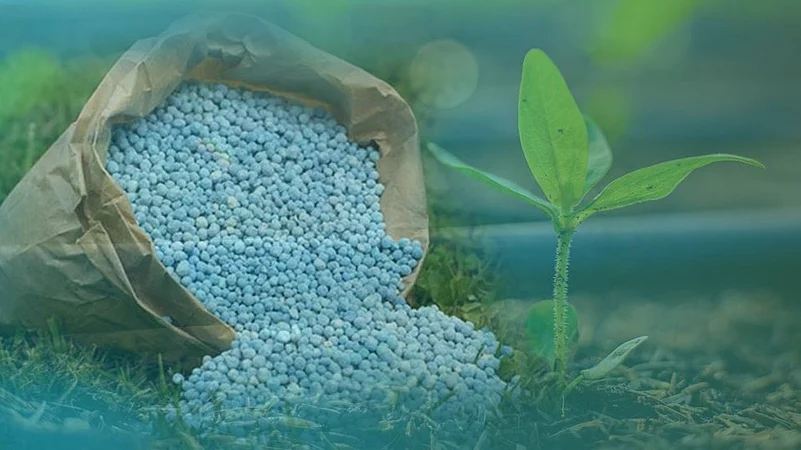

India’s agriculture depends heavily on imported fossil fuels for fertiliser, especially ammonia.
The article makes a case for shifting to green ammonia to cut imports, emissions, and economic risks.
It suggests policy push through subsidies, blending mandates, and demand aggregation to speed up adoption.
India’s agriculture is a source of its food, fuel, and fabrics, and currently, all of it is subject to risks beyond its control. Deep beneath the nation's fertiliser synthesis and subsidy framework lies a notoriously stubborn structural dependency on fossil fuels extracted abroad, particularly in the volatile Middle East.
This exposes the fragility of the country’s food security, its foreign exchange reserves, and its macroeconomic growth trajectory to forces it can hardly control. Thus, the case for a definitive and urgent shift to green fertilisers is not just environmental; it is also economic, geopolitical, and a food security issue.

1 September 2026
Get the latest issue of Outlook Business

Subsidies Undermine Sovereignty
In 2050, India’s population of 1.7 billion will consume 580 million tons of foodgrain. To grow this food, the soil will demand large amounts of nitrogen. This will push ammonia usage to 45 MMT (up from the present 19 MT). Presently, about 85% of India's ammonia requirement — the fundamental nitrogen carrier and the building block for all major fertilisers — is fulfilled through imports of natural gas or other fertiliser precursors.
Every gram of fertiliser manufactured in such value chains is a drain on the precious foreign reserve of the country. Global conflicts have only amplified the price of this dependency. Thus, an economy feeding its 1.4 billion people on imported fertiliser precursors cannot be considered a sovereign food ecosystem. It is a precarious bet on a geopolitical balance that barely holds.
Advertisement
To steer the economy away from imports, subsidies for green ammonia should be treated as capital investment, substituting for indiscriminate, open-ended, foreign-currency-denominated, and volatile revenue expenditure. A comprehensive investment strategy for developing domestic green ammonia capabilities – tangible and intangible- slashes the subsidy burden in the face of international commodity price uncertainty. This can no doubt be a fiscal masterstroke.
Climate Cost of Inaction
Every ton of ammonia has an emission footprint of around 2.4-ton CO2 eq. on the planet. This is about two times as intensive as crude steel production and four times as intensive as cement production. It is found that total ammonia manufacturing emissions in India are likely to increase from 145 MMT in 2030 (~3.4% of India’s greenhouse gas emissions) to about 540 MMT by 2070 without abatement.
Advertisement
Thus, interventions such as the use of clean energy, water electrolysis, and in situ carbon capture are essential for decarbonising nitrogen fertiliser synthesis. However, as agriculture contributes ~15% of India’s GDP and provides livelihood to 500+ million people, this transition must be managed sensitively yet urgently.
Nudging Towards Green Ammonia
India spends ₹2.5+ lakh crore ($31 billion) on fertiliser subsidies – an amount that exceeds the combined spend of several major union and state ministries.. Green ammonia priced at $700 per tonne creates an additional cost of ₹680 crore for a 10% blend at current production volumes — a mere 6 per cent addition to the average non-urea subsidy outlay.
Surprisingly, in years of crude oil price spikes, a 10% green ammonia blend can deliver an estimated net gain of ₹500+ crore. The green premium, under heightened market prices, flips to a green savings — precisely the situations India is currently facing and should be structurally prepared for in the long run.
Prudent industrial strategy suggests that the first transitions towards green ammonia must begin in situations where the economic case is the most obvious. It creates institutional confidence for future scale-up. In India's fertiliser landscape, that entry point is non-urea fertilisers — diammonium phosphate and associated fertilisers — rather than urea – for obvious reasons. The technical trajectory to achieve this is favourable. Unlike urea, which contains a carbon atom, such fertilisers have no complications associated with CO₂ sourcing.
Thus, India’s Department of Fertilisers should consider a progressive blending mandate to achieve 100% green ammonia usage by 2035. To create market certainty, the SIGHT programme under the National Green Hydrogen Mission can dedicate a workstream solely to non-urea fertiliser offtake, directing its production incentives precisely where the market can leverage them.

Engineering the Demand
Demand signals may dissipate quickly when abandoned to propagate organically, especially in India’s unorganised and fragmented value chains. This does not instil confidence in the producer who is taking on the risk of substantial investments. India's multi-stakeholder agri-food chain includes producers, aggregators, cooperatives, primary and secondary processors, and marketing and sales agencies — it is, to say the least, perplexing. A commitment towards sustainability from a customer-facing food company traverses five or six layers before shaping the unit economics of green fertiliser plants. At each transition point, the risk of complacency is real.
A Green Fertiliser Demand Aggregation Platform — a government-initiated, industry-powered agency that pools sustainable and green procurement commitments from large FMCG companies and agri-exporters facing Scope 3 mandates, can add the missing edge to India’s ambitions to cut its fertiliser-related imports. This platform can transform intangible green intentions into bankable price commitments for green ammonia producers through long-term purchase agreements.
The reality of heightened scrutiny and the associated barriers faced by India's food exporters from environmentally conscious buyers like the European Union, which are demanding supply chain emissions disclosures, is growing by the day. Thus, a green fertiliser ecosystem, designed and deployed now, will place India's food exports more favourably as a first mover.
Building Institutional Capabilities
India’s Bureau of Energy Efficiency (BEE) can take the lead in formalising a comprehensive framework for the fertiliser sector as an integral part of its proposed Carbon Credits Trading Scheme. It should outline a methodology for attributing emission reductions from green ammonia-blending across both urea and non-urea manufacturing processes.
A future-looking Green Fertiliser Certification Standard should be established, enabling buyers to claim verified, internationally recognised credentials. Solar Energy Corporation of India’s SIGHT Tranche-I tender recently covered 7,24,000 MT per annum of green ammonia capacity. Subsequent tranches are expected to be even larger. The prices discovered so far have been globally competitive, hovering around USD 650/tonne across locations.
Additionally, according to a CEEW-GIZ report, the levelized cost of green ammonia can be further reduced by about 20% with just a 500-basis-point reduction in the cost of capital and the use of drop-in round-the-clock renewable energy. This communicates the country's clear intent to reap the benefits of economies of scale.
The ultimate gift a 100-year-old India can give to itself is sovereignty in agriculture. Year 2047 should be the year the country breaks free from price shocks, especially from those emanating offshore. The window for a strategically managed transition towards indigenous green fertilisers is open – but not for long. As monsoons approach this year, work on India’s farms is underway. Let this season be remembered for decisive, swift actions that yield India perpetual dividends – economically, environmentally, and geopolitically.


Disclaimer: Labanya Prakash Jena is director at Climate and Sustainability Initiative and visiting senior fellow at LSE, while Prasad Thakur is an alumnus of IIT Bombay and IIM Ahmedabad. Views expressed are personal