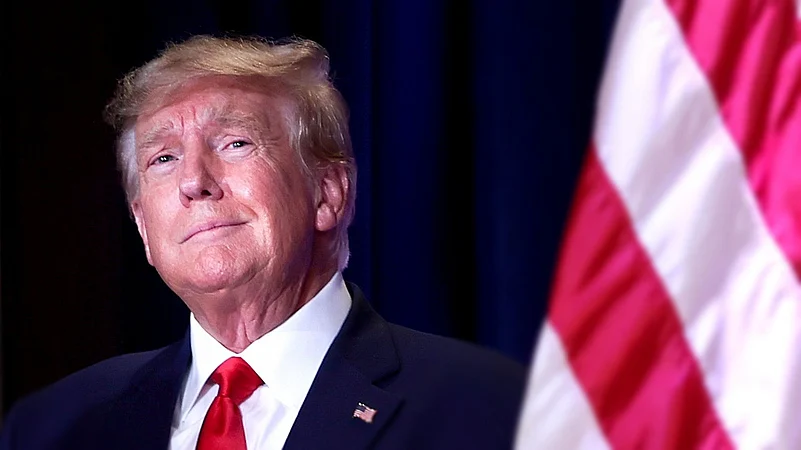

India has been invited by US President Donald Trump to join the Board of Peace focused on Gaza’s post-war recovery
The Board of Peace will guide Gaza’s rebuilding and governance, with plans to expand its role to other global conflicts
India is among 60 invited nations, including Pakistan, as the US seeks global support for Gaza’s post-war recovery
US President Donald Trump has invited India to join a new international initiative called the 'Board of Peace', which is aimed at supporting post-war recovery in Gaza. The initiative is a part of the next stage of the Israel-Hamas ceasefire. The board is likely to shape Gaza's post-war recovery.
It is expected to oversee Gaza’s rebuilding, including infrastructure, governance, and mobilisation of capital. While it will start with Gaza, Trump has indicated that the body could expand to address other global conflicts in the future.
A preliminary charter circulated among roughly 60 countries lays down some eligibility rules. Under the proposal, most members would be limited to a three-year term, with extensions subject to the chair’s approval.

1 September 2026
Get the latest issue of Outlook Business

However, the cap would not apply to countries that commit more than $1 billion in direct funding to the Board of Peace within the charter’s first year.

Advertisement
What Is the Board’s Structure?
The Board of Peace is organised into three levels. At the top is the Founding Executive Council, led by the US and comprising influential individuals responsible for key decisions and funding.
The second layer of the setup is the Gaza Executive Board, which will work alongside the High Representative and a Palestinian team of experts. At the ground level is the National Committee for the Administration of Gaza, or NCAG, which will be responsible for running everyday affairs during the transition period.
Bulgarian diplomat Nickolay Mladenov has been appointed High Representative to oversee the transition from Hamas rule to a technocratic Palestinian administration. Ali Shaath, former deputy minister in the Palestinian Authority, will lead the NCAG and coordinate closely with the Gaza Executive Board.
Advertisement
Who Are the Key Members?
The Founding Executive Council is chaired by President Trump, who holds veto power. Other members include US Secretary of State Marco Rubio, US Special Envoy Steve Witkoff, Jared Kushner, billionaire Marc Rowan, World Bank President Ajay Banga, former UK Prime Minister Tony Blair, and Deputy National Security Adviser Robert Gabriel Jr.
Leaders from Egypt, Turkiye, Jordan, Argentina and Canada have also been invited to oversee Gaza’s post-war transition. Arab countries on the Executive Board will play a role in supporting governance and delivering essential services to the local population.
Why Trump Invited India?
India is one of about 60 countries invited to join the board. Pakistan is also on the list and has said it will engage in international efforts to support peace and stability in Gaza. The US hopes to bring together key countries to help guide the region’s post-war recovery.
Joining the board would give India a chance to contribute to Gaza’s rebuilding and governance. It would also strengthen India’s role in global diplomacy and allow it to take part in humanitarian initiatives in the conflict-affected area.

What Happens Next?
A draft charter sets out how countries can be part of the board. Most members will be allowed to serve for three years. However, countries that contribute $1 billion in the first year will not face this limit. The White House has said this rule is meant to encourage serious and long-term involvement in Gaza’s recovery.



Countries such as India will now need to decide whether they want to join the Board of Peace and on what terms. As Gaza moves into a sensitive post-war period, the board’s powers and influence are expected to draw close attention globally.
The Board of Peace marks a different approach to dealing with global conflicts. It brings together governments, regional partners and specialists to focus on rebuilding after war. If it works in Gaza, the model could be used in other conflict-hit regions as well.