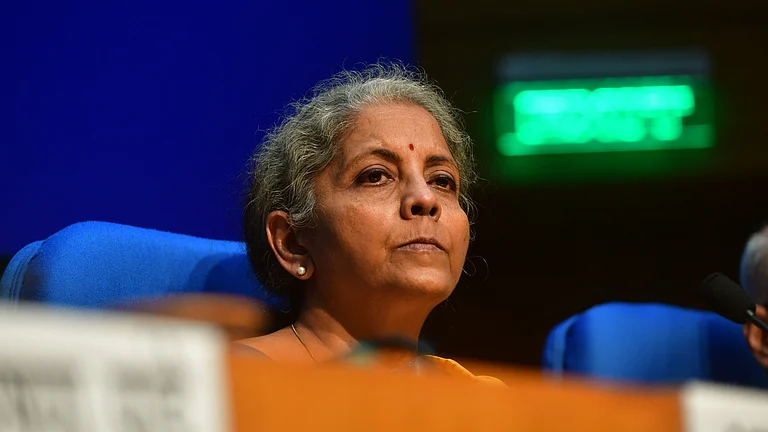
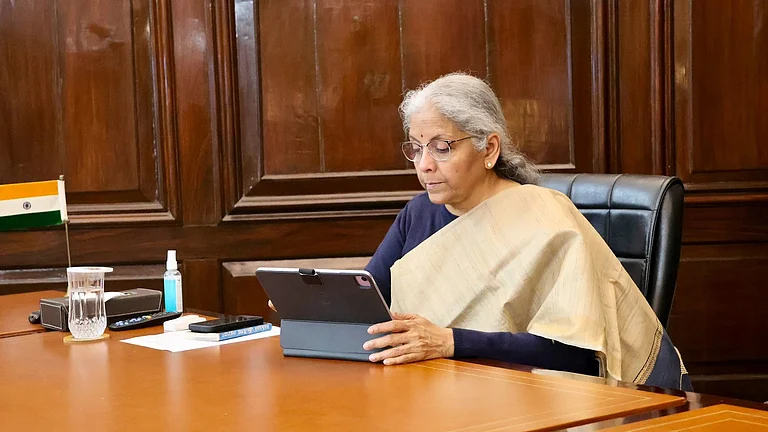
Finance Minister Nirmala Sitharaman proposed several changes under on Tax front in Budget 2026.
While personal income tax slabs remain unchanged, measures impacting investors and individual taxpayers were announced.
Key proposals include changes to STT, tax relief on motor accident compensation and tighter crypto reporting rules.
Finance Minister Nirmala Sitharaman presented the Union Budget 2026 in Parliament on Sunday, February 1, with several major changes proposed under the Income Tax Act (ITC), 2025. Although there was no change in personal income tax slabs, the FM announced multiple measures that affect stock market investors, individual taxpayers and compliance rules.
The proposals include changes to Securities Transaction Tax (STT), tax relief on motor accident compensation, stricter reporting rules for crypto-related transactions and a new way of taxing share buybacks.
During her speech, the finance minister also confirmed that the new Income Tax Act, which will replace the 1961 law that has been in place for decades, will take effect from April 1, 2026.
1 September 2026
Get the latest issue of Outlook Business

STT Hike for F&O
Budget 2026 has increased taxes on stock market derivatives. The tax charged when stock options are exercised has been raised to 0.15% from 0.125%.
The tax on futures trades has also been increased, moving from 0.02% to 0.05%. In both cases, the tax will be charged on the actual value of the trade.
These higher tax rates will apply to derivatives trades made on or after April 1, 2026, as stated by the Income Tax Department in its post-Budget clarification.
Advertisement
Another significant shift affects share buybacks by listed corporates. The budget proposes treating proceeds from stock buybacks as capital gains instead of dividends, changing the taxation approach introduced in October 2024. As of now, the entire proceeds of a company’s share buyback were treated as dividend and taxed at the investor’s slab rate.
This led to uneven outcomes, as dividends were taxed at the investor’s income-tax slab, up to 30% for high earners, while losses offset against capital gains yielded tax savings of only 12.5%. The mismatch meant investors were effectively taxed on their own capital, making buybacks less attractive. Budget 2026 fixes this by classifying buyback proceeds as capital gains rather than dividends.
Advertisement

Relief for Individuals
The Budget has given relief to road accident victims and their families by making the interest earned on compensation from Motor Accidents Claims Tribunals tax-free.
From April 1, 2026, any interest on compensation for death, permanent disability, or bodily injury will not be taxed. Previously, only the main compensation amount was exempt.
The finance minister also proposed extending the deadline for filing revised income tax returns. Taxpayers will now have time until March 31 instead of December 31 to correct or update their returns.
This change aims to give individuals more time to comply without rushing through revisions or facing avoidable penalties.

Compliance & Penalties
The government has proposed easing the punishment provisions for tax offences in Budget 2026. Under the Income Tax Act, 2025, the longest jail term has been reduced from seven years to two years. In cases where an offence is repeated, the maximum punishment will now be three years instead of seven.
Specific penalty provisions have been introduced for crypto asset transactions. Non-submission of required statements may attract a penalty of ₹200 per day.
Giving wrong information or not correcting errors in crypto reports can result in a ₹50,000 penalty.
The Budget also gives taxpayers an option to avoid penalties and legal action if they clear their tax dues and interest within the given time and choose not to contest the assessment order.

In another change, the government has limited the punishment for failing to deposit TDS or TCS to a maximum of two years in jail, while a fine will remain the minimum penalty, bringing the income tax announcements to a close.