
Around 15% of Sundarbans forest shows declining ability to recover from disturbances.
Study links resilience loss to climate stress, cyclones, and human pressures.
Critical slowing down signals ecosystem instability and risk of long-term shifts.
The Sundarbans, a UNESCO World Heritage Site that spans India and Bangladesh, is witnessing a decline in its ability to recover from environmental stressors like climate change and human-made changes, with 10-15% of the forest—roughly 610 to 990 square kilometres—having lost resilience over a 25-year period from February 2000 to December 2024, according to the journal Communications Earth & Environment.
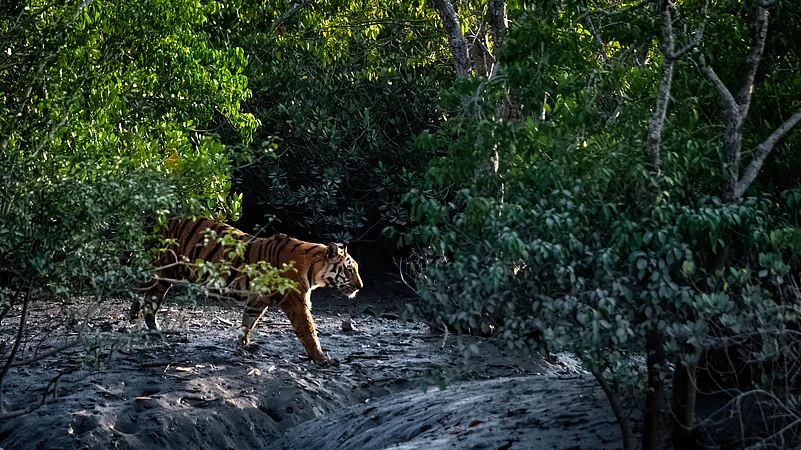
The Sundarbans stretches across more than 10,000 sq km.

1 September 2026
Get the latest issue of Outlook Business

The report identified this weakening through a phenomenon known as “critical slowing down”, where ecosystems take longer to recover from disturbances, show increased fluctuations in productivity and become more unstable over time.
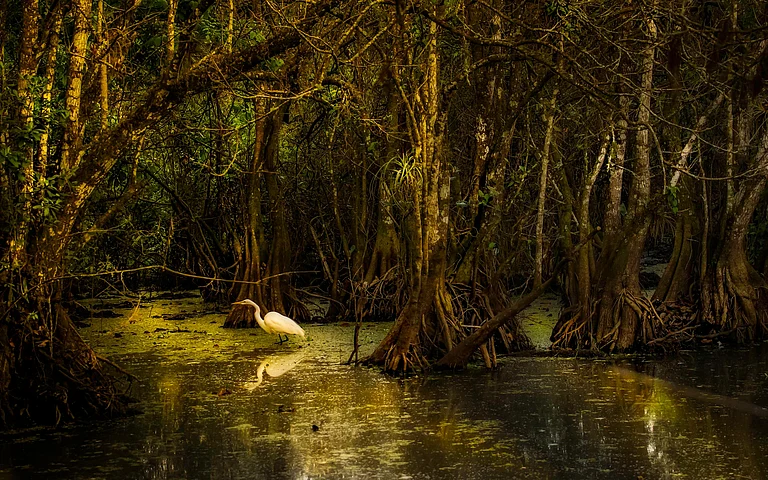
The report also pointed out that after cyclones Sidr, Rashmi and Aila hit, many areas of forest moved to lower resilience categories between 2007 and 2009. For instance, regions of 820.97 square kilometres, 732.54 square kilometres, and 1,138.74 square kilometres transitioned from resilient to moderately resilient and finally to weakly resilient.
The most affected zones are in the central and south-eastern parts of the Sundarbans, particularly in seaward regions stretching from the Satkhira range to the Sharankhola range. These include parts of the Chandpai and Sharankhola ranges. Another notable exception is the low-resilience hotspot located between the southeastern Chandpai range and the Sharankhola range along with both the east and west sides of the Shala River. Despite receiving freshwater, this region remains highly vulnerable due to its exposure to the paths of severe cyclones such as Sidr.
Advertisement
Vulnerable to Climate Risks
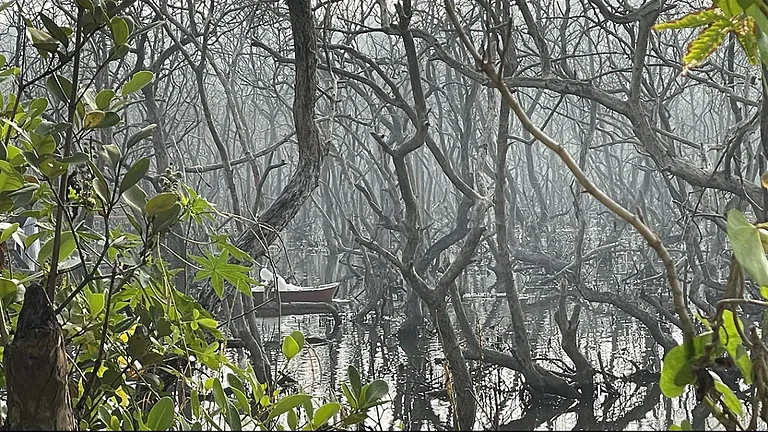
The Sundarbans, the world’s largest mangrove ecosystem, plays a crucial role in coastal protection, carbon storage and biodiversity conservation. However, a growing body of research shows that the region is increasingly vulnerable to the combined pressures of climate change and human activity. Rising sea levels, increasing salinity, coastal erosion and more frequent high-intensity cyclones are accelerating ecosystem degradation and weakening natural recovery processes.
According to Phys.org, mangroves protect tropical coasts from storms, store large amounts of carbon and provide vital habitats for plants and animals, for example, as nurseries for fish and crabs. However, their resilience depends on biodiversity and structural diversity within the forest. As environmental stress intensifies, these systems are becoming less stable, raising concerns about long-term sustainability. This aligns with the study’s finding that parts of the Sundarbans are already exhibiting “critical slowing down”, a crucial early-warning signal of declining ecosystem resilience and potential regime shifts.