The RDI Fund will only support innovations beyond TRL 4, explicitly excluding routine R&D to prioritise breakthrough, market-ready technologies.
Government will fund up to 50% of project costs and provide long-gestation “patient capital” to crowd in private investment for high-risk deeptech.
The fund aims to bridge the lab-to-market gap through ecosystem support, including certification, testing infrastructure, and market creation mechanisms.
One of the core criteria for the much-talked-about Research, Development and Innovation (RDI) Fund is that routine R&D will not be funded; it has to be innovative challenges, said Jyoti Sharma, Head, Research Development and Innovation (RDI) Cell, Department of Science and Technology, Government of India. “Whatever you are proposing, it should be really innovative,” she added. Sharma further said that if we look at the data, we are in the top 6 in patent filings, in the top 3 in producing PhDs, and in the top 3 in producing publications.
“So why is our innovation not reaching the market level? To convert ideas from lab to market, this fund will play a critical role. Your product or innovation should be above TRL 4; RDI will fund it. Apart from this, any routine R&D programme will not be funded by RDI,” she added.

1 September 2026
Get the latest issue of Outlook Business

Speaking about the long-standing problem that deeptech startups mostly face, she added, “If you go through the RDI, you will find the beauty of this fund: there is no gap, first. Second, the government is investing up to 50% of the project cost. Third, the government is investing for the long gestation period because we understand that high-risk technologies need more time.
Advertisement
And the government understands that once it puts in 50% of the money in high-risk technology, it will definitely enhance the confidence of private players to invest, because nowadays most deeptech startups or companies are not getting investment from private capital due to high risk and long gestation periods.”
She added that the innovation ecosystem in the country is undergoing a shift with the introduction of the ANRF and RDI schemes, which is also redefining the role of the Department of Science and Technology (DST). While DST has traditionally functioned as both a policy-making and apex funding body, its role is now evolving to focus more on policy design and the implementation of sectoral mission programmes.
Advertisement
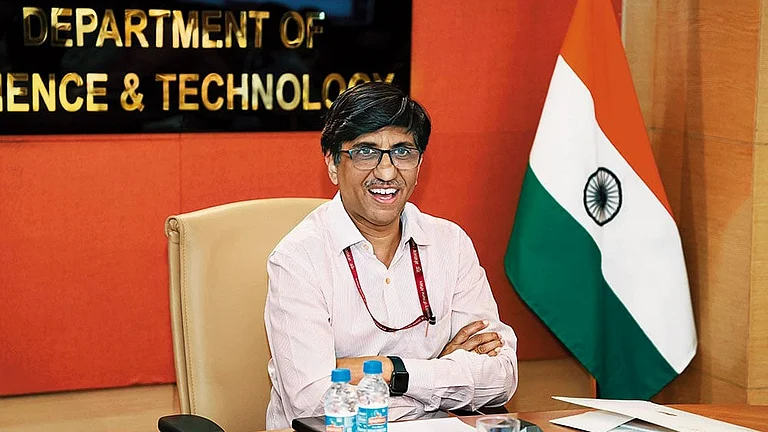
Speaking about the time it takes for deeptech start-ups when it comes to certification and testing, she added, “When we have meetings with different stakeholders, not only market participants such as fund managers, companies, startups, and corporate leaders, we focus on creating a market for the products that will be developed under the RDI fund. Certification and testing are therefore very important. We are working on building robust policies for regulation, certification, and testing facilities,” she added.
Weighing in on the RDI Fund and why it has second-level fund managers, Dr. Shivkumar Kalyanaraman, CEO of the Anusandhan National Research Foundation (ANRF), said, “This is a translation and scale-up fund, which we chose not to allocate directly.
Instead, we allocate it through second-level fund managers because that is a faster way, and we do not want government exposure on balance sheets. It is not a grant programme. A grant is where I give money and do not expect it back. Capital is where I give money expecting returns. There could be equity, risk, and so on. But it is patient capital.”

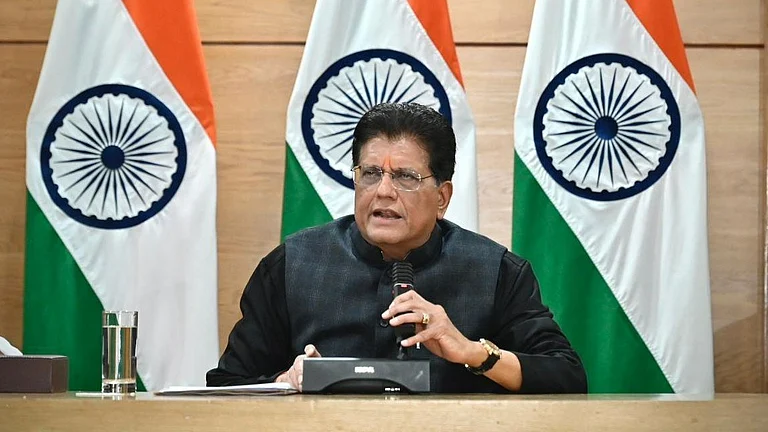


Sharma and Kalyanaraman were speaking at the TiE Delhi-NCR Capital Connect in New Delhi.