
The RBI said the ongoing West Asia conflict remains a key challenge for the global economy due to trade disruptions and energy price volatility.
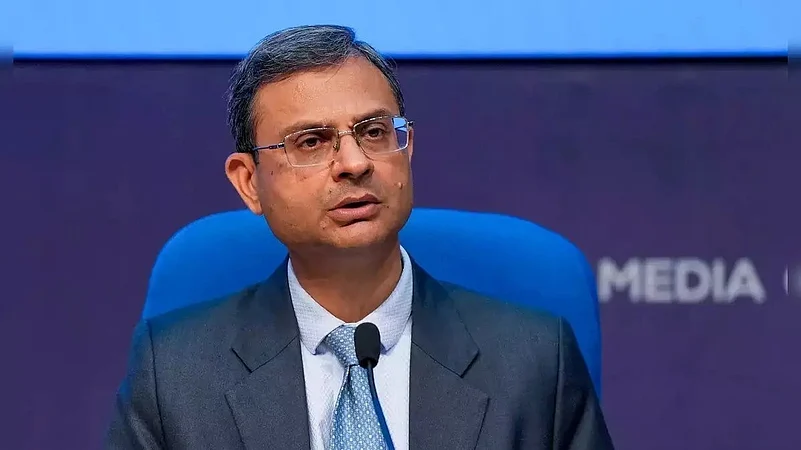
Governor Sanjay Malhotra said renewed tensions since July have increased uncertainty around supply chains.
The comments came after the MPC unanimously kept the repo rate unchanged at 5.25% while retaining a neutral stance.
The Reserve Bank of India (RBI) on Wednesday said the continuing conflict in West Asia remains a major risk for the global economy, with disruptions to trade routes, volatility in energy prices and uncertainty around supply chains weighing on the outlook.
RBI Governor Sanjay Malhotra said supply-side pressures caused by the conflict had eased somewhat since June 2026, but renewed tensions since the first week of July have increased risks.

1 September 2026
Get the latest issue of Outlook Business

"The West Asia conflict continues to challenge global economy by disrupting key trade routes," Malhotra said while announcing the Monetary Policy Committee's (MPC) decision.
The remarks came after the six-member MPC unanimously decided to keep the policy repo rate unchanged at 5.25% and retain its neutral policy stance.
West Asia Conflict Raises Global Economic Risks
Governor Malhotra said the recent escalation in West Asia has increased volatility in energy markets and created fresh concerns over global supply chains.
"However, the re-escalation of the conflict since the first week of July has amplified volatility in energy prices and renewed uncertainty about supply chains," he said.
Advertisement
He added that global economic conditions and market sentiment continue to remain influenced by rapidly changing developments in West Asia. The central bank, he said, will continue to take measures to strengthen the resilience of the Indian economy.

Inflation Rise Driven by Food and Fuel Prices
The RBI Governor also highlighted the impact of food and fuel prices on inflation trends while noting that broader inflationary pressures remain under control.
"The increase in inflation in June was primarily due to higher food, fuel, and fuel-induced inflation," Malhotra said.
Advertisement
The central bank's decision to maintain the status quo on rates reflects a cautious approach as policymakers balance domestic growth conditions with risks arising from geopolitical tensions, commodity price movements and global uncertainty.

.jpeg?auto=format%2Ccompress&fit=max&format=webp&w=768&dpr=1.0)