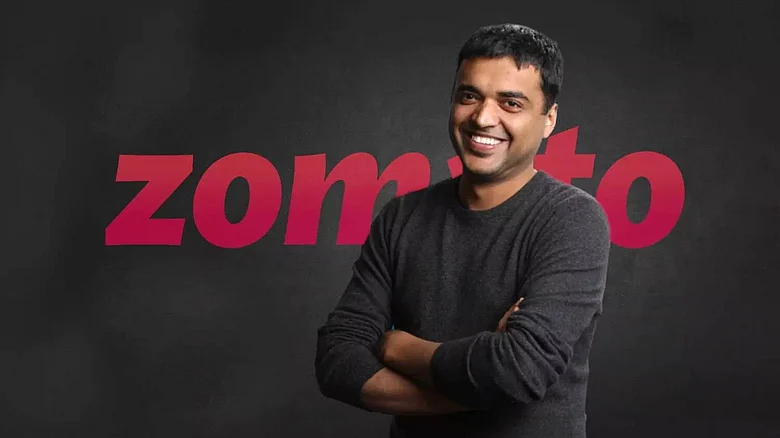

Deepinder Goyal explains how Zomato handles fraud and disputes
On Raj Shamani’s podcast, Goyal explained running Zomato’s delivery business
Goyal said some customers deliberately tamper with food, adding hair or objects, then claim refunds
Eternal CEO Deepinder Goyal, who recently appeared on YouTuber Raj Shamani's podcast, spoke about how the food delivery platform handles fraud, disputes and misconduct involving customers and delivery partners. During the conversation, he also discussed the day-to-day challenges of managing a large food delivery business in India.
Goyal touched upon customer behaviour on food delivery apps, saying that while most users are honest, a small number repeatedly try to exploit refund policies. He described some of these attempts as extreme and said they have increased over time.
According to Goyal, some customers deliberately tamper with food after delivery and then raise complaints to claim refunds. He mentioned instances where people have placed their own hair into meals or added foreign objects before reporting issues through the app.

1 October 2026
Get the latest issue of Outlook Business


He also highlighted how technology is now being misused to strengthen false claims. Goyal said customers have started using artificial intelligence (AI) tools to manipulate images. In some cases, digitally generated flies, insects, or even nails are added to food photos to make complaints appear genuine.
He pointed out a noticeable rise in damaged-food complaints, particularly cakes. Goyal recalled being surprised by a sudden jump in smashed cake images being reported, despite no change in delivery conditions, suggesting that image manipulation had played a role.
Advertisement
The Zomato chief also addressed fraud committed by delivery partners. He revealed that the company terminates close to 5,000 gig workers every month after identifying repeated dishonest behaviour across different categories.
How Zomato Handles Fraud?
One of the most common issues is delivery partners marking orders as delivered on the app without giving the food to customers. Another complaint involves cash-on-delivery orders, where riders say they do not have change and promise to return, but never do.
Goyal clarified that Zomato does not remove delivery partners over one complaint. He explained that each case is checked, but action is taken only when the same issue keeps coming up over time.
Advertisement

To settle disputes between customers and riders, Zomato relies on an internal karma score, he said, while adding that the system looks at past records and complaint history on both sides before deciding who is more likely to be at fault.
Goyal acknowledged that the company does not always get these decisions right. When it is unclear who is responsible, Zomato often bears the cost itself instead of penalising one side unfairly.
He said that in about 50 to 70% of disputed cases, Zomato refunds the customer while allowing the delivery partner to continue working.
However, Goyal noted that when complaints against a delivery partner show a clear and repeated pattern, the company takes strict action. He stressed that delivery partners are removed only after repeated issues, not for one-time mistakes.



Concluding his remarks, Goyal said building trust at a large scale is difficult in India’s food delivery business. He added that maintaining fairness for customers while protecting delivery partners remains a constant challenge.