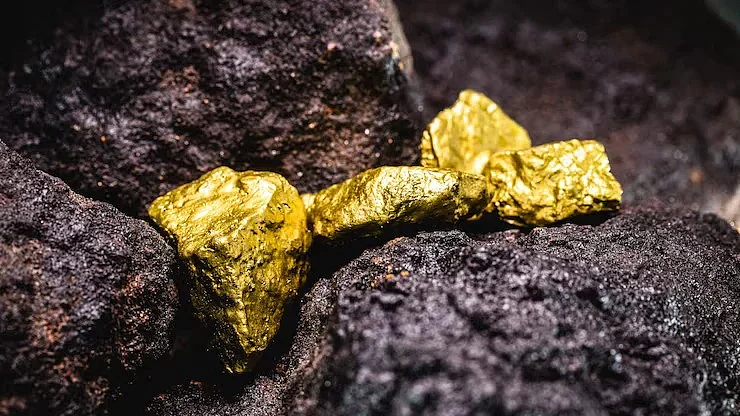

The Jonnagiri mine in Andhra Pradesh will become India’s first large-scale privately operated gold mine since Independence, with production expected to begin in early May.
India imports over 800 tonnes of gold annually; the project is seen as an early step toward strengthening domestic output and diversifying supply sources.
Gold ETFs recorded ₹22.7 billion in inflows in March, extending an 11-month streak, while Q1 inflows touched a record ₹316 billion despite seasonal demand softness.
Andhra Pradesh is preparing to host India’s first large-scale privately operated gold mine since Independence, with the Jonnagiri project in Kurnool district expected to commence operations in early May, The Economic Times reported. Developed by Geomysore Services India Pvt Ltd, the project could signal a gradual shift in India’s gold supply dynamics as the country attempts to strengthen domestic production and reduce reliance on imports, the report said.
Spread across nearly 598 hectares covering Jonnagiri, Erragudi and Pagidirayi villages, the project has attracted investments exceeding ₹400 crore. Andhra Pradesh Chief Minister N. Chandrababu Naidu is expected to formally dedicate the mine to the nation, the report said.

1 September 2026
Get the latest issue of Outlook Business

India currently imports more than 800 tonnes of gold annually, placing pressure on the country’s current account and foreign exchange reserves. Domestic production has remained limited, with Hutti Gold Mines producing roughly 1.5 tonnes per year.
The Jonnagiri mine has certified gold resources of 13.1 tonnes, with further exploration suggesting the potential to increase reserves to around 42.5 tonnes. At peak capacity, the mine is expected to produce up to 1,000 kg of refined gold annually over an estimated 15-year operational period.
Advertisement
According to the report, alongside mining activity, the project includes community development initiatives focused on education, healthcare, sanitation, drinking water, and skill development, supported by government facilitation and regulatory clearances aligned with industrial growth objectives.
Industry experts note that while the mine is unlikely to significantly reduce India’s import dependence in the short term, it represents an important structural step toward tapping domestic mineral resources.

Separately, gold demand remained subdued in early March due to seasonal factors, financial year-end adjustments, and price volatility, according to the World Gold Council.
Advertisement
Gold exchange-traded funds (ETFs) recorded net inflows of ₹22.7 billion in March, marking the 11th consecutive month of inflows, although at a slower pace due to profit booking. Total ETF holdings rose to 115 tonnes. Investment demand strengthened again in early April, while the first quarter of the year saw record inflows of ₹316 billion, highlighting continued investor interest in the precious metal.
Gold prices may also face pressure after the US Federal Reserve signalled that interest rates could remain elevated amid ongoing uncertainty. While gold is considered a safe-haven asset that attracts investors during periods of volatility, it typically performs better in a low-interest-rate environment, where the opportunity cost of holding non-yielding assets is lower.