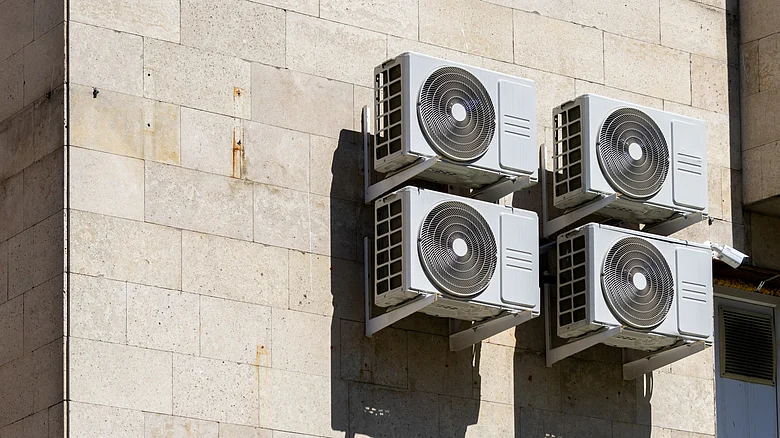

Leading Indian ACC manufacturers have asked the PMO and key ministries to reconsider an exemption that allows Chinese companies to bid for certain government thermal power plant contracts.
Companies argue procurement should consider lifecycle costs, execution reliability and foreign exchange outgo—not just the lowest bid price—as India prepares to add 80 GW of thermal power capacity.
The manufacturers have also urged the government to invoke provisions under the Public Procurement (Preference to Make in India) Order, citing limited market access for Indian firms in China's public procurement system.
Leading Indian manufacturers of air-cooled condenser (ACC) systems have urged the Prime Minister's Office (PMO) and key government ministries to review a recent policy exemption that allows companies from countries sharing a land border with India, including China, to participate in government thermal power plant tenders, The Economic Times reported citing people familiar with the matter.
ACC systems are a critical component of dry-cooling technology used in thermal power plants and are generally supplied as part of larger engineering, procurement and construction (EPC) contracts.

1 October 2026
Get the latest issue of Outlook Business

Industry Flags Concerns Over Policy Exemption
In separate representations addressed to the PMO, the Ministry of Power and the Department for Promotion of Industry and Internal Trade (DPIIT), Paharpur Cooling Towers, Enexio Power Cooling and Holtec Asia have sought a review of the exemption, according to the report. They have also proposed a procurement framework that gives preference to domestically manufactured ACC systems.
The industry argues that procurement decisions should not be based solely on the lowest upfront bid. Instead, they say, the government should also account for lifecycle costs, execution reliability and foreign exchange outgo.
Advertisement
As per the ET report, relying only on initial pricing creates a misleading comparison that makes Indian-made ACC systems appear costlier, despite domestic manufacturers already exporting these systems to global markets.
Exemption Linked to BHEL Procurement
The industry's concerns stem from the Centre's decision in March to exempt ACC systems from registration requirements under Rule 144(xi) of the General Financial Rules (GFR), 2017, for the procurement of 21 critical inputs by Bharat Heavy Electricals Ltd (BHEL).
Rule 144(xi), introduced by the Department of Expenditure, restricts companies from countries sharing a land border with India from participating in government procurement on grounds of national security and defence. The exemption effectively permits Chinese suppliers to bid for eligible ACC contracts under the specified procurement.
Advertisement
Domestic Capacity at Risk, Say Manufacturers
The manufacturers contend that the timing of the exemption is particularly significant as India plans to add around 80 GW of thermal power generation capacity over the coming years, a pipeline expected to require nearly 100 ACC units.
They argue that increased competition from Chinese suppliers could discourage fresh investment in domestic manufacturing and undermine the substantial capital already deployed to build local production capabilities.
Industry Seeks 'Make in India' Safeguards
In a separate representation to DPIIT, the companies invoked Clause 10(d) of the Public Procurement (Preference to Make in India) Order, requesting government intervention to protect India's strategic ACC manufacturing sector.
The manufacturers argued that Indian firms continue to face limited and non-reciprocal access to China's public procurement market. Extending similar procurement access to Chinese suppliers in India, they said, puts domestic manufacturers at a competitive disadvantage.
Clause 10(d) empowers the government to impose reciprocal measures against countries that do not provide Indian companies fair and equitable access to their public procurement markets.