




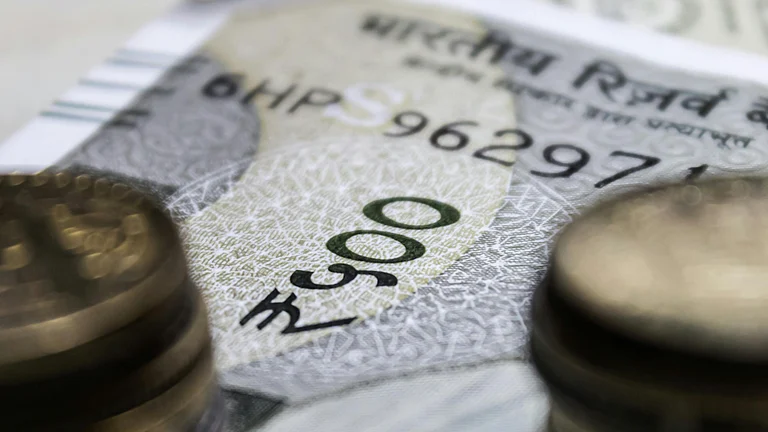
India has around 176 billion banknotes in circulation, compared with an estimated 56 billion US dollar bills and 30 billion euro notes.
The RBI prints 28-30 billion new notes annually while withdrawing around 21 billion worn or damaged notes under its Clean Note Policy.
Physical currency continues to grow at double-digit rates even as cash accounts for a declining share of individual transactions, creating what the RBI calls a “cash paradox.”
India currently circulates roughly 176 billion physical banknotes, far outpacing the global supply of major Western currencies, the Reserve Bank of India stated.
The total volume is approximately three times the number of US bills and nearly six times the total eurozone currency in circulation.

1 September 2026
Get the latest issue of Outlook Business

Reserve Bank of India Deputy Governor Shirish Chandra Murmu shared the data during a cash management conference hosted by Bank Indonesia in Jakarta on August 13.



At the end of last year, worldwide circulation stood at an estimated 56 billion US dollar bills and 30 billion euro notes, Murmu said.
Massive Annual Printing Churn
The central bank prints between 28 billion and 30 billion fresh notes annually across six denominations to maintain supply, the RBI stated.
Simultaneously, authorities withdraw roughly 21 billion damaged or worn notes from the financial system every year.
This massive replacement cycle is mandated by the Clean Note Policy. Established in 1999, the framework ensures only high-quality physical currency remains available for public transactions.
Advertisement
Officials attributed much of the gap to India's currency mix. The country relies heavily on lower-value notes, requiring a larger number of individual paper bills to facilitate equivalent transaction values compared to economies that rely on higher-value notes.
Navigating the Cash Paradox
The expansion of physical cash occurs despite the rapid adoption of digital payments, the RBI stated. Physical currency circulation grows at double-digit rates annually, even as cash comprises a shrinking share of overall individual transactions.
The central bank described this as a "cash paradox". Forecasting long-term production is complex because transactional demand—influenced by economic growth, inflation, interest rates and digital uptake—diverges from replacement demand driven by physical wear and tear.
Advertisement
To manage this logistical challenge, which reflects the scope of logistics involved in keeping cash flowing across the country, the RBI estimates currency requirements about five years ahead.
Production involves banknote paper mills, four currency printing presses and ink facilities operated by the central bank and the government.
The subsequent distribution network spans 19 regional RBI offices, government treasuries and currency chests operated by commercial banks.
Cash ultimately reaches the public through over 250,000 automated teller machines and business correspondents serving rural and smaller-town India.









