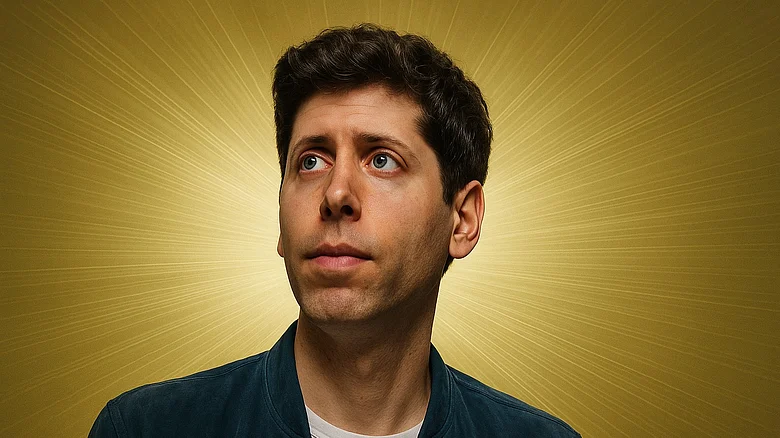
OpenAI CEO Sam Altman said the world may be only a couple of years away from early versions of true superintelligence and that by the end of 2028, more of the world’s intellectual capacity could reside inside data centres than outside them.
Speaking at India AI Impact Summit, Altman said the pace of progress over the past year has been striking. “We’ve gone from AI systems that struggled with high school-level math to systems that can do research-level mathematics now, and derive novel results in theoretical physics,” he said.
Highlighting India’s rapid adoption of AI, Altman noted that more than 100 million people in the country use ChatGPT every week, with more than a third of them students. India is also now the fastest-growing market for Codex, OpenAI’s coding agent that helps developers build software faster and better.
On superintelligence, Altman said such systems could eventually do a better job as CEO of a major company than any executive, or outperform top scientists in research. While acknowledging that these projections could be wrong, he said they “bear serious consideration.”
He framed the future of AI around three core beliefs. First, democratization is essential. Concentrating the technology in one company or country could lead to ruin, while broad access would support liberty, democracy and human agency. “We can choose to either empower people or concentrate power,” he said.

1 October 2026
Get the latest issue of Outlook Business

Second, safety must extend beyond building aligned systems to strengthening societal resilience. Altman warned that increasingly capable open-source biomodels could pose risks, including the creation of new pathogens, requiring a society-wide defensive approach. He added that the world may need international coordination mechanisms similar to the International Atomic Energy Agency to respond rapidly to AI developments.



Advertisement
Third, he stressed humility. “The future of AI is not going to unfold exactly like anyone predicts,” he said, advocating iterative deployment so societies can adapt step by step.
Separately, OpenAI and JioHotstar announced a partnership to integrate ChatGPT-powered multilingual voice discovery into the platform.
Speaking about the collaboration, Uday Shankar, Vice Chairman of JioStar, said, “AI marks a transformative shift for the media and entertainment industry. It fundamentally disrupts every aspect of the value chain, from conceptualisation and production to discovery and monetisation. As a tech-native, user-first platform, JioStar is embedding AI at the very core of the user experience.”
Advertisement
This partnership with OpenAI will allow viewers to discover, engage with, and even curate content simply using their voice. It is a fundamental reimagining of the entertainment experience; one that anticipates culture and feels deeply personal to every viewer.