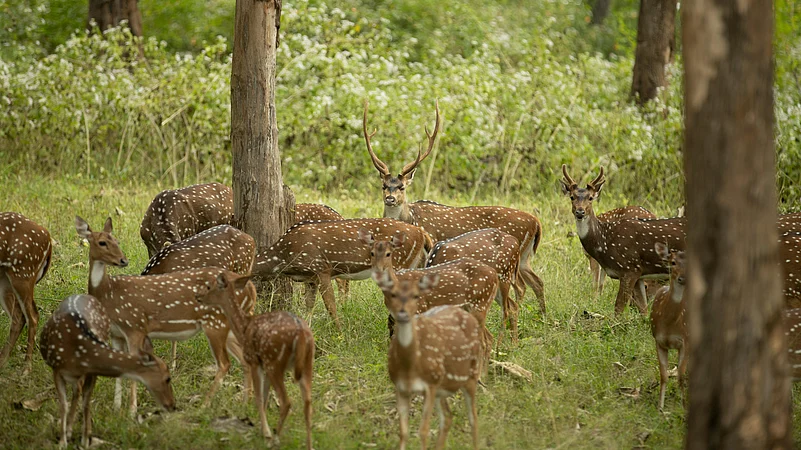

Study reveals 36% of animal habitats could face heatwaves, floods, and wildfires.
Climate change’s compounded effects on ecosystems threaten biodiversity by 2085, experts say.
Immediate emission cuts could prevent habitat loss and help protect wildlife by 2050.
More than one-third of all terrestrial animal habitats are at risk of being hammered by multiple, overlapping climate extremes by 2085, according to the research published in Nature Ecology & Evolution.
The study further stated that 36% of current land habitats could face a "compounded" onslaught of heatwaves, wildfires, and floods if global warming continues its current trajectory through the latter half of the century.
1 September 2026
Get the latest issue of Outlook Business

The study, led by the Potsdam Institute for Climate Impact Research (PIK) and an international team of 18 scientists, suggested that current conservation strategies may be dangerously inadequate. Stefanie Heinicke, the lead author and a postdoctoral researcher at PIK, argued that planners often focus on the slow, gradual rise in global temperatures while failing to account for the sudden devastation caused by extreme weather. “I think climate change, and in particular extreme events, are still really being underestimated when it comes to conservation planning,” Heinicke noted in the news release published by PIK.
Advertisement
The researchers utilised a novel approach by drawing data from climate impact models, which allow for a more nuanced projection of threats beyond simple temperature metrics, such as flooded areas and wildfire risks. These models reveal a stark timeline: by 2050, 74% of land animal habitats will likely be exposed to heatwaves, while 16% will face the threat of wildfire.
The study emphasises that the most significant danger lies in the compounding effect of back-to-back disasters. For instance, following the 2019-2020 Australian bushfires, researchers found that areas previously weakened by drought saw species declines 27 to 40% greater than in regions hit by fire alone.
Advertisement
Despite these dire projections, the scientists emphasise that the worst-case scenario is not yet inevitable. If the world rapidly transitions to net-zero emissions, the portion of habitat exposed to multiple extremes would drop from 36% to just 9%. Heinicke remains hopeful that immediate policy changes can shift the outcome, stating, “There’s still a lot of difference we can make by cutting emissions as fast as we can from today”
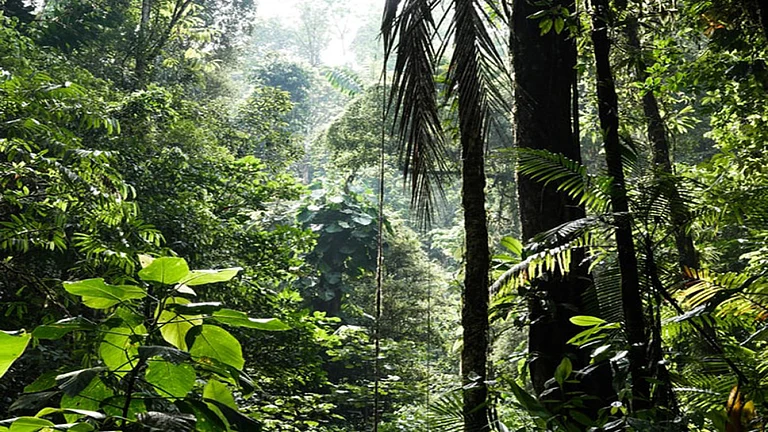
Compounding Climate Risks Ahead
A major international study warns that climate change could expose a large share of Earth’s land animal habitats to multiple overlapping extreme events by 2085, including heatwaves, wildfires and floods. Researchers from the Potsdam Institute for Climate Impact Research say conservation planning often underestimates sudden climate shocks compared to gradual warming.
Another 2025 study by the Potsdam Institute for Climate Research echoed similar trends as it stated that economic damages from climate change till mid-century are substantial and outweigh the costs of mitigation, they are mainly driven by temperature changes and affect regions with low incomes and low historical emissions most. They urge faster emission cuts and stronger adaptation strategies to protect biodiversity.