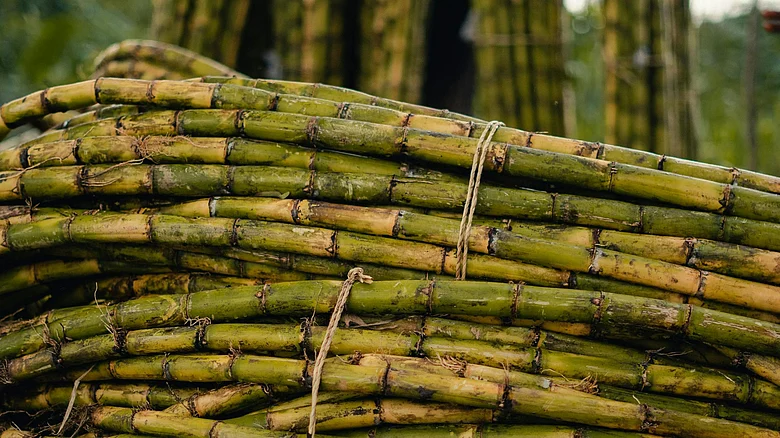

Trichoderma, a natural fungus, can suppress red rot, while infected cane is removed, and destroyed
ISMA says there is no sugar shortage, estimates 2025–26 net sugar production at around 279 LMT, with closing stocks of around 35 LMT
The government has allowed duty-free imports of 10 LMT of raw sugar, imposed stock limits and is advancing the 2026–27 crushing season
As the sugar industry works to ease concerns over domestic availability and prepare for the next crushing season, it is also stepping up efforts to protect sugarcane output from crop diseases such as red rot, including through biological solutions such as Trichoderma and the replacement of disease-prone varieties.
Outlook Business spoke with industry experts as the sugar fiasco in India unfolds ahead of the demanding festive season. While the industry has ruled out sugar price increase due to ethanol blending programme, the hike has been attributed to speculative hoarding, weather and in some cases 'red rot' disease which affects the sugarcane crop.

1 October 2026
Get the latest issue of Outlook Business

Elaborating on the role of Trichoderma, a biological measure to mitigate the effects of red rot disease in sugarcane, Madhav B Shriram, Vice President of Indian Sugar & Bio-energy Manufacturers Association (ISMA), said that Trichoderma can suppress the growth of red rot, although it does not cure the disease.



Advertisement
"Red rot is a fungal disease that can spread between fields, particularly when excessive rain and water movement create favourable conditions for its spread. In such cases, Trichoderma comes to the aid of the farmers," he said.
Where red rot is detected, the affected cane is removed and destroyed, along with cane within a surrounding radius. Lime is then applied to the soil to destroy any remaining disease-causing material, after which sugarcane is not planted in the affected area for a year, Shriram said.
What Is Red Rot And How Does Trichoderma Help?
Red rot is a fungal disease of sugarcane that can damage the crop and ultimately affect cane yields and sugar recovery.
Advertisement
Shriram said there is no measure that can completely eliminate the risk, making early identification and removal of infected plants important.
Trichoderma is a naturally occurring beneficial fungus used as a biological control agent against plant pathogens.
There are varieties of Trichoderma that help in mitigating the concerns. A 2018 field study, published in Springer Nature, found that Trichoderma could significantly suppress red rot in sugarcane under subtropical Indian field conditions.
Researchers tested two promising Trichoderma longibrachiatum isolates and found that treatments reduced red rot incidence by 29.5%–56.3% compared with untreated crops.
The strongest results came when Trichoderma was used through a combination of sugarcane sett treatment and soil application, which achieved more than 53% reduction in red rot, compared with 43%–49% through soil application alone and less than 35% with sett treatment alone.

The combined treatment also produced better numbers of millable canes and higher yields than untreated crops, suggesting that Trichoderma could offer a practical biological option for managing red rot on a larger scale.
Sugarcane Varieties Are Being Changed
Shriram said areas considered prone to red rot have seen disease-susceptible varieties being replaced. He cited the replacement of affected sugar crops with varieties Co 0238 (Karan 4) and Co 0118 (also known as Karan 2).
He described 238 as a "wonder variety" developed by agricultural scientist Dr Bakshi Ram, who is Padma Shri recipient and a former director at ICAR- Sugarcane Breeding Institute, saying it helped improve sugar recovery from around 8-12% while increasing sugarcane yield by around 20%.
Variety 118, he said, offers good performance but has lower yields than 238. Another variety, known as Co 20016 (also known as Karan 20),is under process of being released by the Indian government and is expected to deliver performance comparable to 238 in the future, Sriram said.
The measures are important because protecting next season's cane crop will be critical as the industry attempts to rebuild supplies and reduce the pressure that has pushed sugar prices higher.
Why Have Sugar Prices Surged?
According to ISMA, India is not facing a structural sugar shortage. The association estimates 2025–26 net sugar production at around 279 lakh tonnes (LMT), against domestic consumption of around 280–285 LMT, with projected closing stocks of around 35 LMT.
ISMA has attributed the recent price firmness to a combination of lower-than-initially-expected production, festive demand, market sentiment, speculative hoarding and higher international sugar prices.
International sugar prices rose from $474 per tonne on June 30 to $552 per tonne on August 20, an increase of more than 16%, the association said.
Speculative buying has amplified the rise in sugar prices, according to Deepak Ballani, DG of ISMA. "The perception was created that there is tightness. Whenever the perception is created, if a section of the trade says that there is tightness, then what happens? A person who buys one month's stock starts buying two months' stock. He feels that the price will increase, there will be an availability problem, so this cascading effect led to the price increase," he said.
Ballani said stocks remain available and that prices have already started easing after government intervention. He expects the impact of the measures to become clearer over about a month.
Imports, Early Crushing To Ease Pressure
The government has allowed duty-free imports of 10 LMT of raw sugar, while imposing stockholding restrictions and undertaking physical verification of stocks.
The industry body said these measures are intended to discourage speculative holding and strengthen market confidence.
ISMA and sugar mills are also working to advance the 2026–27 crushing season by 10–15 days. Special crushing is already under way in Tamil Nadu and Karnataka, with October production expected to rise to around 10 LMT, compared with the usual 4 LMT.
"The import window, stockholding measures and advancement of the crushing season provide multiple levers to manage the temporary firmness we are seeing. With closing stocks estimated at around 35 LMT and fresh-season production being brought forward, we remain confident about domestic availability," said Niraj Shirgaokar, President of ISMA.
The officials said that the additional domestic supply, existing stocks and calibrated releases should help ease pressure as festive buying normalises.
Is Ethanol Responsible For The Sugar Price Rise?
ISMA has rejected the argument that ethanol diversion is behind the current price increase. It estimates that grain-based ethanol accounted for 75% of total ethanol supply in 2025–26, while sugar-based ethanol accounted for 25%.

Ballani said sugar diversion towards ethanol is planned after assessing domestic requirements and the overall sugar balance, adding that the ethanol programme has supported sugar mills' liquidity and helped them make timely payments to farmers.
The immediate challenge, therefore, is to manage festive-season demand while protecting the next crop from disease and bringing fresh sugar into the market earlier, he remarked.