The West Asia crisis has pushed freight costs for Europe-bound cargo up by 60-80%, with exports falling by as much as 50% for some exporters while hundreds of containers got stranded at Kolkata port, industry representatives said on Thursday.
Calcutta Customs House Agents Association (CCHAA) president Mannu Choudhary told PTI that freight charges have risen by over 40% due to rerouting through the African route, while war surcharges imposed by shipping lines have taken the total cost escalation to 70-80% for shipments to Europe and the US.
Exporters also complained of a shortage of containers.

1 September 2026
Get the latest issue of Outlook Business

"Shipping lines are denying freight details to exporters, who are now waiting. No fresh containers are being accepted by shipping lines," he said.
Choudhary said around 600 containers that had entered Kolkata port for loading were being returned to the city following last-minute cargo cancellations.
Of these, around 400 have already been taken back, while the remaining 200 are in the process of being cleared.
Former EEPC India chairman and managing director of Nipha Ltd, Rakesh Shah, said the situation was "dire".
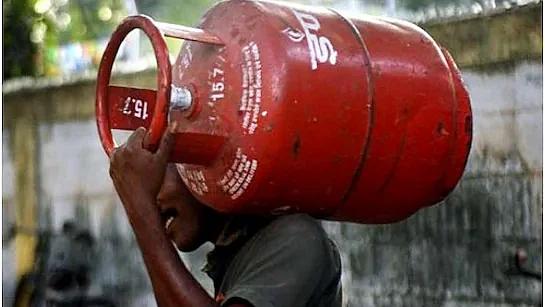
He said the LPG supply crunch was compounding production difficulties, as the fuel is used in the finishing process for certain manufactured goods, including engineering products.
Freight rates have risen 60-80% depending on destination, containers are in short supply, and exports have fallen by up to 50%, he added.
Advertisement
"March used to be the best month, but this will turn out to be the worst month for shipments," Shah said.
He said the engineering goods industry, which had been expecting growth of 3% to 3.5% over the previous year, would now lose incremental exports and was likely to end the current fiscal flat.
"We were up 2% till January, but with February and March, the geopolitical headwinds will eliminate the growth factor," he said.
Shah said exporters were also unable to take advantage of the falling rupee due to disruptions in logistics and order execution.
On the government's relief measures, Shah acknowledged the freight neutralisation scheme offering 50% reimbursement but flagged a critical implementation gap.
Advertisement
"There is a lack of clarity on the total freight equalisation benefit, which is making our internal calculations difficult," he said.
Choudhary said the port trust and Concord have offered reduced tariffs, and weekly CCFC (Customs Clearance Facilitation Committee) meetings are being held at the Custom House with all stakeholders.
Further stakeholder meetings are scheduled for March 23 and 24, he added.
Perishable cargo from the eastern region, particularly shrimps and fish, has been among the worst affected, along with engineering goods, textiles and medicines meant for European markets.
While medicines are largely being transported by air, last-minute flight cancellations and mid-air route changes are pushing up air freight tariffs.
"Crisis is still there. Exporters are a little concerned. The environment is insecure," Choudhary said, adding that he expects shipping lines to cooperate in reducing charges in upcoming discussions.
The Jawaharlal Nehru Customs House (JNCH) at Nhava Sheva had on March 13 directed all shipping lines and non-vessel owning common carriers (NVOCCs) to pass on relief granted by the Jawaharlal Nehru Port Authority (JNPA), including a 100% waiver on ground rent and dwell time charges and an 80% waiver on reefer plug-in charges for eligible Middle East-bound containers stranded between February 28 and March 14, 2026.
The government, on March 19, approved the ₹497 crore 'RELIEF' (Resilience and Logistics Intervention for Export Facilitation) scheme under the Export Promotion Mission.
Implemented through ECGC Ltd, the scheme covers shipments between February 14 and March 15, 2026, with up to 100% risk coverage for conflict-linked losses, and up to 95% coverage for exports between March 16 and June 15, 2026.
MSME exporters without ECGC cover are eligible for up to 50% reimbursement of freight and insurance surcharges, capped at ₹50 lakh per exporter.