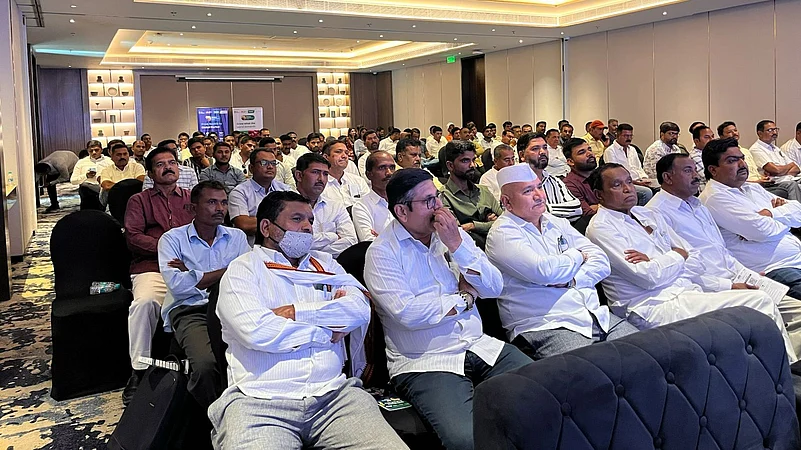

DeHaat partners with NHB to develop Nashik grape cluster for global markets.
Programme offers financial support, drip irrigation and GAP/IPM compliance for farmers.
Initiative aligns with India’s strategy to enhance agricultural exports and competitiveness.
DeHaat, an Indian AgriTech platform, has launched a Grapes Cluster Development Programme in Nashik in partnership with the National Horticulture Board (NHB) under the Ministry of Agriculture & Farmers Welfare. The programme, announced on March 20, 2026, is designed to improve the global competitiveness of India’s grape industry by modernising local farming practices and crop varieties.
The initiative addresses a significant shift in international demand. While Indian grape production is currently dominated by traditional open varieties such as Thompson Seedless, global markets are increasingly moving toward premium, licensed varieties. These new-generation grapes are preferred by international buyers for their consistent quality, improved shelf life, and specific consumer traits. According to the programme organisers, early adopters of these export-oriented varieties are likely to gain advantages in market access and price realisation.

1 September 2026
Get the latest issue of Outlook Business

The programme offers financial assistance ranging from 30% to 50% for eligible activities, subject to NHB cost norms and scheme guidelines. Supported components include the expansion of land for new grape varieties, the installation of drip irrigation systems, and ensuring compliance with Good Agricultural Practices (GAP) and Integrated Pest Management (IPM). Farmers can also receive support for canopy and orchard rejuvenation, as well as the development of post-harvest and export linkages.
DeHaat will implement the programme through its integrated Seeds to Market platform, which combines agricultural advisory, input delivery and crop aggregation. The company already maintains an export presence in the Nashik region through the Freshtrop brand.
Advertisement
Ravindra Dangi, Deputy Director of the NHB, stated in the news release that the programme provides end-to-end value chain support to help farmers integrate more effectively with organised export markets. Nikhil Toshniwal, Chief Digital Officer at DeHaat, added that regional growth depends on farmers aligning with global requirements for better varieties and full traceability. The initiative is expected to take three to five years to accelerate this transition and establish Nashik as a globally benchmarked grape cluster.

Enhancing Grape Exports
The National Horticulture Board (NHB) and its implementing frameworks under the Mission for Integrated Development of Horticulture (MIDH) support farmers in adopting export-oriented, premium varieties as a core strategy to improve yield quality, enhance shelf life and strengthen international competitiveness.
Advertisement
A February 2026 report by The Economic Times outlined that India is eyeing a $30trn economy by 2047 through FTAs, agri-reforms, modernising MSMEs, scaling food processing and bridging the farmer-private sector trust gap.