India stayed cautious on US strikes as Venezuela holds limited economic weight
Bilateral trade shrank sharply; oil ties weakened after renewed US sanctions
Venezuela’s oil reserves matter geopolitically amid US–BRICS tensions
Sanction easing could help India recover $536mn and boost energy security
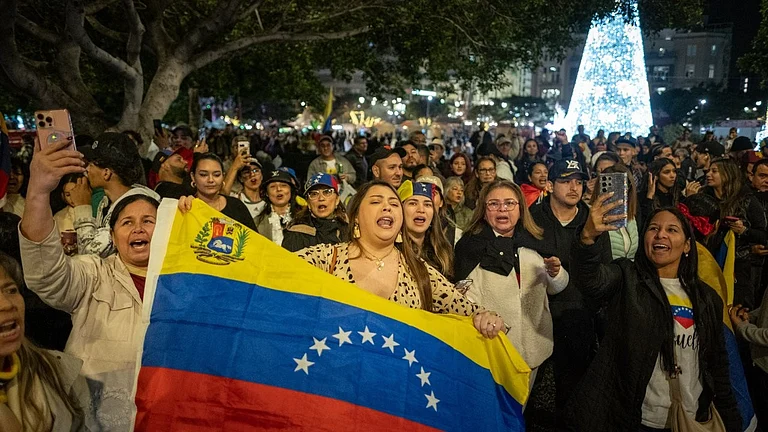
When American bombs hit Venezuela on January 3, the ripples were felt far beyond Latin America. The strikes drew both sharp criticism and vocal support for the Donald Trump administration. Several members of BRICS were quick to condemn the US military action on the territory of a sovereign state.
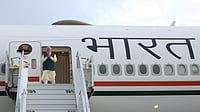
India, however, chose a more cautious line. In a statement issued on Sunday, the Ministry of External Affairs said the evolving situation in Venezuela was a matter of “deep concern”, without directly referring to the US operation. There was no mention of President Nicolás Maduro, his capture, or questions of international law.

1 September 2026
Get the latest issue of Outlook Business

The restraint signals at a simple truth — Venezuela matters to India, but its importance is limited.

India’s Tightrope
In recent years, India has largely avoided open criticism of the US, with the notable exception of defending its energy ties with Russia. New Delhi is currently negotiating a bilateral trade agreement with Washington—its largest export market—seeking relief from tariffs that have gone as high as 50% on some products.
However, India's careful statement is not different from its stance on Ukraine, Gaza and Iran. Strategic autonomy, often described as non-alignment in contemporary form, continues to shape Indian diplomacy.
Advertisement
Economically, however, India–Venezuela ties have thinned over time, even as diplomatic engagement has been maintained. The relationship received a major boost during former president Hugo Chávez’s visit to India in March 2005, when he held talks with then prime minister Manmohan Singh and president A.P.J. Abdul Kalam. Six agreements were signed, including on hydrocarbons cooperation and the establishment of a joint commission.
Engagement has continued sporadically since then. Officials from the two countries met three times in 2025. But trade tells a different story. Bilateral trade fell sharply from $6.4bn in FY20 to $431mn in FY23, before rebounding to $1.17bn in FY24. Even that recovery was largely driven by imports, with India’s import bill jumping from $253mn to $999mn over the same period.
Advertisement
India's import basket from Venezuela was mostly driven by oil but US sanctions in 2019 led India to drop oil imports from Venezuela to a bare minimum. Before the sanctions, Caracas was New Delhi's top five suppliers of oil.
There was a brief revival after Washington eased sanctions in October 2023, allowing companies such as Reliance Industries—once a regular buyer—to resume purchases. The momentum did not last. The US declined to extend the waiver, and uncertainty returned.
It has become more difficult after Trump, in his second term, threatened to impose higher tariffs on countries buying Venezuelan oil. India is already paying 25% extra tariffs due to its relationship with Russia.
From a purely economic perspective, therefore, India’s stakes in Venezuela are limited. Politically, however, the situation is more delicate. India’s close ties with Russia, combined with a more openly confrontational stance taken by BRICS against Washington, leave New Delhi exposed to pressure from multiple directions.
Trump already sees BRICS as an anti-American entity and threatened to put an additional 10% 'reciprocal tariffs' on them. It could complicate India's already delayed BTA discussions further.
A Narrow Silver Lining
There is, nonetheless, a potential upside. Venezuela is home to around 18% of the world’s proven crude oil reserves—more than Saudi Arabia, Russia or even the US. In fact, Venezuela alone has more oil than the US and Russia combined.
Control over this vast upstream resource lies at the heart of Washington’s actions. Trump made it clear that he wants Venezuela's oil. Vice President JD Vance also accused Venezuela of expropriating American oil property 20 years ago and "until recently used that stolen property to get rich and fund their narco terrorist activities". The US, he said, is now taking back what is “theirs”.
If that vision were to materialise, Venezuela could once again emerge as a major oil supplier. But this is unlikely to happen quickly. Years of underinvestment, decaying infrastructure, sanctions and a prolonged economic crisis have hollowed out the country’s production capacity.
For India, that delay could be an opportunity. Analysts suggest Washington may eventually be forced to ease sanctions again to unlock Venezuelan output. Such a move could allow ONGC Videsh (OVL) to recover $536mn in unpaid dividends from its stakes in two Venezuelan oil and gas projects, while also reopening the door to fresh Indian investment in the sector.
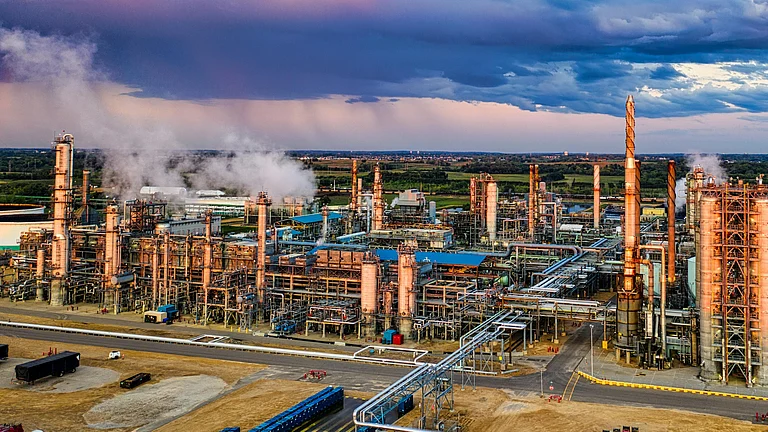


Venezuela not only failed to pay OVL in dividends due on its 40% stake in the field up to 2014, but also a near-equivalent amount for the subsequent period for which Caracas has refused to permit audits, effectively freezing settlement of the claims.
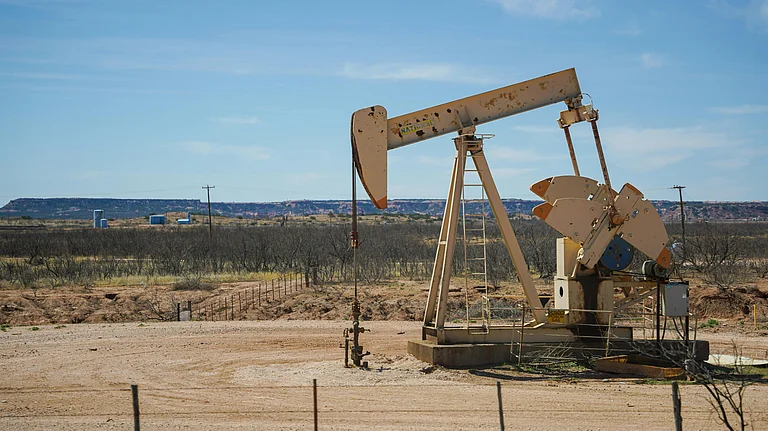
"Once sanctions are eased, OVL can move rigs and other equipment from places, such as its parent ONGC's oil fields in Gujarat, to San Cristobal to revive output that has plummeted to 5,000-10,000 barrels per day," officials in the know of the matter told PTI.
More broadly, bringing Venezuelan oil back into the global market—where it currently accounts for well under 1% of supply—could increase overall availability and exert downward pressure on prices.
For India, Venezuela is unlikely to become a major economic partner anytime soon. But in a world where energy security and geopolitics are increasingly intertwined, it remains a country that New Delhi cannot afford to ignore.