
Hormuz traffic collapses 86%, stranding over 700 tankers near the strait.
Brent jumps nearly 10%, Europe’s gas prices surge over 40% after attacks.
India weighs curbs on fuel exports and emergency crude sourcing options.
LPG most vulnerable, with imports covering barely two weeks of demand.
The Strait of Hormuz has not been formally shut, but the effect is much the same. Oil traffic through one of the planet's most critical shipping corridors has ground to a near-standstill, with close to 86% of normal crude flows simply vanishing from the waterway — and energy markets are feeling every bit of it.
Figures from maritime analytics providers Windward and Kpler, as reported by NDTV, tell a stark story. On March 1, just three tankers made the crossing, carrying a combined 2.8mn barrels — a 86% collapse from the 2026 daily average of 19.8mn barrels. By the morning of March 2, movement had dwindled further still, with only one small tanker and a single cargo vessel picking their way through the main shipping lanes.

1 October 2026
Get the latest issue of Outlook Business

The backlog is already substantial. Some 706 non-Iranian tankers are now anchored or drifting on either side of the strait — 334 crude carriers, 109 dirty product tankers and 263 clean product vessels among them. A further 26 tankers are meandering inside the Gulf without apparent destinations, while hundreds more sit idle in the Gulf of Oman, waiting for a signal that may not come.

Markets react, and fast
The response in commodity markets was swift. Brent crude climbed nearly 10% to roughly $80 a barrel, while European natural gas prices surged by more than 40% following strikes on Saudi Arabia's Ras Tanura refinery complex and a Qatari liquefied natural gas facility, both of which were forced into shutdown, said the report.
Advertisement
The consequences of even a brief paralysis are serious enough. Tanker queues will continue to lengthen, delivery schedules will fall apart, and war-risk insurance for vessels operating in Gulf waters has already tightened considerably. Freight rates and the premiums demanded by shipowners willing to approach the strait are rising — costs that will, inevitably, feed through to fuel prices at the pump across the globe.
A prolonged disruption of weeks rather than days would be a different matter altogether.

Asia, Europe Scramble for Alternatives
Refiners across Asia and Europe are already hunting for replacement barrels, turning to suppliers in the US Gulf, West Africa, Brazil and Russia. China and India — both heavily dependent on Gulf crude — are particularly exposed, it said.
Advertisement
New Delhi is weighing a range of emergency options. India may consider restricting petrol and diesel exports to protect domestic availability, accelerating purchases of Russian crude, and introducing demand-management measures, including LPG rationing, should the crisis drag on. These potential steps have not been independently verified.
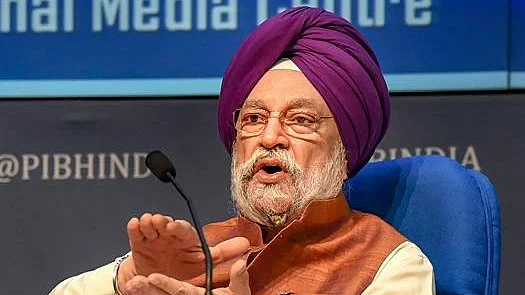
"We are continuously monitoring the evolving situation, and all necessary steps will be taken to ensure availability and affordability of major petroleum products in the country," it said in a post on X, following a supply review by Oil Minister Hardeep Puri.
The country's exposure is not insignificant. India sends abroad roughly a third of its petrol output and around a quarter of its diesel production, according to industry estimates. Its most vulnerable position, however, is in LPG: India imports somewhere between 80 and 85% of its liquefied petroleum gas requirements, the bulk of it from Gulf producers shipped through Hormuz. Current stocks, industry figures reportedly suggest, may not cover more than a fortnight of consumption if fresh deliveries stop arriving.


State-owned refiners Indian Oil, HPCL and BPCL have begun ramping up LPG production at selected sites. Puri has stated that India's total crude and product reserves — spread across strategic underground caverns, refineries, ports and floating storage — can sustain roughly 74 days of demand. Within that overall figure, dedicated crude caverns are thought to hold around 17 to 18 days' worth, refined fuels approximately 20 to 21 days, and LNG storage in the region of 10 to 12 days.
US President Donald Trump has warned that the conflict in West Asia could run for "weeks, not days." If he is right, India may soon find itself having to make difficult choices — balancing the imperative of keeping its own population supplied against its position as one of the world's significant fuel exporters.