



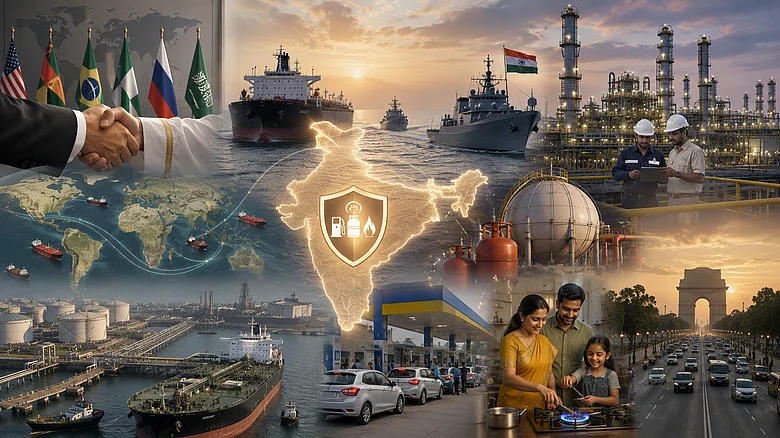

India rerouted crude imports and boosted domestic LPG production within days of the Hormuz closure on February 28.
Excise duty cuts worth ₹1.7 lakh crore kept retail fuel price increases in single digits, against an 85% rise in diesel prices in the UAE.
The Indian Navy launched Operation Sankalpa to escort tankers, while diplomacy secured passage for Indian-flagged vessels through the Strait.
When the Strait of Hormuz closed on 28 February 2026, India was presented its most severe energy-supply shock. But barring the sporadic queues at petrol pumps and LPG distribution points in the initial days, retail outlets in the country have run normally and the ordinary consumer has been shielded from the full impact of the global supply disruption.
While some of India’s neighbours reacted by imposing fuel rationing at retail outlets and work-from-home measures to deal with the global supply disruption, India’s multi-pronged response showed a major world economy maturely exercising its choices to protect its national interests.

1 October 2026
Get the latest issue of Outlook Business

This approach required actions at multiple levels: from vigorous diplomacy to refinery-level tweaks in the product slate, the bold use of the Indian Navy (Operation Sankalpa) to escort tankers through the Gulf, and involvement of the State Governments and Industry bodies in demand and supply management.
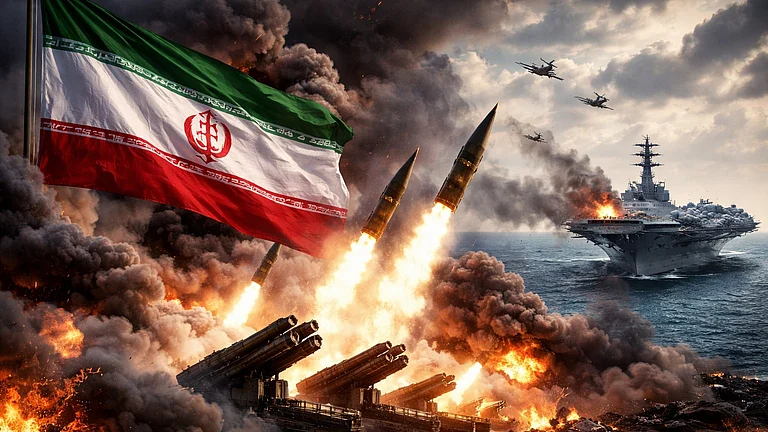


The immediate challenge was structural: nearly half of India's crude oil imports and over 90% of its LPG transited though the Strait. An indefinite closure of indefinite meant that refineries would face feedstock interruptions, LPG would be in acute shortage, and the entire supply chain would fail unless alternative sources were secured fast enough. This demanded agile decision-making especially by the State-owned oil companies. Board-level strategic decisions that would have normally taken months were taken in days.
Advertisement
Within weeks, non-Hormuz sourcing rose from 55 to 70% of imports. This shift required nimble-footed engagement with suppliers across the Atlantic basin, the Americas, West Africa, Russia and Gulf partners, negotiated across commercial, bilateral and diplomatic channels simultaneously.
Through the LPG Control Order, the Union Government directed India’s refineries to maximise their LPG yields. Within five days, domestic production of LPG rose from 35 TMT per day to 54 TMT per day. Refineries adjusted their cracking configurations and production splits, squeezing out additional LPG from each barrel of crude oil. LPG supplies were carefully calibrated between household and commercial sectors.
Advertisement
The Union Government also issued the Natural Gas Supply Regulation Order under the Essential Commodities Act, establishing clear priorities for supply: domestic consumers of piped gas and CNG received full protection; the demands of industrial users were moderated while fertiliser plants faced tighter constraints. The logic was transparent: household consumption had to be ring-fenced entirely. Sectors with greater substitutability absorbed progressively larger adjustments. This differentiated treatment based on strategic priority assigned by the Government worked well.
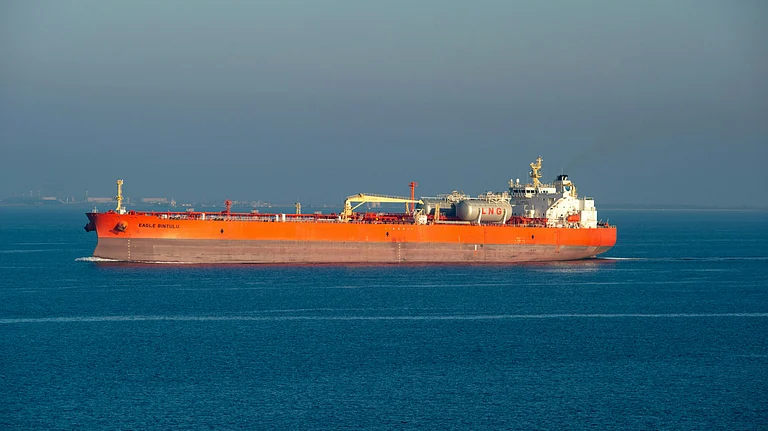
The real success of the Union Government’s handling of the crisis, however, is its decision not to pass on the spike in crude oil prices to the ordinary consumer. Cuts in excise duties (approximately ₹1.7 lakh crore of revenue forgone), revision in export levies and with the State-owned oil companies shouldering the burden of price under-recoveries, the citizen was largely shielded from any price shocks. While retail prices of petrol in the neighbouring countries went up substantially, the same could be contained in single digit in India. In Diesel, while an oil-producing country like UAE saw a retail price rise of 85%, in India the retail price rise was only 8% during this period. This price management not only protected the ordinary consumer but also seems essential from the medium-term inflation management that is likely to affect many major economies.
The diplomatic dimension and the synergy between MEA and the Ministry of Petroleum & Natural Gas deserve mention. One-on-one engagement with Gulf partners at the highest political level secured passage for Indian-flagged vessels through the Strait. Proactive diplomacy was harmonised with operational logistics spread across the globe: vessels chartered, cargoes confirmed, factoring in the spike in insurance costs, juggling the volatility in prices and re-writing supply contracts, etc.
Every crisis is a teacher. The broader lessons from this one are: India needs to diversify its hydrocarbon sources and supply chains by looking at energy exporters in the Americas and West Africa, improve its maritime infrastructure for handling Very Large Crude Carriers (VLCC) to reduce freight costs of sea-borne hydrocarbons, gradually reduce its dependence on sea-borne oil and gas, accelerate investments in domestic exploration and production, renewable energy and nuclear power, and strengthen its strategic petroleum reserves by quickening the development of the sites at Padur and Chandikhol.
(Vivek Kumar is a retired IAS officer and a former Joint Secretary in the Ministry of Oil and Natural Gas. Views expressed are personal.)









