
India to receive US yarn and cotton trade benefits similar to Bangladesh.
Zero reciprocal tariff applies if Indian textiles use US raw material.
US–Bangladesh pact cuts tariff gap to 1%, raising exporter concerns.
Industry warns deal may impact India’s cotton yarn exports to Bangladesh.
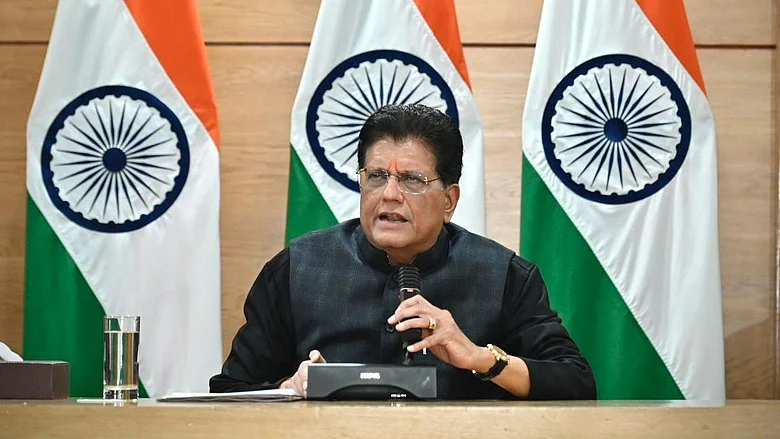
India is likely to receive yarn and cotton-related trade benefits similar to those of Bangladesh under its trade deal with the US, commerce minister Piyush Goyal said on Thursday. However, to get such a concession, India must procure the raw material from the US.
Goyal responded to a claim made by the leader of opposition, Rahul Gandhi where he said Bangladesh had secured better terms than India. "He [Rahul Gandhi] spread another lie in the Parliament that Bangladesh has got more benefits from the trade than India,” the minister noted.

1 October 2026
Get the latest issue of Outlook Business

"Just as Bangladesh has a facility that if raw material is purchased from America, then if you process it and make cloth and export it, then it will be available at zero reciprocal tariff. India also has the same facility and India will also get it,” he explained, adding that it will be clear in the final deal.

US-Bangladesh Deal
Recently, the US announced the conclusion of a trade deal with Bangladesh, where they announced zero tariffs for textile exports, which triggered widespread panic across Indian exporters. As part of the agreement, the Trump administration has lowered tariffs on Bangladeshi products to 19%, slightly above India.
Advertisement
The US-Bangladesh deal includes a clause that says Dhaka garments will attract zero if made with US cotton and man-made fibres. A Bangladeshi garment now faces a 31% levy, and if it uses US fibres, then duty falls to the most-favoured nation 12% only, excluding the reciprocal tariff.
“The United States commits to establishing a mechanism that will allow for certain textile and apparel goods from Bangladesh to receive a zero reciprocal tariff rate. This mechanism will provide that a to-be-specified volume of apparel and textile imports from Bangladesh can enter the United States at this reduced tariff rate,” the Bangladesh-US joint statement said.
Advertisement
The Confederation of Indian Textile Industry (CITI) called it a two-fold challenge. "First, the tariff differential between India and Bangladesh has halved from 2% to 1%, which is a matter of concern in a sector with narrow profit margins. Secondly, the US–Bangladesh Agreement on Reciprocal Trade could likely adversely affect India’s cotton yarn exports to Bangladesh," it noted.