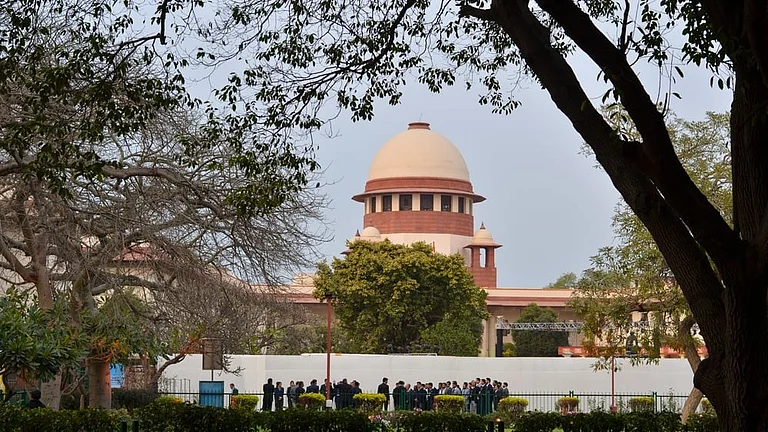
Government considers flex-fuel policy amid disruptions caused by West Asia conflict.
India pushes ethanol blending and alternative fuels to reduce oil imports.
Industry concerns persist over pricing, demand, and lack of vehicle readiness.
The government is considering a policy for the adoption of flex-fuel vehicles in the country amid supply disruptions caused due to the West Asia conflict, Business Standard reported citing Sujata Sharma, joint secretary at the Ministry of Petroleum and Natural Gas (MoPNG).
The official’s comments come a day after Nitin Gadkari, Union minister of road transport and highways, said the country needs to target 100% ethanol blending in petrol in the near future to become energy self-reliant in the wake of the energy crisis due to the conflict in West Asia.

1 October 2026
Get the latest issue of Outlook Business

India’s Flex-Fuel Policy Plan
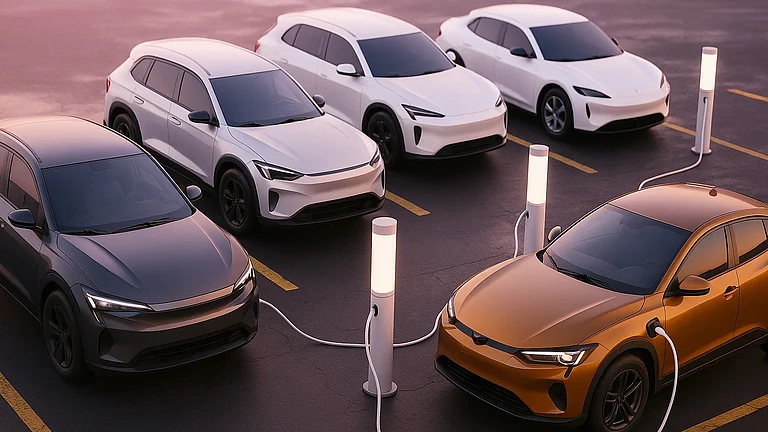
India currently blends 20% ethanol with petrol. The government’s plan to increase blending beyond 20% was met with resistance after reports emerged of reduced mileage due to the use of blended fuel in vehicles.
Meanwhile, to boost consumption of alternate fuels in the country, the government said 467 applications for compressed natural gas (CNG) and compressed biogas (CBG) dispensing stations were received between March 25 and April 2. Out of the total applications, 157 were granted final licences and 38 were given prior approvals for the construction of new CNG or CBG dispensing stations.
Advertisement
The government has also approved 41 biogas cylinder filling and storage plants and subsequently granted licences to 14 plants. Additionally, Petronet LNG has been granted commissioning permission for an additional 5 million tonnes per annum (mtpa) regasification capacity at the Dahej terminal, increasing total capacity to 22.5 mtpa.
While alternate fuels are being considered for vehicles due to the West Asia conflict, the development also comes at a time when the aviation industry is aligning with fuels that produce lower emissions.
How Flex-Fuel Vehicles Work
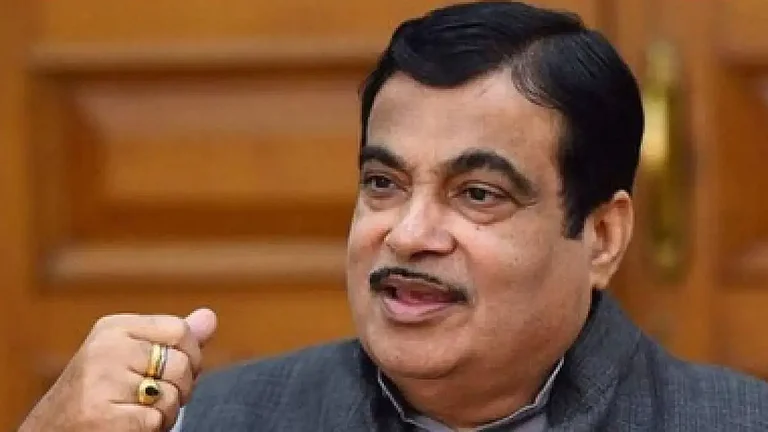
According to India Science, Technology and Innovation Portal, flexible fuel vehicles (FFVs) are vehicles that have been changed so that they can run on petrol or a mixture of petrol and ethanol (up to 83%). They have a regular internal combustion engine like other gasoline-only cars, but their fuel system is compatible with ethanol and their powertrain is set up differently.
Advertisement
They display improved acceleration performance when operating on higher ethanol blends. Dimethyl Ether (DME) is an ideal alternative fuel as it has a higher cetane number (CN) (~58) than that of conventional diesel (51), indicating higher ignitability. Beyond ethanol-based fuels, other alternative fuel options are also being explored for transport applications.
DME can be produced from biomass, coal, industrial wastes, municipal solid wastes and black liquor (a by-product of pulp) through gasification and the Fisher-Tropsch synthesis process. It can also be produced via catalytic dehydration of methanol. It is generally stored as liquid and phase change from liquid to vapour/gas could easily occur at ambient temperature and pressure.
Policy Discussed, Not Delivered
To curb pollution, the government had planned to announce a policy a decade ago in January 2016 as well to allow automakers to manufacture flexible-fuel vehicles in the country. According to reports, in December 2015, Union Transport Minister Nitin Gadkari had called upon the sugar industry to ramp up ethanol production as demand for it was expected to go up with the introduction of flexi-fuel vehicles in India.
In 2021, the transport ministry even advised automakers to start producing FFVs within 6 months. The transport ministry also urged the manufacturers to produce the Flex Fuel Strong Hybrid vehicles and expected both types of vehicles to comply with the BS-6 emission norms. This was just an advisory and not a binding mandate.
According to a report published by Business Standard on April 23, 2026, Indian Oil Corporation, Bharat Petroleum Corporation, and Hindustan Petroleum Corporation raised concerns during a meeting on February 28 over the lack of price difference between E20 and flex fuels. They also pointed to minuscule demand seen in earlier pilot projects, where E93 fuel was supplied at about 500 outlets in 2024. The companies further flagged the absence of flex fuel vehicle models in India and the lack of a clear timeline for their launch, reported Business Standard.
Since the policy was ahead of its time, the country has been building the necessary environment to push the flex-fuel vehicles seriously. Meanwhile airlines too have made progress in reducing emissions.