
New H-1B approvals for India’s top IT companies fell to 4,573 in FY25 — a 70% drop over a decade.
Renewals remain strong with over 291,000 approvals, signalling a shift toward retaining existing workers rather than sponsoring new ones.
Trump-era immigration reforms, fee hikes, and proposed outsourcing penalties are reshaping talent strategies and pushing Indian IT firms toward localisation.
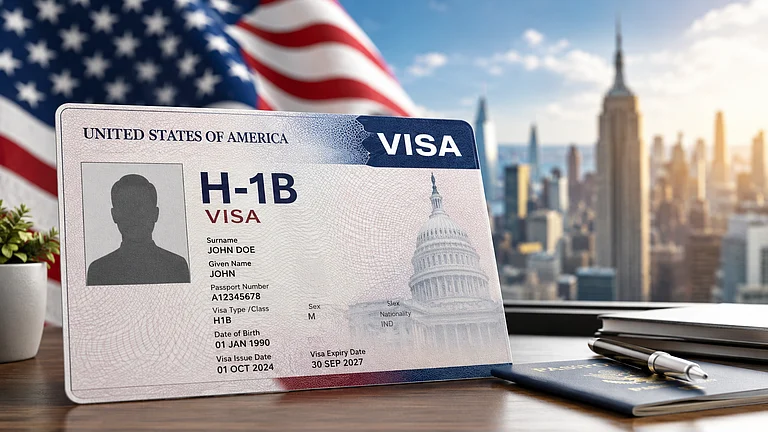
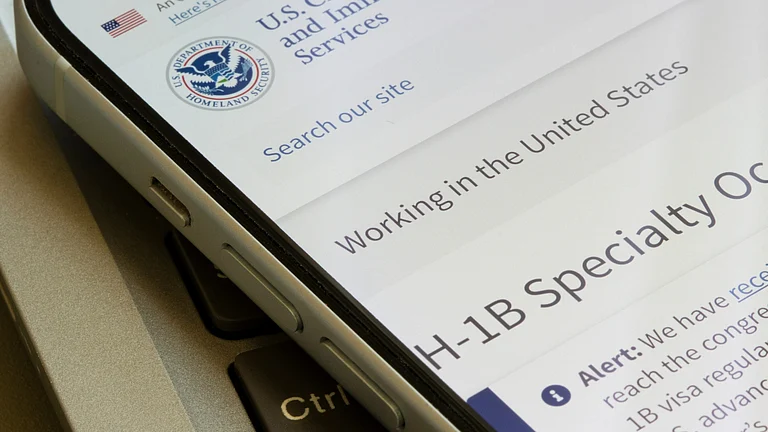
New H-1B visa approvals for India’s top seven IT services companies fell to a decade low of 4,573 in FY25, marking a 70% decline from about 15,270 approvals a decade ago and 37% lower than last year, according to an analysis by the National Foundation for American Policy (NFAP) based on US Citizenship and Immigration Services (USCIS) employer data. This represents the steepest annual drop in ten years as the US tightens screening criteria for skilled worker visas.
US tech giants including Amazon, Meta, Microsoft, and Google now account for the highest number of initial H-1B approvals for the first time, signalling a growing preference for US-based employers in the battle for high-skilled talent.

1 September 2026
Get the latest issue of Outlook Business

Indian IT Firms Reliant on Renewals
While new H-1B approvals for Indian IT service majors have plunged, renewal petitions remain stable. USCIS approved 291,542 continuing-employment petitions in FY25 with a rejection rate of 1.9%, indicating a shift towards retaining employees already in the United States over onboarding new foreign workers.
According to The Economic Times, Tata Consultancy Services (TCS) is the only Indian IT firm among the top five employers for continuing-employment petitions, securing 5,293 approvals this year. However, the rejection rate for extensions crossed 7%, above the USCIS average.
Advertisement
Industry analysts say the H-1B program is increasingly serving as a retention mechanism, pushing Indian IT firms towards local hiring strategies and expanding global capability centres (GCCs).

Shifting US Immigration Landscape
The US government under President Donald Trump’s second term is reshaping its skilled immigration frameworks. In early 2025, the administration introduced H-1B modernisation rules redefining specialty occupations, tightening degree-relevance requirements, and increasing compliance obligations for employers.
In September, the administration announced a steep hike in H-1B filing fees — up to $100,000 for certain new petitions — and proposed the US HIRE Bill 2025 (Halting International Relocation of Employment), which would impose a 25% duty on companies outsourcing jobs overseas.
Advertisement
Analysts say these moves may accelerate hiring localisation across the IT sector and reduce dependence on H-1B talent pipelines.