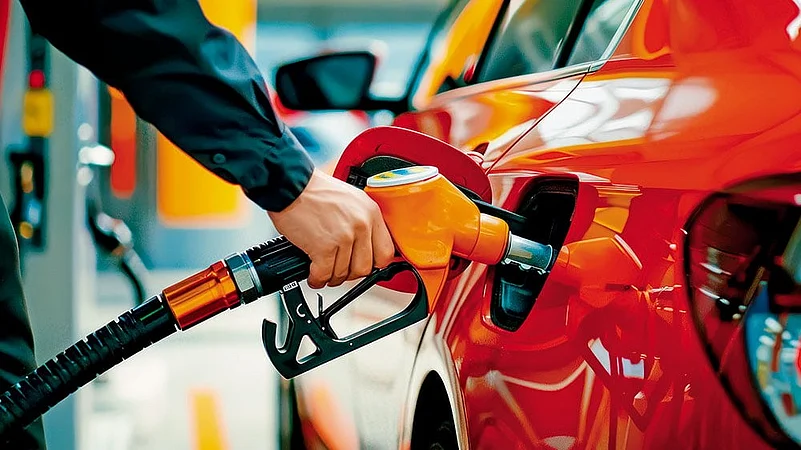
The government is likely to slow down the proposed transition to E25 petrol, which contains 25% ethanol, following concerns over the rapid rollout of E20 fuel, The Indian Express reported.
The move comes amid a backlash over the sharp rise in ethanol blending in petrol, from 10% to 20%, within just three years. The government is now likely to push back the shift to E25 fuel, which would comprise 75% petrol and 25% ethanol, according to the report.
The government had originally planned to introduce 20% ethanol-blended petrol only by 2030. However, E20 fuel, containing 80% petrol and 20% ethanol, has already become the standard variant available across the country.
1 September 2026
Get the latest issue of Outlook Business

What Triggered the Concerns
No formal date has been announced for the rollout of E25 fuel. However, two government decisions taken over the past six weeks have raised fresh concerns. These include a central excise duty exemption for blended fuel containing 22% to 30% ethanol, and new fuel standards notified by the Bureau of Indian Standards for such blends.

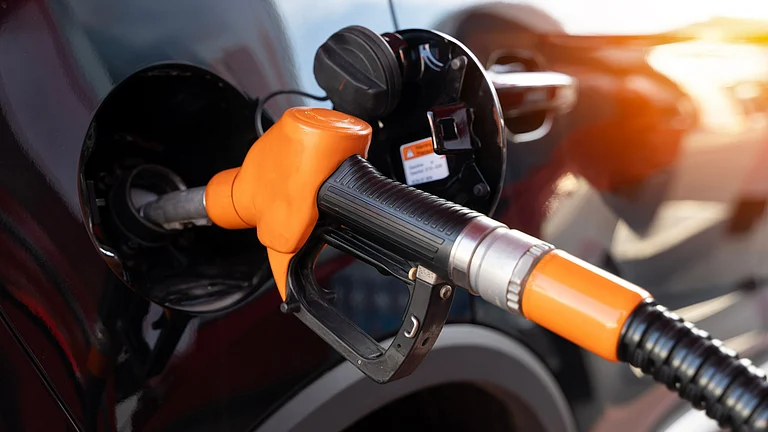

These steps were seen as signals of the government's intent to prepare vehicles and fuel infrastructure for the next phase of ethanol adoption. The prospect of moving beyond E20 has raised concerns among both carmakers and motorists, the report said.
Even before these developments, the accelerated shift to E20, which was advanced by five years, had led to complaints from consumers about a drop in fuel efficiency. Concerns were also raised about damage to vehicle parts, particularly in older cars, as ethanol content increased.
Advertisement
A senior-level government meeting held last week reportedly flagged the need to address these concerns scientifically. Officials also asked vehicle manufacturers to look into consumer complaints, some of which were described as "overblown."
The report noted that the government believes sufficient time must be given for the ecosystem to prepare, and that the rushed approach seen during the E20 transition should not be repeated with E25.
"There is a view (within the government) that the transition beyond E20 will need to be spaced out. That is the sense we have got from vehicle manufacturers too. The idea is to go to E25 in a calibrated, graded manner for existing vehicles," a senior government official told The Indian Express.
Advertisement

Why Carmakers and Motorists Are Concerned
Vehicles not designed for higher ethanol blends tend to show a drop in fuel economy, with the extent depending on the age of the vehicle. While E10 fuel had little impact on performance, the shift to E20 affected the operational parameters of older vehicles. Performance decline does not increase in a straight line as ethanol content rises further.
Ethanol has a lower calorific value than petrol, which results in a noticeable drop in mileage. Vehicles running on higher ethanol blends are also harder to start on cold mornings, since ethanol burns at a higher temperature than petrol.
Automakers have also raised concerns about potential damage to vehicle parts from corrosion, as ethanol is hygroscopic and tends to promote water absorption, particularly in older internal combustion engine vehicles.
Ethanol does have benefits, including a higher octane number, which helps the fuel resist premature combustion. It is also considered more eco-friendly due to its lower carbon content and reduces dependence on fuel imports.
Several carmakers in India are reportedly working on engines with higher compression ratios to improve mileage with higher ethanol blends, though such developments are still some time away.
The transition to E25 will require automakers to carry out additional engineering and testing, covering engine calibration, fuel-system durability, corrosion resistance, and material compatibility. This will be followed by homologation, the certification process confirming compliance with safety, environmental and road-worthiness regulations. All of this requires adequate time, which could be compromised if the rollout is rushed.