

Fintech is a relatively young industry, but leadership pipelines still reflect older financial institutions where women historically had lower representation
In fintech, leadership credibility comes from measurable outcomes like growth and customer impact
Digital lending can expand credit access for women without formal credit histories
As the fintech sector positions itself as a disruptor of traditional finance, the issue is less about capability and more about visibility and early access to decision-making roles. On the occasion of International Women’s Day 2026, Outlook Business spoke with a senior marketing leader of IPO-bound Kissht about navigating leadership in fintech.
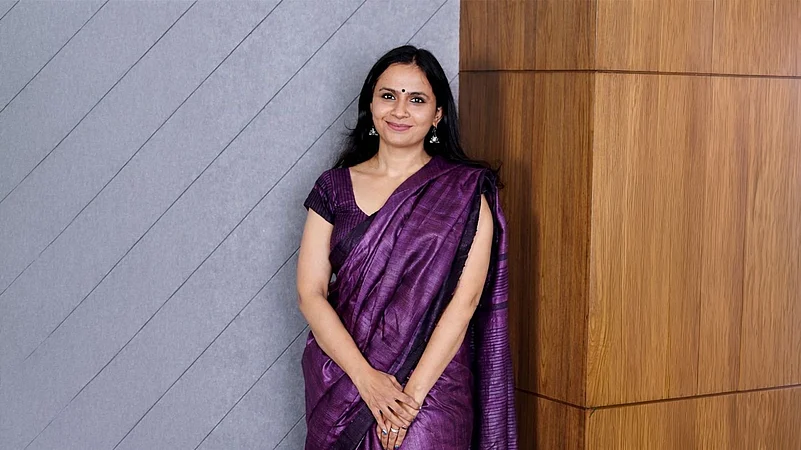
For her, the challenge in fintech leadership is less about capability and more about access to early decision-making opportunities. “The issue is not whether women can lead high-growth businesses. It’s about visibility and getting exposure to roles where strategic decisions are made,” said Shwetha Iyer, SVP and Head of Marketing at Kissht.
2 March 2026
Get the latest issue of Outlook Business

In high-velocity companies, she adds, credibility ultimately comes from outcomes. “When you are accountable for growth, revenue, and customer experience, the conversation quickly shifts from who you are to what you deliver,” she added.
Beyond leadership and regulation, she also sees fintech playing a critical role in expanding financial participation, especially for women who remain underserved by traditional credit systems. While women borrowers often demonstrate strong repayment discipline, many still lack formal credit histories.
Edited Excerpts:
Women are still underrepresented in fintech leadership. What structural challenges persist?
Fintech is a relatively young industry, but leadership pipelines still reflect older financial institutions where women historically had lower representation. The issue is less about capability and more about visibility and early access to decision-making roles.
Personally, I don’t see my journey through the lens of having to prove myself twice. In high-growth environments, credibility tends to come from impact. When you are accountable for outcomes like growth, revenue, and customer experience, the conversation quickly shifts from who you are to what you deliver.
My focus has always been on building functions that drive real business outcomes. When that happens, the rest tends to take care of itself.
Is there a difference in leadership styles between men and women in high-growth environments?
I think the difference is often overstated. High-growth environments reward clarity, speed, and the ability to make decisions under uncertainty. Those qualities are not gendered.
What does matter is diversity of perspective. When leadership teams bring different experiences and viewpoints to the table, the quality of decisions improves. In sectors like fintech, where customer behaviour and technology evolve quickly, that diversity becomes especially valuable. Ultimately leadership is less about style and more about alignment and clarity of direction.

Is there a gender gap in credit behaviour? Do women borrow differently?
There are some interesting behavioural patterns. Women borrowers tend to be more disciplined in repayment and often borrow with a clear purpose. In many cases, the credit is directed toward household needs, education, or other practical priorities.
The bigger gap, however, is not behaviour but access. Many financially responsible women still have limited formal credit history. At Kissht, we see this often. There are users who demonstrate strong financial discipline through digital transactions or spending patterns but remain invisible to traditional credit systems.
Fintech has the opportunity to bridge that gap by recognising real financial behaviour rather than relying only on legacy signals.
How can fintech unlock more financial participation for women consumers?
The first step is designing products around how people actually manage money rather than how traditional systems expect them to behave. Many women may not have long credit histories, but they often show strong financial discipline through savings habits, digital payments, or household budgeting.
Financial products can sometimes feel intimidating or overly complex. When the experience is simple, transparent, and predictable, participation naturally increases. Expanding financial inclusion is not just about giving access to credit. It is about building confidence in how that credit works.
With tighter RBI norms around lending apps, how do you build credibility in a category where consumer scepticism is high?
The regulatory tightening is actually healthy for the industry. It helps distinguish credible, compliant platforms from opportunistic players.
For companies like Kissht, credibility comes from consistency. Customers should clearly understand pricing, repayment schedules, and how the product behaves over time. Responsible collections practices are equally important. The way a company treats customers during difficult moments often defines its brand far more than acquisition campaigns.
Over time, trust builds when the experience consistently matches the promise.

What has been your biggest marketing pivot at Kissht in the past year?
The biggest shift has been moving from purely acquisition-driven marketing to building a stronger narrative around responsible credit and financial empowerment.
In the early stages of fintech growth, performance marketing tends to dominate because scale is the priority. But as the category matures, trust becomes equally important. Over the past year we have expanded our focus toward brand storytelling, partnerships, and content that explains how credit can actually enable progress in people’s lives.
The pivot was not just about marketing channels. It was about broadening the conversation beyond transactions.
What metrics matter most to you as SVP–Head Marketing—CAC, LTV, brand recall, or something else?
Those metrics are important, but the deeper question is whether we are acquiring the right customer.
If a product reaches people who genuinely benefit from it, the downstream metrics usually take care of themselves. Acquisition becomes more efficient, retention improves, and lifetime value grows.
Has customer behaviour post-pandemic changed in terms of borrowing sentiment?
Yes, consumers today are more intentional about borrowing. During the pandemic, credit often acted as a short-term bridge during uncertainty.
Now there is a stronger emphasis on planned borrowing. Customers look for flexible products, transparent repayment structures, and smaller ticket credit that fits into monthly financial planning. At Kissht, we have seen increasing demand for products that integrate smoothly into everyday financial behaviour rather than feeling like a one-time loan.
In many ways, the customer has become more financially aware, which is a positive shift for the entire ecosystem.

As a marketing leader in fintech, what excites you most about the future of the industry?
What excites me most is that fintech is moving from being purely transactional to becoming more integrated into people’s everyday financial lives.
The next phase of growth will not just be about faster lending or better technology. It will be about building financial tools that feel intuitive, transparent, and genuinely useful. At Kissht, we see marketing as playing a role in that transition by helping customers understand how financial products can support their ambitions rather than simply promoting credit.
When marketing helps build trust and clarity, it becomes part of shaping the future of the category itself.