Clean Max's ₹3,100-crore issue opens February 23; price band set at ₹1,000–₹1,053 per share
Majority of fresh proceeds to be used for debt reduction; OFS benefits existing investors
Strong exposure to technology and data centre clients amid rising corporate renewable demand
Renewable power company, Clean Max Enviro Energy Solutions, is all set for its public market debut this month. The IPO will open for public subscription on February 23 and close on February 25. The stock is slated to debut on the exchanges on March 2.
The public issue features a price band of ₹1,000-₹1,053 per share, with a minimum lot size of 14 shares.

1 October 2026
Get the latest issue of Outlook Business

At the upper end of the band, retail investors will need to put in a minimum of ₹14,472 to apply for the IPO, which is sized at ₹3,100 crore. The issue includes ₹1,200 crore of fresh share sale and ₹1,900 crore offer for sale of 1.80 crore shares.
Axis Capital, JP Morgan India, HSBC Securities and Capital Markets India, IIFL Capital Services, Nomura Financial Advisory, BOB Capital Markets and SBI Capital Markets are acting as the book-running lead managers for the offering, while MUFG Intime India has been appointed as the registrar.
Shares worth ₹30 crore have been set aside for employees, who will receive a ₹100 per share discount on the IPO price. Half of the net issue is allocated to qualified institutional buyers (QIBs), 15% to non-institutional investors (NIIs), and 35% to retail investors.
Advertisement
Clean Max provides renewable power, energy services, and carbon credit solutions to companies operating in various sectors like technology, data centres, commercial and industrial etc.
As of July 31, 2025, the company had an operational portfolio of 2.54 GW of renewable energy assets under its ownership and management. An additional 2.53 GW was in the pipeline, either under construction or tied up through agreements for upcoming projects.

Use of Clean Max IPO Funds
Of the total issue size, the company will use ₹1,122.6 crore for debt repayment, with the remaining funds from the fresh issue earmarked for general corporate purposes. Meanwhile, proceeds from the offer for sale (OFS) will go directly to the selling shareholders, including promoters and certain institutional investors.
Advertisement
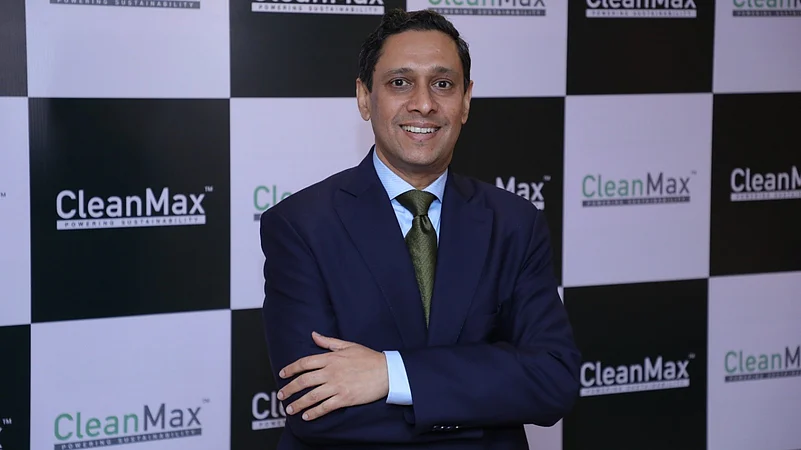
Speaking about the IPO, Kuldeep Jain, Chairman and Managing Director of Clean Max said maintaining discipline remains central to the company’s strategy, especially in a capital-intensive sector such as renewable energy.
He noted that leverage levels are monitored at the board level, and any borrowing beyond pre-defined thresholds requires approval from the risk management committee. He added that the company has focused on improving financial performance over the past few fiscal years, while maintaining oversight on its net debt-to-EBITDA metrics.
“Our debt (net off liquid assets) to Adjusted EBITDA ratio over the past 3 fiscals 2.71x, 4.10x, 4.80x for FY23, FY24, and FY25, respectively. Our Board-level Risk Management Committee monitors leverage and must unanimously approve any borrowings resulting in deviation beyond agreed thresholds for Net Debt/EBITDA,” he said.
The planned debt repayment through IPO proceeds comes as Clean Max continues to scale its renewable energy portfolio across geographies and customer segments.

Post-IPO Expansion Plans
A growing share of Clean Max’s portfolio is linked to technology companies and data centre operators. This reflects rising renewable energy demand from digital infrastructure and artificial intelligence-led workloads.
“New high-consumption sectors such as data centres, driven by hyperscalers, co-location players, and AI-led workloads, are committing to 100% RE for upcoming facilities, adding large, stable baseload demand,” he told us.
As of March 31, 2025, technology customers accounted for a significant portion of the company’s contracted but yet-to-be-executed capacity. Jain said repeat business forms a substantial part of demand, indicating long-term relationships with enterprise clients.
“Approximately 38% (1,880 MW) of our total operational and contracted capacity is from technology customers. Technology customers form 12% of our operational capacity, but they already constitute 59% (1,623 MW) of our contracted, yet-to-be-executed capacity,” he said.
“78% of our contracted capacity in Fiscal 2025 was attributable to demand from repeat customers, reflecting the stability and long-term nature of our relationships,” he added.
At the same time, he added that Clean Max maintains a diversified customer base across industries to mitigate concentration risks.
The company’s key customers span sectors including data centres, manufacturing, pharmaceuticals, infrastructure, and fast-moving consumer goods, among others.
Its plants are located in regions such as Maharashtra, Tamil Nadu, and Karnataka, which enables supply to major commercial hubs including Mumbai, Chennai, and Bengaluru.
The company also has international operations in Thailand, the United Arab Emirates and Bahrain, and is evaluating additional markets. Jain said overseas expansion has been pursued selectively over the past several years.
Clean Max has entered into co-investment partnerships with foreign investors, including Osaka Gas and Toyota Tsusho, to develop renewable energy projects.

Corporate Renewable Adoption Trends
According to Jain, corporate renewable adoption is accelerating due to net-zero targets, energy security, and technology that enables a reliable clean supply. He said the demand is likely to be integrated with long-term solutions delivered through flexible PPA and aggregation models.
Thus, corporate sustainability targets, energy security, ESG compliance requirements, and regulatory support are a few of the primary drivers accelerating corporate renewable adoption, he added.
He further highlighted that data centres require resilient, high-quality power, demanding solutions that match reliability to reduce their carbon footprint. With the development of new AI models, including GPT-4, Gemini 1.5 and DeepSeek, comes a significantly higher appetite for data centre capacity and electricity.
Clean Max Enviro’s listed comparables include ACME Solar Holdings Ltd, trading at a price-to-earnings (P/E) ratio of 49.46; NTPC Green Energy Ltd at 132.94; Adani Green Energy Limited at 119.14; and ReNew Energy Global PLC, which commands a P/E multiple of 44.84.




Ahead of its IPO launch, Clean Max raised ₹1,185 crore through a mix of fresh issuance and secondary share sales. The fundraise included a ₹296.8-crore pre-IPO placement that saw participation from global investors such as Temasek Holdings, through Jongsong Investments, and Bain Capital Advisors.
On February 6, the company issued 28.19 lakh new equity shares to Jongsong Investments at ₹1,053 apiece, mobilising ₹296.8 crore under the fresh issue component. On the same date, existing investors BGTF One Holdings (DIFC) and KEMPINC LLP divested 84.34 lakh shares, representing a 7.94% stake, for ₹888.1 crore, also at ₹1,053 per share.