
Women in marketing are rising, with confidence and opportunities steadily increasing
Digital and influencer marketing are becoming central to consumer durable advertising
AC marketing requires precision, as purchases are infrequent and high-value decisions
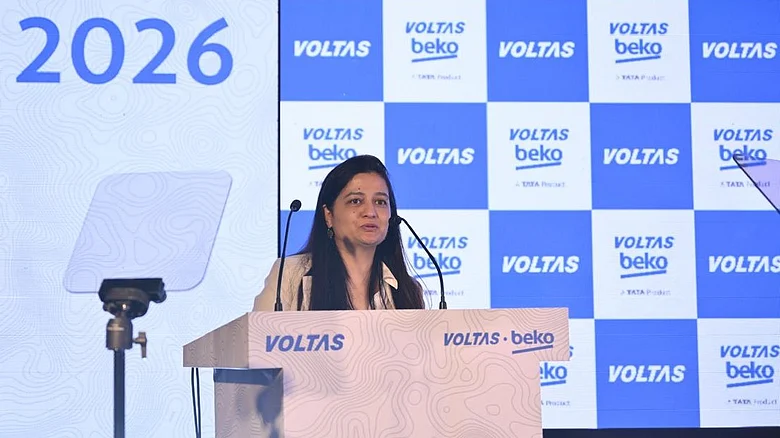
Roles should never be gendered. They have to be gender-agnostic and there should be no bias between men and women, says Pragya Bijalwann, Chief Marketing Officer, Voltas.
Ahead of International Women’s Day, Outlook Business spoke with Pragya Bijalwann, about how marketing in India has evolved over the past decade, the growing role of digital and influencers in consumer durables, and the challenges of selling products that consumers buy only once in several years. In this conversation, she also shares her perspective on women in leadership and the skills marketers need to stay relevant in a rapidly changing industry.

1 October 2026
Get the latest issue of Outlook Business

Edited Excerpt:
What changes have you seen in the way women are shaping careers in marketing, and what message would you share with young professionals?
I think they are doing fantastic. In the marketing space today, you see many more women than before.
First of all, I firmly believe that roles should never be gendered. They have to be gender-agnostic. There should be no bias between men and women. It’s about giving everyone equal opportunity and the full right to own any role. Men should have as much right to take up a role as women, and vice versa.
Having said that, I do feel women today are becoming much more confident compared to what we saw in the past. That’s largely because of greater exposure, a more liberalised world and organisations becoming more understanding of different perspectives. Organisations today are quite supportive. But it is also important for every woman to speak for herself. Brands and organisations can support you only if you voice your aspirations. A large part of your career is something you have to take ownership of.
And as I often say, do what you love. Don’t try to emulate someone else’s career path. What has worked for me may not work for someone else, and what works for someone else may not work for me. Define your own path, stay true to it, and you will remain relevant. Most importantly, it’s important to be happy.
Advertisement
How has marketing evolved over the past decade in India, both within the consumer durables sector and across the broader industry?
I think consumers today have become much smarter, and marketers have to stay several steps ahead to remain relevant.
One of the biggest challenges for any brand today is staying meaningful to the consumer. Over the years, consumers have gained far greater exposure, and the internet has played the biggest role in enabling that shift.
If you look at our parents’ generation, their knowledge was largely limited to what they saw around them or what was communicated through traditional channels. Access to the internet was limited, so sources of advocacy were trusted almost completely whether it was the neighbourhood shopkeeper or recommendations from friends and family.
Television did have wide reach, but it didn’t allow for personalised conversations. The only places where such personalised interactions happened were through local retailers or within one’s social circle, which is why those voices carried the most credibility. Today, that dynamic has changed significantly. In many cases, influencers have become more trusted voices than even friends or family when it comes to certain product categories. Consumers tend to follow influencers they relate to and trust their expertise or credentials.
So a lot has changed. Brands today need to constantly find new ways to stay relevant in the consumer’s mind whether through their go-to-market strategy, content approach, influencer collaborations, or other platforms because consumers are now exposed to an overwhelming amount of information.
Advertisement
Has the marketing focus now shifted more towards Gen Z and younger millennials? Is this a key consideration in your consumer research and strategy?
If you look at it, ACs are not being presented in the typical way anymore. We have moved towards a bit of a show-and-tell approach and a more lifestyle-led conversation, so that consumers can better understand and appreciate the aesthetics, rather than just seeing the product in a conventional format.
Gen Z as an age bracket may still be a little young to actually purchase ACs, but they are very relevant to the category. They may not be the buyers yet, but they certainly influence the decision—whether it’s encouraging their parents to buy or shaping preferences at home. Secondly, AC purchases are largely driven by two life events: home renovation or buying a new home. This typically happens in the 30–40 age group, which largely falls within the millennial bracket. So from a conversion perspective, that remains our sharp focus.
Having said that, we have signed up Neetu Kapoor and Ranbir Kapoor as brand ambassadors. Their multi-generational appeal allows us to stay relevant across consumer segments. They also bring a natural warmth and genuineness that aligns well with a Tata Group brand. That authenticity reflects in the way they connect with consumers, so we don’t have to try too hard to create relatability.
At the same time, if you look at the overall ad film, it is aspirational, modern and contemporary. It reinforces the message that Voltas has remained a market leader because it has consistently stayed relevant and evolved with the times and that is exactly what we want to communicate.
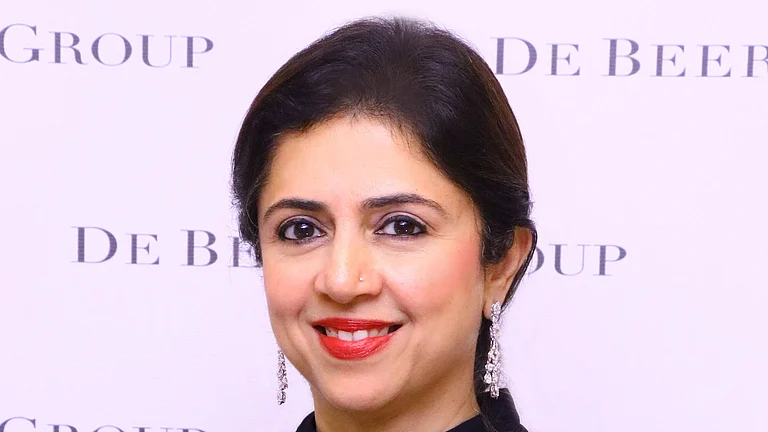
Could you give us a sense of how your marketing budget is split between influencer-led campaigns and traditional media? How have you seen the digital advertisement going up?
Our digital spend currently accounts for over 40% of our overall marketing spend, which, from what I understand, is among the higher in the air conditioning industry.
To clarify, this refers to our marketing spend, not revenue. I wouldn’t comment on advertising-to-revenue ratios right now, but within our media mix, digital has been growing very rapidly.
That said, we remain one of the most salient air-conditioning brands in the country and continue to hold the highest top-of-mind recall. Mass media still plays a critical role in maintaining that leadership. At the same time, digital platforms allow us to target high-intent consumers far more precisely. Whether it is through discoverability, social media engagement, or conversion-led platforms, digital enables us to reach consumers who are actively considering a purchase.
Our digital investments have increased nearly fourfold over the last two years. If it was "x" two years ago, it became roughly 4X last year.
And how do you see the advertisements going forward?
Going forward, I see the share of digital only increasing.
AC penetration in India is still around 8%, which means the category itself is relatively niche. So it doesn’t make sense for us to advertise everywhere to everyone. Instead, we need to reach the consumers who actually matter for us.
Digital platforms give us that level of relevance and sharp targeting. This is not to say mass media is not important. For categories with very high consumption, say something like toothpaste, mass advertising may make more sense. But in our case, the product is priced around ₹35,000–₹40,000, and the consumer base is more selective.
We know that within this selective set, only a certain number of consumers are actively looking to buy an AC during a particular season. Our focus is to reach exactly those consumers. And digital media enables that through multiple layers of targeting, allowing us to engage with high-intent buyers far more effectively.
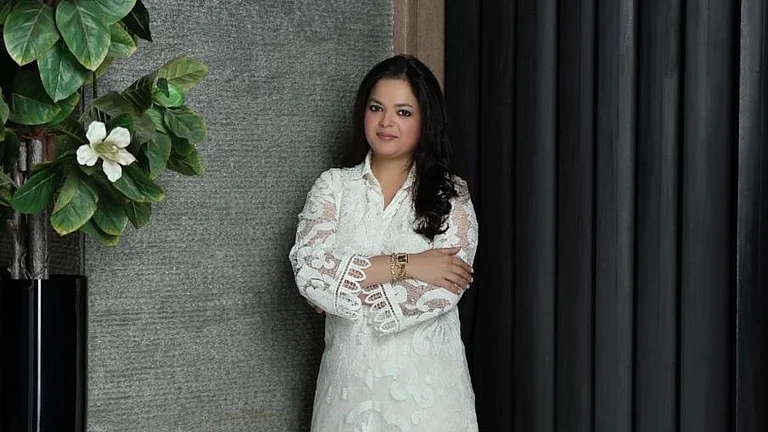
What kind of influencers do you target?
Tech influencers take precedence for us, more than any other category. These are typically high-tier influencers who have strong credibility when it comes to technology products. Alongside them, we also work with macro-influencers and, increasingly, regional influencers. For instance, some of the top macro-influencers we collaborated with last year for our hero product will continue to work with us this year as well.
At the same time, we are expanding our focus on regional influencers to make our conversations more locally relevant. This helps us stay connected with audiences who closely follow these creators in their respective regions, allowing us to drive more authentic and meaningful engagement.
Do you see these kinds of AI ads becoming mainstream in the future?
I would find that difficult.
Machines and AI can certainly help speed things up, and that’s a good thing. But I always believe we are in the business of humanising technology, not letting technology define humans.
At the end of the day, technology exists to solve human problems and improve human experiences. If I can’t explain to a consumer how a product actually solves their problem, then the technology itself doesn’t really matter. It has to be rooted in a human need, and I need to contextualise it in a way that makes sense to people.
In fact, I would find it quite worrying if we ever reached a point where we stopped talking about humans altogether. That would be a rather scary place to be.
What about the shift from the Murthy campaign to the new celebrity faces?
When Mr. Murthy was brought in, it worked wonderfully for the brand. He was introduced around 2010–12 and remained for many years because, at that time, the key challenge was affordability.
The brand wanted to communicate that even a middle-class consumer could afford an AC. It was not just about buying the AC, but also about the cost of owning and running it. The message was that the cost of ownership could be managed. In that sense, Murthy represented the common man.
Today, that challenge largely no longer exists. Affordability has improved significantly. As a result, the brand’s task now is to remain aspirational and relevant to current consumer expectations.
The conversation today is more about aesthetics, advanced technology and being future-forward. That sense of aspiration, combined with authenticity, is what the new brand faces aim to reflect.
What makes consumer durable marketing different from other sectors like FMCG?
FMCG brands get a chance with consumers almost every week. In consumer durables, we don’t have that luxury.
A consumer typically buys our product once in eight or even ten years. So we simply cannot afford to get it wrong.
Take toothpaste, for example. If it doesn’t work for you, switching is easy. But when it comes to a high-value purchase, consumers are far less forgiving. They scrutinise the decision carefully at the time of buying, and they also judge you throughout the entire ownership experience, which can last eight years or more.
And that experience becomes the biggest advocacy channel. No matter how much marketing or influence you create, word-of-mouth within someone’s personal circle carries far more weight. If even one conversation turns negative, you could easily lose the next ten potential customers.
So in our category, you simply don’t have the luxury of not getting it right. I wouldn’t even call it failure, it’s about being right the first time. Because you may not get another chance.