
Tata Power Renewables has commissioned a 72.5 MW captive solar project for Tata Steel in Rajasthan.
The Kalasar project is expected to generate 166 million units of green energy annually.
The project takes Tata Power Renewables’ total renewable utility capacity to 12.3 GW.
Tata Power Renewables Energy Ltd (TPREL), a subsidiary of Tata Power, has commissioned a 72.5 MW captive solar project for Tata Steel at Kalasar in Bikaner, Rajasthan, the company said in an exchange filing on Thursday.
The project is expected to generate 166 million units (MUs) of green energy annually and offset around 1,18,856 tonnes of carbon emissions each year, according to Tata Power. The project is aimed at supporting Tata Steel’s decarbonisation efforts while adding to TPREL’s renewable energy portfolio.

1 October 2026
Get the latest issue of Outlook Business

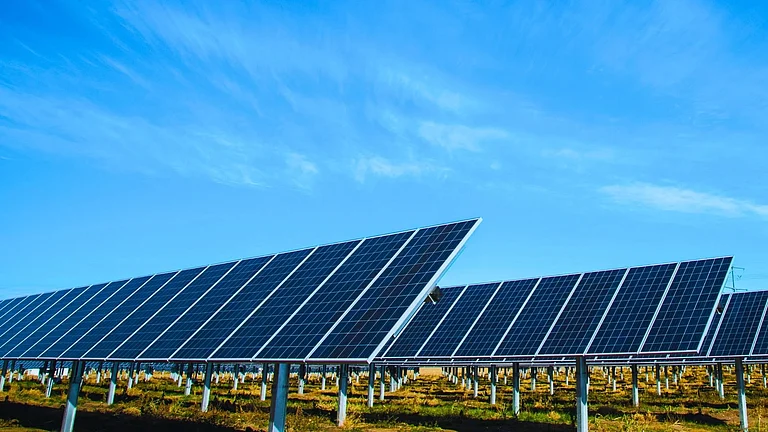
The solar project uses 1,71,360 modules, which were manufactured by TP Solar, another Tata Power group company.
Tata Power Renewables Expands Solar Capacity
With the commissioning of the project, TPREL’s total renewable utility capacity has reached 12.3 GW, the company said.
Of this, around 7 GW is operational, including 5.7 GW of solar and 1.3 GW of wind capacity. Another close to 5.3 GW is under implementation, comprising around 2.2 GW of solar and 3.1 GW of wind projects.
The company said these projects are expected to be commissioned in phases over the next 6-24 months. TPREL has been developing renewable energy projects for sectors including data centres, communications, IT, petrochemicals, steel, automobiles, FMCG and biotechnology.
Advertisement

Solar Project To Support Tata Steel’s Decarbonisation
The Kalasar project combines large-scale solar generation with technology solutions and is designed to support Tata Steel’s shift towards cleaner energy, according to Tata Power.
TPREL said the project demonstrates its ability to execute technology-driven renewable energy projects within demanding timelines. The company added that such projects can support industrial decarbonisation and strengthen grid resilience.
The company said it remains focused on developing clean-energy infrastructure as India works towards its target of achieving 500 GW of non-fossil fuel capacity by 2030.